When the Law Fails to Protect Children from Pedophiles

Taiwan’s High Court handed down a verdict that should haunt anyone who takes violence against children seriously

Thank you for all the new followers and shares! I am using Substack a lot more than WordPress, so make sure to subscribe (it’s free!)


On November 25, 2025, Taiwan’s High Court handed down a verdict that should haunt anyone who takes violence against children seriously.

Former television host Mickey Huang was sentenced to one year and six months in prison, suspended for four years, for possessing sexual images and videos involving 37 minors aged 10–17. He is required to complete 180 hours of labor service and three legal education sessions. The sentence can still be appealed, but unless something dramatic changes, he will not serve a single day in prison.
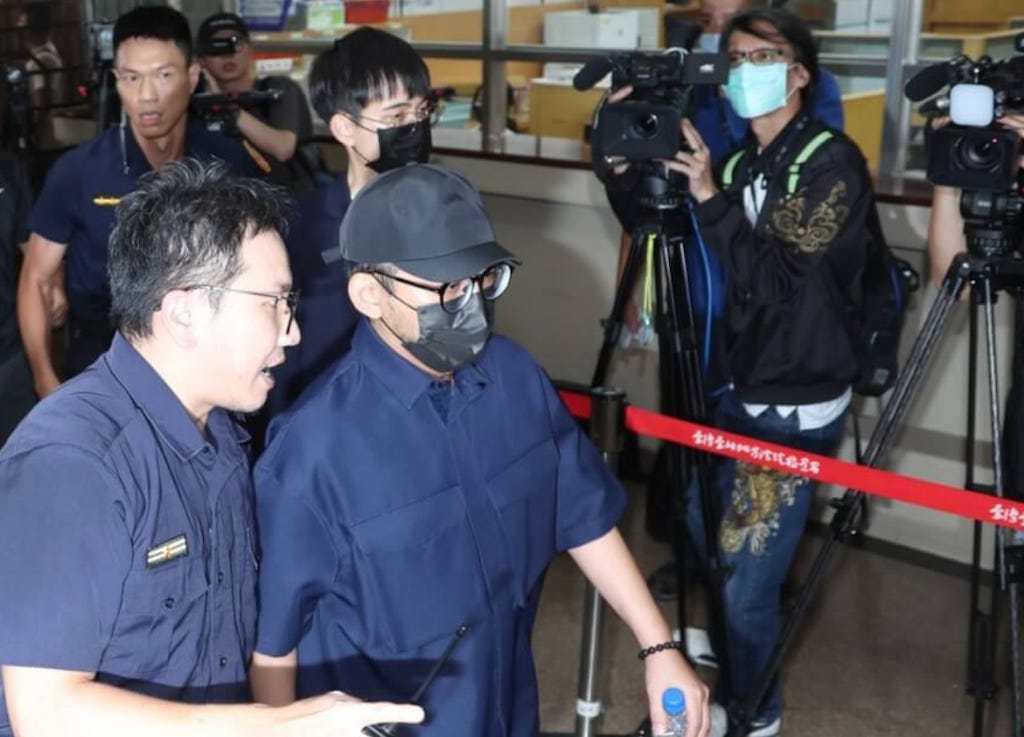
Mickey Huang is taken in for police questioning, 2023. (CNA photo)

Mickey Huang is taken in for police questioning, 2023. (CNA photo)

According to the court, Huang joined an online forum called Creative Private House in 2014 and used it to purchase and store these images of child sexual abuse, keeping them for years, even after amendments to the Child and Youth Sexual Exploitation Prevention Act (CYSEPA) came into force in 2023.

The court acknowledged that he violated CYSEPA and the Personal Data Protection Act, and noted that he had settled with 37 victims. On that basis, with no prior criminal record and “settlements reached”, the judges granted him a suspended sentence.

Women’s rights groups and child-protection NGOs immediately condemned the ruling as a failure to understand the gravity of digital sexual violence. ECPAT Taiwan said that granting a suspended sentence solely because settlements were reached is “completely contrary” to the spirit of laws designed to protect minors.

Now set that beside another decision.

In 2023, a Taiwanese court sentenced a man to five years and six months in prison for growing marijuana and making cigarettes, cream and chocolate from it. Cannabis is classified as a Category II narcotic in Taiwan; cultivating or processing it for distribution is treated as a major crime.

So, to clarify for my readers, a man who grows a plant and turns it into weed products gets 5.5 years in prison.

A famous entertainer who buys and stores sexual images of 37 children gets a suspended sentence and some community service.

If you want a concrete picture of Taiwan’s moral priorities, you don’t need a philosophy seminar. You just need to read the court records.


A Country Obsessed With “Drugs,” Indifferent to Predators

Under Taiwan’s Narcotics Hazard Prevention Act, cannabis is classified as a Category II narcotic. Using cannabis carries a maximum penalty of three years in prison; possessing it can lead to up to two years in prison, detention, or a fine, with harsher penalties if the quantity is large or if there is intention to sell.

Manufacturing, transporting, or selling Category II narcotics (including cannabis) can result in life imprisonment or a minimum ten-year term, plus fines of up to NT$15 million.

The government proudly advertises this harshness. Official advisories warn Taiwanese travelers never to carry cannabis products back from places like Thailand or Canada, because they could face years behind bars.

In 2023 alone, police seized a record 1,169.3 kilograms of cannabis products and nearly 6,700 plants, and 802 people were charged with marijuana use or possession. Premier Chen Chien-jen publicly urged agencies to “work harder” to crack down.

On drugs, the moral panic is clear. The state wants us to believe that cannabis is such a grave threat that it justifies multi-year sentences and public crusades.


Digital Sexual Violence: The “Tip of the Iceberg”

The Huang verdict is not an isolated case, but the visible tip of a much deeper problem.

In 2024, Taiwanese police dismantled what was described as the largest illegal pornography ring in the country’s history, involving hundreds of people and an online ecosystem where child sexual abuse images and voyeuristic footage of women were traded, often paid for in cryptocurrency.

Local reports noted that possession of child sexual abuse images only became explicitly criminalized in Taiwan in 2023, astonishingly late, given international standards. NGOs like the Taipei Women’s Rescue Foundation have been calling for stiffer penalties for those who obtain such images, not only those who create or distribute them.

In the Huang case, we learned that the “Creative Private House” forum had over 5,000 members, including police officers and teachers, the very people we trust to protect children.

Let that sink in.

Teachers and police officers were among thousands of men trading images of children being sexually abused.

A lawyer representing one of the victims bluntly stated that the case shows how inadequate current laws are for deterring digital sexual violence.

Legislators themselves have acknowledged that Taiwan’s laws are too lenient on child and sex crimes, with public outcry mounting as cases like Huang’s surfaced even before his final conviction.

If this does not feel like a national emergency, it should.

This isn’t a legal technicality; it is a reflection of political priorities. Taiwan inherited decades of anti-drug moral panic, where being “tough on drugs” is good politics, while confronting sexual crimes, especially those involving powerful men, is treated as messy, embarrassing, and socially inconvenient. Victims are pressured to settle. Courts cite apologies and payments as mitigating factors. And predators in esteemed professions are quietly shielded.

If Taiwan truly wants to protect children, meaningful reform must begin with one principle:
No suspended sentences for large-scale possession of child sexual abuse materials.
Settlements shouldn’t purchase freedom. Celebrity shouldn’t soften consequences. And cannabis use, already legalized or decriminalized in much of the world, should not trigger harsher punishment than consuming images of children being raped.

Laws reveal what a society fears most. Right now, Taiwan fears a cannabis edible more than it fears men who create demand for the sexual exploitation of minors. Until that changes, every victim is being told exactly how much their suffering is worth.


Jaclynn is a Taiwan-based writer and activist exposing the gap between law and lived reality for women and children. She writes on sex-based rights, digital exploitation, and political hypocrisy.

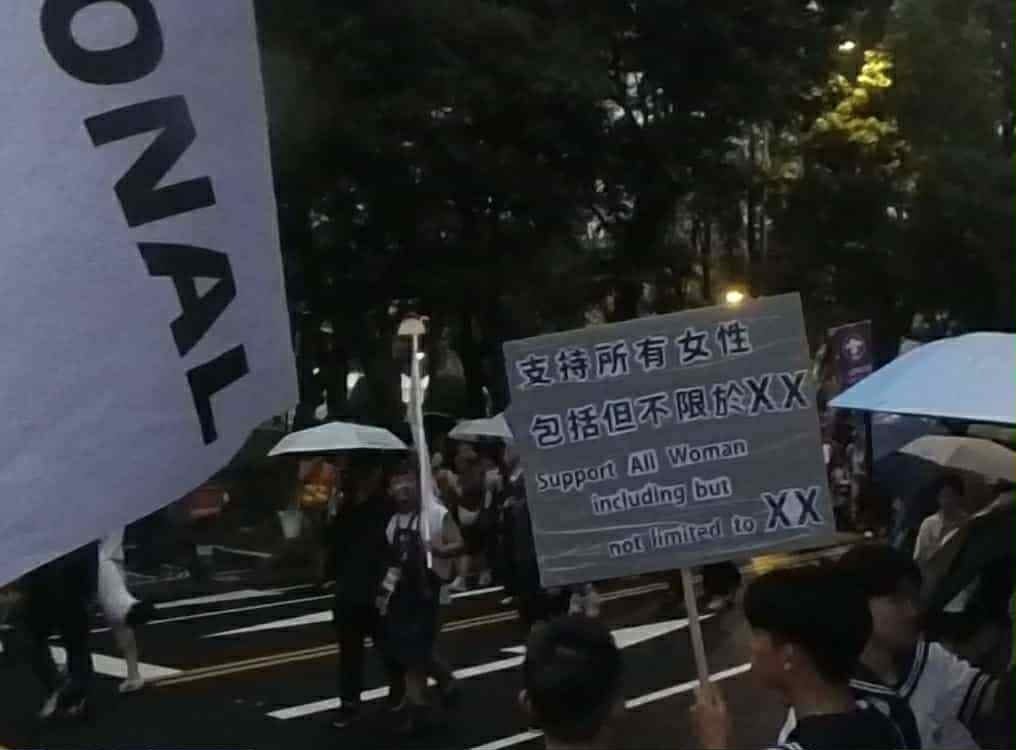
Harassment claims shadow Taiwan Pride: LGB Alliance Taiwan says intimidation and threats are rising

Thank you for all the new followers and shares! I am using Substack a lot more than WordPress, so make sure to subscribe (it’s free!)


TAIPEI — Nov. 20th, 2025.

Two weeks after an estimated 130,000–150,000 people marched in Taipei’s 23rd Taiwan LGBT+ Pride, a local contingent of the newly formed LGB Alliance Taiwan says its members faced escalating intimidation, culminating in an incident in which organizer Nick Yao was harassed and shadowed for the length of the parade.

Yao, who helped coordinate the group’s march formation, shared that multiple individuals trailed and filmed them throughout both the north and south routes, at times crowding close and shouting denunciations. Yao said that members of the human rights group did not report physical injury but described the hours-long encounter as “sustained harassment.”

Some casual misogyny at Taiwan Pride, while following and harassing the LGB Alliance members.

A march amid an online storm

This year’s Pride, held on October 25 under the theme “Hyperlink: Cross labels, understand differences”, was Taipei’s largest civic celebration since the same-sex marriage law took effect in 2019. Despite steady rain, turnout swelled well into six figures, according to organizers and international coverage.

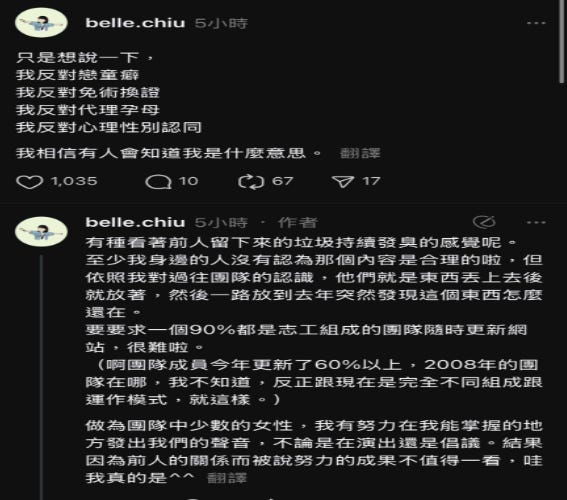
But the festival unfolded after weeks of unusually vicious public infighting within Taiwan’s broader LGBT+ advocacy ecosystem, triggered by comments from a Pride staffer that were criticized as “anti-transgender”. Belle Chiu, the public relations director of the Taiwan Rainbow Citizen Action Association, which organizes the LGBT Pride Parade, stated on her personal social media that she personally “opposes pedophilia, opposes surrogacy, and opposes gender identity fraud (legal changing of one’s sex-marker on documentation)”.

This deeper, politically sensitive dispute emerged around Taipei Pride’s Rainbow Declaration, Taiwan’s localized six-color interpretation of the traditional Pride flag. Historically, the declaration framed “red” as advocating for sexual rights and the removal of Criminal Code Article 221, which criminalizes rape and non-consensual sexual acts:

Article 221: “A person who by threats, violence, intimidation, inducing hypnosis, or other means against the will of a male or female and who has sexual intercourse with such person shall be sentenced to imprisonment for not less than three years but not more than ten years.”
(Ministry of Justice, ROC; an attempt to commit the offense is also punishable.)

Chiu served as the director of public relationship for 2025 Taipei Pride before she spoke against the mainstream opinions of Taiwanese gay men. She states here that she opposes pedophilia, gender self-ID, surrogacy, and mental genders/gender identities. She defined Taiwan’s version of Rainbow Declaration as “stinking garbages left by former people” (Taipei Pride hosts).

According to LGB Alliance Taiwan, Pride organizers quietly removed the anti-221 language from their website after a public scandal surrounding Taiwanese celebrity, Mickey Huang, who was accused of involvement in consuming child pornography. Critics within the LGB community say the deletion was an attempt to downplay conversations about sexual-abuse prevention, grooming, and safeguarding.

The LGB Alliance Taiwan further alleges that LGBTQ+ institutions reinstated the declaration only after pressure from what they describe as “powerful older gay men”, a claim they have linked to long-standing conversations about predatory behavior and exploitation within some corners of Taiwan’s gay male community. LGB Alliance Taiwan states it is “the only LGB group willing to talk openly about the pedophile problem among gay men,” referencing a 2023 article on its own site detailing alleged cases and community responses.

Some activists, including one gay man cited by the group, described Pride organizers’ willingness to remove and restore the article as “ASPD behavior” (antisocial personality disorder), questioning why anyone would advocate weakening sexual-assault laws.

Those remarks prompted formal statements from established NGOs, media scrutiny and calls for clearer positions on sex-marker reform laws being pushed through in Taiwan. The Pride organizers apologized and reassigned the Chiu ahead of the march.

Into that volatile backdrop stepped LGB Alliance Taiwan.

“Increased threats and hostility” reported by LGB Alliance Taiwan

Following Pride weekend, LGB Alliance Taiwan says members saw a spike in threatening or doxxing-adjacent messages across multiple platforms, including posts naming individual volunteers. The group argues it is being punished for its public stance that same-sex attraction is defined by biological sex, not gender identity, an outlook that puts it at sharp odds with every established LGBT+ organization in Taiwan. .

LGB Alliance Taiwan was founded in 2024 by two activists, Nick Yao and Joan Lu. They describe their mission as re-centering lesbian, gay and bisexual advocacy on sex-based rights after, in their view, local NGOs moved toward a unified LGBTQ+ model that deprioritized LGB-specific issues. Their website echoes that position and frames the group’s work around L, G and B constituencies. Many LGB Alliance members can be described as “first-generation” gay and lesbian activists who participated in the gay rights movement’s earliest equality campaigns.

In fact, in recent years, many major LGBTQ+ organizations in the West shifted from a sex-based framework toward policies centered on gender identity, a change that critics say left little room for those who maintain that sexual orientation is rooted in biological sex. Individuals and groups who questioned this shift were frequently labeled “exclusionary,” and in some cases accused of bigotry or even extremism. Many lesbians and gay men argue that openly stating same-sex attraction has become socially discouraged in parts of the movement, particularly at Pride events, where they say such expressions are now treated as insensitive or politically unwelcome. For these critics, the irony is stark: a community once fighting for the right to name and live their sexuality now faces pressure to soften or silence that same reality in the name of progress.

The LGB Alliance Taiwan argues that much of the country’s (Taiwan) LGBT+ sector is now led by, and primarily oriented toward, gay men, leaving lesbian concerns underrepresented in policy discussions. As part of its stated mission to refocus attention on sex-based rights, the alliance has submitted a formal opinion to Taiwan’s CEDAW committee asserting that protections for women should be grounded in biological sex. Members say this stance reflects their view that lesbians and bisexual women are among the first groups affected by gender self-identification policies, and that their organization fills a gap left by larger NGOs that, in their view, have deprioritized lesbian-specific issues.

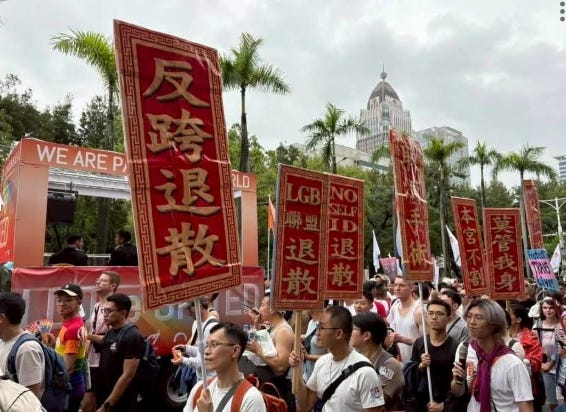
Signs say (from left to right): Transphobes go away, No Self ID website go away, LGB Alliance go away, Cancel (gender) surgery, We trans women do not cut off our penises, You have no power over my body, 100 strokes of the cane for Ministry of the Interior (for not passing the self-ID bill.)

In September 2025, national LGB Alliance groups from 17 countries launched LGB International, a global umbrella aimed at coordinating advocacy and representing LGB positions before multilateral institutions. The UK-based LGB Alliance, founded in 2019, announced the launch and described LGB International’s remit as supporting national affiliates, sharing resources and providing a global voice for same-sex-attracted people.

The UK parent organization’s stated mission includes advancing LGB rights, highlighting the “dual discrimination” faced by lesbians, and safeguarding children who may grow up LGB.

What happened on the ground at Pride

In practice, the march featured a mix of corporate teams, rights groups and political parties, and, this year, a visible debate over trans rights that spilled from social media into streetside chants and placards.

Against that scene, Yao’s account details hours of being followed by a rotating cluster of counter-demonstrators shouting or filming at close range. Bystanders captured some of the back-and-forth; Yao wore a body camera that captured heated verbal exchanges. According to Yao, ”we were surrounded by them. But one thing that stood out was, at around the last one-third of the route, a trans-activist (with a megaphone) showed up and started blasting at us with “This is a hate/transphobic organization !” The host of the Taipei Pride event even called the organization (LGB-A) a “fake gender equality group” on the main Pride stage.

Waiting for LGB-A Taiwan members in front of the exit of Zhongxiao Dunhua station, in Taipei, with trans flags in their hands. They followed Yao for a majority of the parade route, he says.

Taiwan’s Pride has long symbolized the island’s pluralism. Advocates note that the tensions seen in Taipei echo patterns already documented in the UK, Europe and Australia, where LGB-focused groups have reported harassment and online intimidation for advancing sex-based rights and critiquing gender-identity policies. Analysts say Taiwan is not an outlier but part of a wider global dispute over who defines the boundaries of LGBT advocacy, and who is permitted to speak within it. For members of LGB Alliance Taiwan, the hostility they encountered at this year’s Pride is less an isolated incident than the local expression of a familiar international trend: sustained pressure on organizations that depart from gender-identity orthodoxy in favor of sex-based human-rights frameworks.

As LGB Alliance Taiwan seeks legal recognition and a larger footprint, skirmishes like those described by Yao are likely to recur, online and offline.

Visit them at: https://www.lgballiance.tw/

Whatever Happened to Consent?

Believe Women—Unless They Want Their Own Spaces

This post is absolutely blowing up on Substack. Thank you for all the new followers and shares! I am using Substack a lot more than WordPress, so make sure to subscribe (it’s free!)


Consent has long stood as a pillar of modern feminist discourse. Women have fought tirelessly to assert their right to bodily autonomy, to say no—and have that no respected. From sexual relationships to reproductive rights, the conversation around consent has been fierce, passionate, and rooted in justice. But strangely, when it comes to the presence of men—specifically males who identify as women—in female-only spaces, that principle suddenly evaporates. Women are not longer allowed to say no to men.

Why are women who claim to be feminists silent when it comes to the lack of consent to have males in our spaces? Worse still, why are some of them the very ones promoting violence and ostracization against those of us who speak up? If feminism means anything at all, it must begin with the defense of female boundaries, not their erasure. Yet today, many mainstream feminist organizations and public figures have been ideologically captured — coerced into prioritizing male feelings over female safety and autonomy.

The very same women who speak so boldly about the necessity of consent often fall silent—or worse, become hostile and abusive—when other women express discomfort about males in female spaces. Whether we’re talking about locker rooms, bathrooms, prisons, or sports teams, the voices of women saying “no” are no longer respected. Instead, they are vilified, mocked, or silenced. Somehow, in this context, female consent becomes optional. Disposable.

And who is doing this? In my experience, it is in large part women on the Left who call themselves feminists. Women who once chanted “believe women,” who marched for MeToo, who railed against rape culture—but who now, without hesitation, gaslight, shame, and attack other women for simply asserting boundaries. Believe all women, except the ones who don’t want men in female spaces; those women get online trolling, harassment, maybe even death threats. Couldn’t one argue that forcing women and girls against their will to accept males into our intimate spaces, where we are most vulnerable, promoting rape culture? Someone make it make sense to me!

I am consistently disappointed by the number of women who so easily sell out their sisters. The hypocrisy is staggering. How did we go from #TimesUp to “shut up”? How can the same voices that demand male accountability in one breath turn around and insist that women be quiet, be kind, and roll over to allow men in our spaces? Women who speak up are being gaslit by the very movement that once claimed to center them. Feminists, in name only, now defend a system that punishes women for asserting boundaries. What we are witnessing is not compassion—it is capitulation.

There is, in modern female political culture, an undercurrent of tribalism and socially sanctioned cruelty—especially toward dissenting women. Bullying is a coercive form of social control, often exercised by those who feel insecure about their status. In this context, women who feel weak or disempowered—whether socially, physically, intellectually, or professionally—tend to resort to aggressive and inappropriate behavior, especially online, to elevate their position within their peer group. Targeting other women who disagree with them becomes a shortcut to status by demonstrating “ideological purity” and punishing perceived heresy. Inclusion has become a weapon, and empathy has been hijacked to enforce conformity. It is emotional blackmail and a desire for power disguised as progress.

Let us be clear: trans women are male. That is not a slur, nor a denial of their completely subjective inner feelings—it is a material fact. The prefix “trans” exists because there is a meaningful difference between being male and being female. If a male person feels unsafe in a men’s space, the answer is not to erase women’s boundaries—it is to create third spaces that respect everyone without violating anyone’s consent.

Despite the online hysteria, no one is taking away the right of trans-identifying males to live freely. They can dress as they like, take hormones (preferably paid out of pocket and not by taxpayers), adopt names that suit them, live their lives. But they are not entitled to the non-consensual inclusion of women in their personal identity project. Most people are happy to live and let live—until they’re forced to deny what they know to be true, or compelled to accept what they never agreed to.

So what happened to believe all women? What happened to consent? In Canada, a man named Jonathan “Jessica” Yaniv took multiple immigrant women to the Human Rights Tribunal, in the process bankrupting most of them, because they declined to wax his testicles. These were female estheticians, many working from their homes, whose only “crime” was refusing to handle male anatomy. In the U.S., entire high school girls’ volleyball and basketball teams have forfeited games rather than be forced to compete against or share locker rooms with boys who claim to be girls. In some cases, these young women are punished—but not the institutions or the adults that put them in this impossible situation. In California, under SB 132 (the “Transgender Respect, Agency and Dignity Act”), male inmates who self-identify as women can be transferred into women’s prisons. Numerous reports have since emerged from female inmates about rape, pregnancy, and threats of violence, while prison officials have issued condoms instead of reconsidering housing policies. Currently, there are over 900 men on the waiting list to get into one of the two women’s prisons in the state. Where was the mainstream feminist backlash? Women who did speak out—like JK Rowling, Kellie-Jay Keen, Meghan Murphy, and Julie Bindel—faced online mobs, bans, and threats. The backlash existed, but it was not supported by institutional feminism—it was grassroots, often coming from older feminists or those working outside the NGO-academic complex.

What should be common sense—male bodies do not belong in female spaces—has become heresy, and the girls who dare say it out loud are shamed, silenced, and erased.

It is not compassion to force women to comply. It is not feminism to shame women into silence. And it is not consent when women are coerced—by men or by other women—into surrendering their spaces, their safety, or their speech.

Consent matters. Or it doesn’t. And if we have to “consent” to something under social pressure, threat of public shame, or fear of ostracism—it was never consent in the first place.

And just in case it wasn’t clear…I do not fucking consent.

Taiwan Approves Medical Transitioning for Children

As the world wakes up to the dangers of gender ideology, Taiwan is walking blindfolded into a medical ethics disaster

(I have moved primarily to Substack!)

In a time when the world is rapidly reassessing the dangers of gender identity ideology, Taiwan is choosing to move in the opposite direction. While countries across Europe, including the UK, Sweden, Finland, and Norway, are restricting or outright banning the use of puberty blockers and sex reassignment surgeries for minors, Taiwan’s Ministry of Health and Welfare is forging ahead with policies that allow children as young as 12 to undergo irreversible medical procedures. This alarming trend not only isolates Taiwan from the growing global consensus but also endangers the health and well-being of vulnerable children.

The Path Taiwan Took: How Did We Get Here?

Taiwan’s embrace of gender identity ideology didn’t happen overnight. Taiwan’s path has been shaped by a combination of judicial rulings, education policies, and NGO influence over several decades.

  1. The Role of Gender Education Policies – Taiwan’s Gender Equity Education Act (2004) marked the beginning of embedding gender ideology into school curricula. Originally designed to combat discrimination and bullying, it evolved into an institutional framework promoting gender identity ideology among youth.
  2. Legal Precedents Favoring Gender Self-ID – Court rulings in Taiwan progressively dismantled medical gatekeeping. In 2024, a Taipei High Administrative Court ruling granted the right for individuals to change their legal sex without surgery, aligning Taiwan with some of the most radical gender policies globally. So far eight such individuals, male and female, have been able to change their legal sex in Taiwan without the previous requirement of surgery.
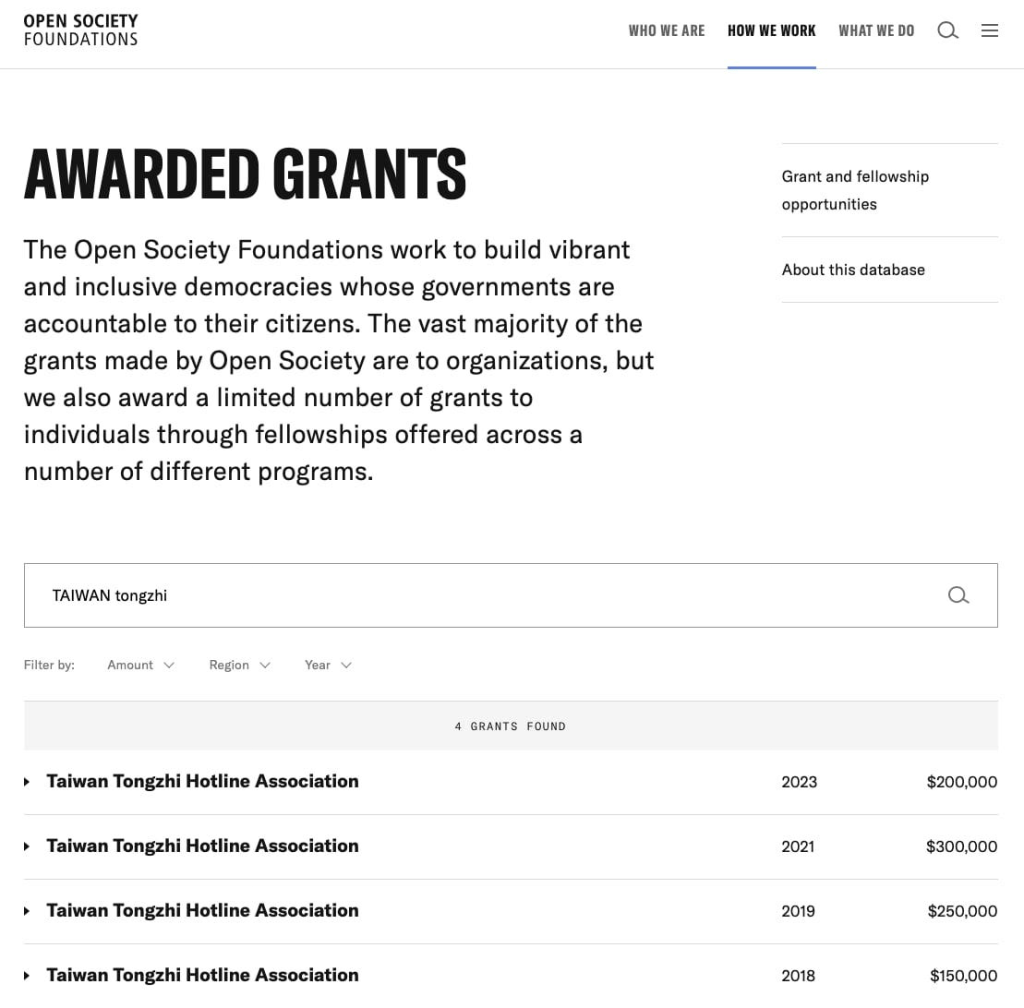
  3. NGO Influence and Foreign Funding – Organizations such as the Taiwan Tongzhi Hotline Association and the Sunshine Queer Center have played a pivotal role in shaping public policy. These groups and others receive international (re: Western) funding, mirroring the activist-led push seen in Western nations before their recent reversals on gender medicine. Open Society Foundations (OFS) has donated close to $1 million USD to the Tongzhi Hotline.

A foreign billionaire-backed foundation is directly shaping Taiwan’s social and political landscape by funding groups that lobby for policy changes. Soros, a self-proclaimed globalist who believes in breaking down national, cultural, and traditional barriers, funds movements that dismantle traditional structures—whether they be national sovereignty, religion, family values, or biological sex distinctions, and replaces them with state-enforced identity constructs.

Another of the sponsors of these Taiwan based groups is an American NGO, spawned by self-identified male lesbian “Susan” Stryker, a man notorious for, among other things, fighting to close a women’s single-sex service rape crisis center in Canada because it refused to accommodate males. These groups have been known to use funding as a way to pressure governments into adopting policies that align with their agendas, and become less accountable to local communities and more beholden to foreign donors. This isn’t just about LGBTQ+ rights—it’s about who controls Taiwan’s social policies. OSF and similar foundations are not neutral actors; they are ideologically driven organizations using financial power to reshape societies globally.

Taiwan is simply the latest recipient of this NGO industrial complex’s agenda.

  1. Public Narrative Control – Taiwanese media, heavily influenced by NGOs and foreign-funded activist organizations, has framed opposition to child sterilization and medical experimentation as “anti-LGBT” rather than a medical ethics issue. This discourages critical debate and silences dissenting voices, including those of detransitioners and medical professionals.

The Global Backlash Against Gender Medicine

The international shift away from so-called “gender-affirming care” is clear. In the UK, the Cass Review, an independent report led by Dr. Hilary Cass, exposed the lack of evidence supporting the medicalization of gender-distressed youth. The review found that puberty blockers and cross-sex hormones pose serious risks, including decreased bone density, infertility, and lifelong dependence on medical interventions. As a result, the UK’s National Health Service (NHS) has shut down the controversial Tavistock gender clinic and significantly tightened regulations around pediatric gender medicine.

Similarly, Sweden—once seen as a pioneer in gender medicine—has reversed course. The Swedish National Board of Health and Welfare now only permits puberty blockers and hormones in extreme cases, citing lack of scientific backing and concerns about long-term harm. Finland, Norway, and several U.S. states have followed suit, recognizing that minors lack the cognitive maturity to consent to life-altering medical decisions.

Even WPATH (World Professional Association for Transgender Health)—the primary global body setting standards for transgender medical care—has faced internal controversy, with whistleblowers and former members warning that its guidelines prioritize ideology over scientific rigor. They expose the reality that these practices are neither sound science nor ethical medicine. For instance, they discuss blocking puberty in a 10-year-old and a 13-year-old child with developmental delays. Another exchange describes performing genital surgeries on individuals diagnosed with schizophrenia and dissociative identity disorder (previously known as multiple personality disorder). These files are difficult to read, but I urge you to examine them. Like most, I have no objection to adults making choices about their own bodies. However, we should all be deeply concerned about unregulated medical experiments performed on individuals who, due to their age or cognitive ability, cannot give informed consent.

Taiwan’s Path Toward Medical Harm

Despite mounting evidence against child medical transition, Taiwan’s Ministry of Health and Welfare recently released its LGBT+ Care Guidelines”, which outline conditions for minors to access sex reassignment surgery. While the guidelines prohibit genital surgery for children under 12, they allow puberty blockers and other medical interventions at even younger ages. Minors between 12 and 18 can undergo medical transition with approval from a “professional team”—a vague and subjective criterion that raises serious ethical concerns.

Taiwan’s decision stands in stark contrast to global trends. Rather than taking a cautious, evidence-based approach, the government appears to be yielding to activist pressure, promoting treatments that have been widely discredited in other nations. Doctors in Taiwan are already performing gender surgeries on minors, with some dismissing the role of age altogether.

Dr. Hu Zhengxuan of the Gender Reassignment Center at Linkou Chang Gung Memorial Hospital openly stated, “It is unreasonable and illogical to use age to directly distinguish whether a person can undergo surgery.”

This sentiment echoes the talking points of trans activist groups worldwide, many of which have financial ties to medical institutions that benefit from lifelong hormone treatments and repeated surgeries. This raises the question: Is Taiwan’s medical community prioritizing ideological compliance over patient safety?

The economic burden of transitioning further exacerbates the issue. Families with the financial means can afford to medically transition their children. A recent interview with a father of a “transgender” sixth-grader revealed that his family spends 15,000NTD (roughly $450USD) every three months on puberty blockers—while the average monthly salary in Taiwan is around $45,000NTD which translates to roughly $1,500 USD per month. Some teens have been documented as going to the Taiwanese blackmarket for hormones in order to avoid parental consent or visits with doctors, with a young woman retelling her account of purchasing testosterone and seemingly bragging about going through early menopause as a result of prolonged use.

At the same time, activist groups in Taiwan are working to normalize these treatments. Organizations such as Taiwan Tongzhi Hotline Association are providing support groups for parents of children who claim to be transgender, similar to previous efforts aimed at normalizing gay and lesbian sexualities. However, there is a stark difference between supporting children’s identities, and medicalizing them with unproven and irreversible interventions.

This Western agenda has been seen in across Taiwan, where trans-identified males teach students that they are “half male and half female”, an American school is accused of providing students with sexually explicit material that actively promotes gender ideology, a trans-identified male politician openly threatens women without censure, the disappearance of women’s single sex restrooms into “all-gender restrooms” (while the men’s rooms remain intact), and allowing trans-identified males to compete in women’s sports.

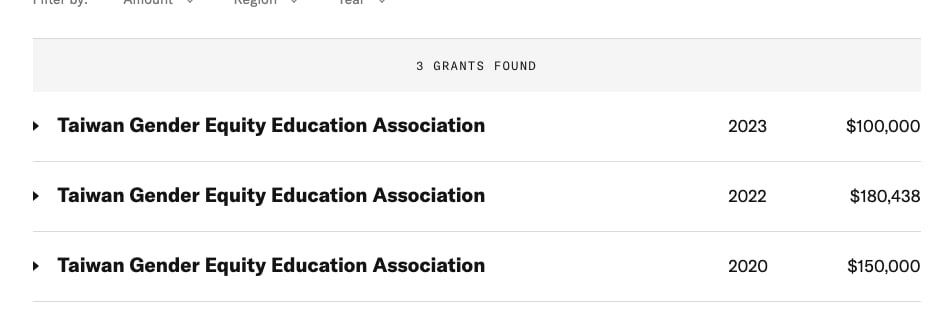
OSF provides over $430,000USD for supporting “gender inclusive education” in Taiwan.

Ignoring Regret and Detransitioners

Taiwan’s reckless policies fail to address the growing number of detransitioners—young adults who now regret their medical transitions. While activist groups argue that regret is rare, recent studies suggest otherwise. Research from Sweden and the UK indicates that many individuals who undergo childhood medical transition later experience serious mental health issues, social difficulties, and physical complications. Long-term use of cross-sex hormones can lead to infertility, osteoporosis, cardiovascular issues, and metabolic disorders. Those who had mastectomies (top surgery), hysterectomies, orchiectomies, or genital reconstruction may suffer from chronic pain, nerve damage, loss of sexual function, and complications such as infections or fistulas. Many procedures are irreversible, and attempts to restore lost function (e.g., breast reconstruction or stopping hormone therapy) come with medical risks.

Even prominent trans-identified activists have admitted that some individuals deeply regret transitioning but are too afraid to speak out due to the aggressive and often violent nature of transgender advocacy groups.

Taiwan’s Dangerous Isolation

Like multiple studies have shown, around 85% of children with gender dysphoria desist by the time they are adults. Most children grow out of their gender dysphoria as they reach adolescence. Social transitions and/or puberty blockers are frequently used to ameliorate symptoms in these children, however, the long-term psychological impact of these strategies on children is unknown. By ignoring global medical trends, Taiwan is setting itself up for a future scandal akin to the Tavistock controversy in the UK. The question is not if Taiwan will face a reckoning on gender medicine, but when. Will the government continue to push unscientific and harmful policies, or will it heed the warnings from nations that have already learned the hard way?

Taiwan is rapidly reaching “peak woke” as it embraces a range of Western ideologies, particularly in gender politics without critical examination. Universities, media, and government institutions are increasingly aligned with these ideological trends, silencing dissent and enforcing compliance through political correctness and institutional pressure. As Taiwan positions itself as a leader in “progressive” policies in Asia, it risks sacrificing women’s rights, free speech, and cultural values in favor of an imported, ideologically driven framework that has already proven divisive and destabilizing in the West.

As the world wakes up to the dangers of gender ideology, Taiwan is walking blindfolded into a medical ethics disaster. The time to reverse course is now—before more children become the next victims of an irreversible experiment.

📢 Defending Women’s Sports in Hawai’i: A Fight for Fairness

Why HB 207 and HB 268 Matter in Protecting Female Athletes

*I am mostly on Substack now!

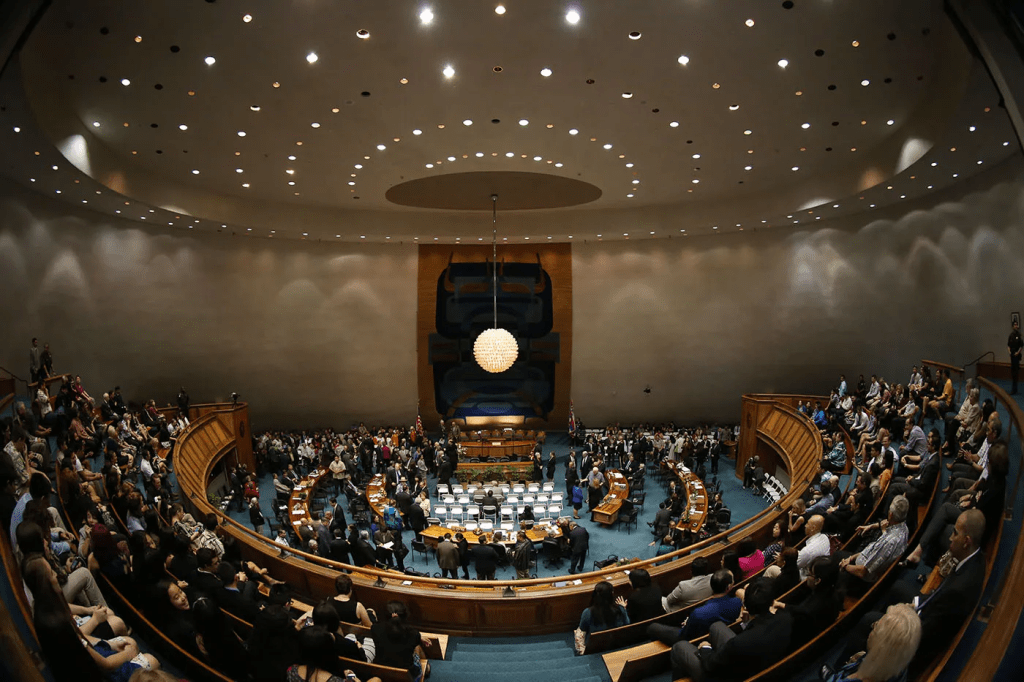
As the Hawai’i state contact for Women’s Declaration International (WDI), I’ve been actively engaging with state representatives to advocate for HB 207 and HB 268, two critical bills that would protect fairness in women’s sports by ensuring that female athletes compete on a level playing field.

These bills are essential to preserving sex-based categories in athletics, in line with Title IX and international women’s rights protections. Allowing male athletes to compete in women’s sports erodes the opportunities that generations of women have fought for.

I have submitted testimony in support of these bills, urging lawmakers to uphold fairness and protect the integrity of women’s sports in Hawai’i. If we do not act now, we risk losing these hard-won rights.

I encourage everyone who values fairness in competition to reach out to your representatives and voice your support for HB 207 and HB 268. No matter where you are from, you can join almost 40,000 people from 160 countries and 500 organizations by signing the declaration for women’s sex based rights here.


Hawaii House Bills 207 and 268, introduced during the 2025 Regular Session, both address the organization of school sports with a focus on sex and fair play.

House Bill 207: This bill proposes that school sports teams be designated based on sex, aiming to promote gender equality in athletics. The bill was introduced on January 16, 2025, and subsequently referred to the House Education (EDN), Judiciary & Hawaiian Affairs (JHA), and Finance (FIN) committees on January 21, 2025.

House Bill 268: Similar in intent, HB 268 requires the Department of Education to categorize athletic teams according to the biological sex. This measure was introduced on January 17, 2025, and referred to the same committees—EDN, JHA, and FIN—on January 21, 2025.

Trans Activist Taiwanese Politician Threatens To Release Addresses, Identification Numbers Of Women Who Oppose Gender Ideology

My newest piece out now on Reduxx


*Piece was originally published by 

REDUXX on October 29, 2024.

EDITOR’S NOTE: Due to Taiwan’s strict libel laws, trans-identified individuals who change their legal sex marker can sue for harassment and slander. As a result, the language in this article has been carefully chosen in order to protect the safety of the author of this important piece.

On October 19, a prominent transgender politician took to social media to harass and threaten women critical of gender ideology, and to target organizations advocating for the protection of women’s single-sex spaces.

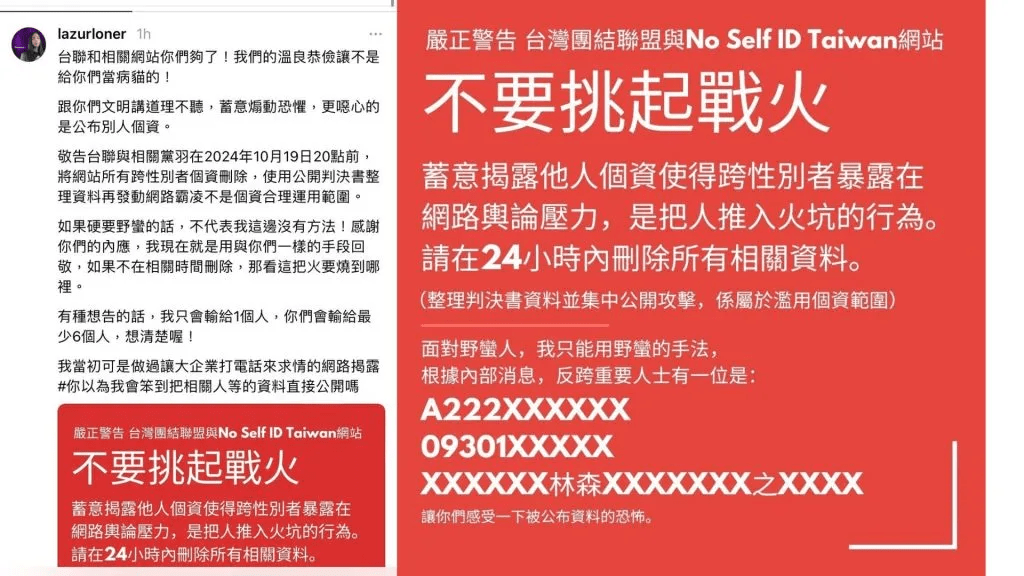
Abbygail ET Wu 吳伊婷, also known as Wu Yiting, threatened multiple female activists via social media for opposing gender ideology. Using both Facebook and Instagram threads, Wu, who is a representative of Taiwan’s Green Party, threatened to release information, including the identification number, phone number, and address of a private citizen associated with the organization No Self ID Taiwan (NSIDT).

Wu demanded the removal of content deemed “offensive” from the NSIDT website within 24 hours, while issuing threats of exposing private information. 

NSIDT was formed in 2021 to help track the progress of self-identification laws in the country, and to provide Taiwanese people with unbiased information from around the world on how gender ideology affects women and girls.

The organization has raised concerns over gender self-identification policies in the country, and have been documenting the emerging cases of males changing their legal sex markers in order to gain access to women’s spaces.

Using publicly-available information from both the mainstream media or court cases, NSIDT found that Taiwan has permitted 7 known cases of sex self-identification. But after the page documenting these cases came to Wu’s attention, the trans activist began to issue chilling threats to release the personal information of members associated with the group unless they deleted the page.

In a post to Facebook, Wu gave NSIDT 24 hours to remove the content, and leaked semi-redacted information demonstrating Wu had the personal identification number, address, and phone number of a female activist associated with NSIDT.

Wu’s post reads:

“According to internal reports, an important individual who is anti-transgender is one of the following:

A222XXXXXX [ID number]
09301XXXXXX 
[Phone number]
林森XXXXXXXX之XXXX 
[Address partially redacted
]

Let them experience the fear of having their personal information exposed.

f you don’t delete the information within the specified time, let’s see who this fire burns next. If you’re brave enough to sue, I’ll expose information of about at least 6 people for every 1 person you file against. Do you understand now?

At first, I was making big companies call me to apologize, requesting me not to expose their internal details. Did you think I wouldn’t directly expose the related parties’ personal information?”

In the comment section of both the Facebook and Instagram Threads posts, Wu claimed to have been contacted by a middleman to “negotiate” a way to diffuse the situation, but stated that the negotiations would not be posted publicly. 

NSIDT confirmed that no one from their organization has contacted or has been in contact with Wu with regard to the post. 

Wu, a trans-identified individual who has legally changed their sex marker to female, is a self- described insurance consultant and information security engineer by profession.

During the 2024 Taiwanese legislative elections, Wu made international news as the first openly transgender person to run for a Legislative Yuan seat on the left-wing Green Party Taiwan’s party list ticket.

Despite a crushing election defeat, Wu vowed to continue fighting to pass self-ID laws by working to “eliminate the burden of undergoing sex-change surgery placed on those wanting to legally change their gender.”

Wu has also spoken out against requiring “gender reassignment surgery” for identification changes, saying: “I think surgery is a myth… They will find out, why do you still look like a boy after surgery? In fact, what makes you look like a girl is your gender expression and temperament… the surgery is really meaningless.”

Wu has a history of relying on the tactic of “doxxing” and exposing personal information online to intimidate opponents of gender ideology.

In April of 2024, Wu posted a video on YouTube with photos of LGB Alliance Taiwan representative Nick Yao, titled: Revealed – The leader of Taiwan anti-trans movement. Yao, a former Trees Party member, has been a vocal activist for years within the gay community and has even been a public supporter of trans rights, but does not support self-identification policy being enshrined in law and believes women and girls require single-sex spaces.

Green Party Taiwan was contacted for comment on Wu’s behavior and the potential consequences it has for civilian safety, but did not respond.

Flushing Equality Down the Drain: How ‘Inclusivity’ is Costing Women Their Bathrooms in Taiwan

Taiwan follows the Western trend of embracing anti-woman stance of gender identity ideology


Originally published on 4W on October 7th, 2024, and also available to read on my Substack.


As I walked through the bustling Wanhua District of New Taipei, the rain began to fall, casting a gray hue over the cityscape. Amidst the typical urban hustle, something caught my eye that embodies a growing issue affecting women worldwide—the silent disappearance of women’s only spaces, including restrooms, under the guise of inclusivity.

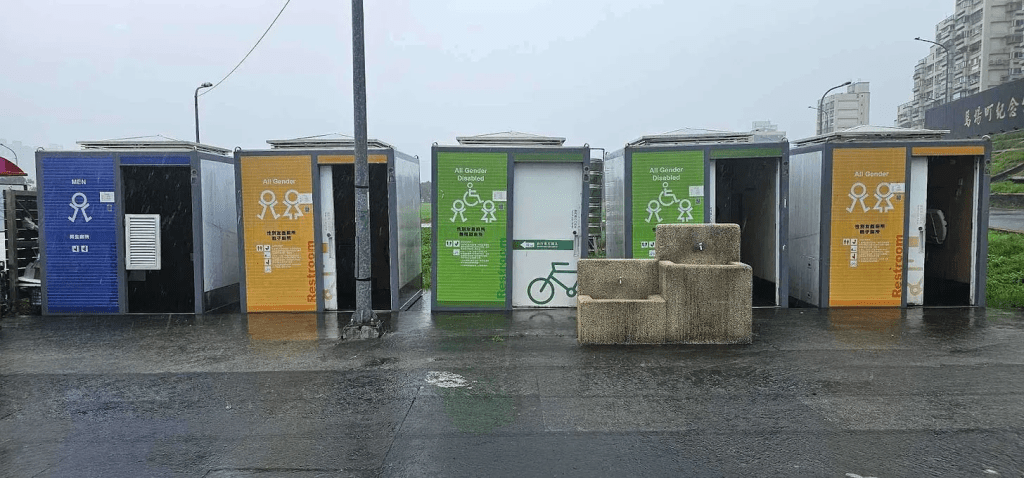
A row of restrooms, standing stark against the rain, proudly displayed signs that offered options for men, and for “all genders.” Noticeably absent? Any restroom specifically designated for women. Men retain their dedicated space, yet women are seemingly lumped into “all gender” categories, erasing our autonomy and privacy in one fell swoop. This unsettling trend is one that I’ve encountered more frequently in Taiwan, as it becomes the norm in Western countries that Taiwan seeks to emulate.


For years, women’s toilets have been a place where we could take refuge, gossip with friends, handle period mishaps, or escape unwanted attention from men in bars. Not anymore. Now we are seeing the consequences of militant gender ideology, imposed without consultation or consent.

Throughout Taiwan, as the country follows the Western trend of embracing the anti-woman stance of gender identity ideology, I have seen organizations proudly proclaiming their inclusivity and progressive values by removing female restrooms and making them “for all genders”. Data from the Taiwan Ministry of Environment show there are more than 46,000 public restrooms nationwide, found throughout 12 types of venues including public enterprises, tourist sites, traditional food markets, bus and train stations, and public parks. The Ministry of Environment said it is to invest NT$280 million (US$8.76 million) over the next four years to double the number of gender-neutral public bathrooms nationwide. We are witnessing the erasure of women’s single-sex toilets in Taiwan in real time.

In one district of Taiwan, officials brag that in a restroom converted for use by men and women together, “menstrual products are also available in the toilets to eliminate menstrual poverty and menstrual stigma.” Let’s be real; very few, if any, grown women would opt for the option of using a public restroom with men, let alone accessing menstrual products with men present. Under only the most dire of circumstances would a girl, having her period and in need of hygiene products, feel comfortable getting those products and using them in a space also used by men.

In fact, this issue is notably prevalent in schools across the UK, where many schools have replaced their single-sex toilets with gender-neutral ones. In many cases, girls have expressed fear of using these facilities due to concerns about harassment from male students. Alarmingly, doctors have reported that female students have developed medical issues, such as infections, as a result of avoiding the use of gender-neutral toilets.

I have found in Taiwan that the men’s restrooms are often left intact, while it is the women’s restroom that is modified, changed into a “gender neutral” space, effectively making it yet another male restroom.

Photo taken in Taipei, Taiwan. Can you find the women’s restroom?

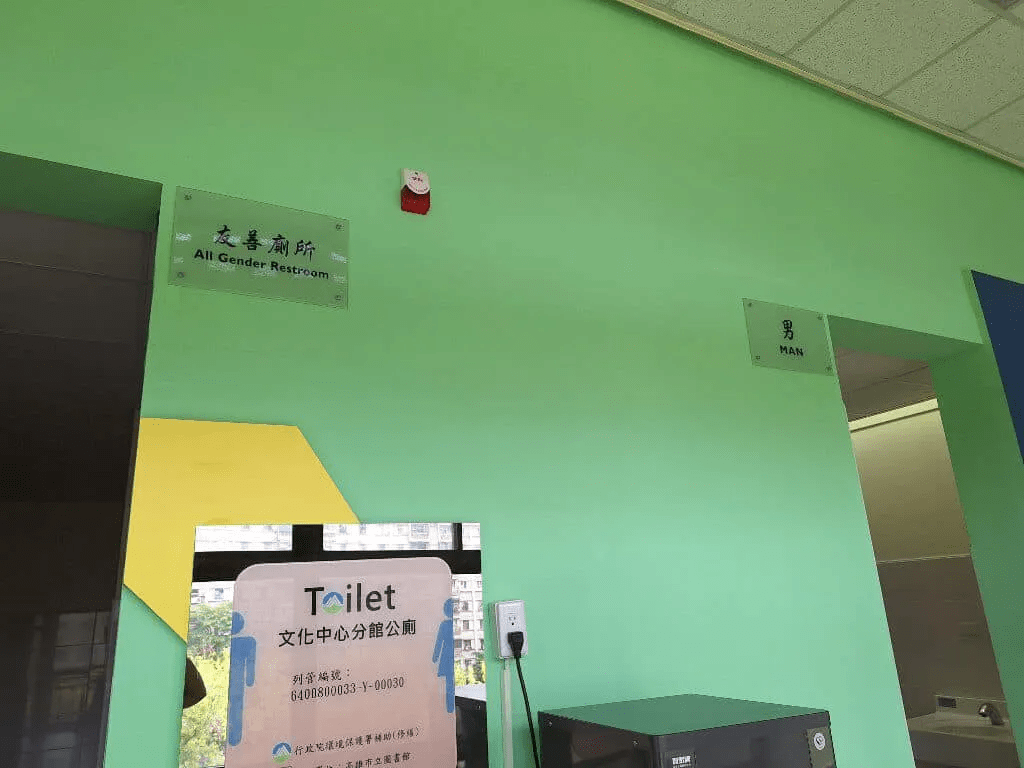
Photo of the men’s and the “All Gender” bathroom options at the Kaohsiung Municipal Library and Cultural Center Branch.

This is not progress; it’s a step backward dressed up in progressive rhetoric. As men’s restrooms remain untouched, women’s restrooms are becoming the battleground of “inclusivity”.

What does the law say?

In Taiwan, there is no formal law governing the implementation of gender-neutral toilets, leaving the regulation of public restroom spaces somewhat ambiguous. While there are specific codes outlining the ratio of male to female toilets in certain public buildings, such as schools and train stations, the term “toilet” in these regulations refers only to the fixture itself (urinals or stalls) rather than the entire restroom space, which traditionally separates men and women.

For example, buildings like train stations and schools require a ratio of one male toilet stall for every five female stalls (a requirement as of 2006), while government buildings must have a one-to-four ratio. However, local authorities can override these requirements based on specific conditions. This flexibility has led to confusion and loopholes, particularly concerning gender-neutral restrooms.

The issue arises because no law in Taiwan explicitly guarantees single-sex spaces in restrooms. Why? Because restrooms were always single-sex, they were considered commonsense, a non-issue, a no-brainer. As a result, many restrooms, especially female ones, are being converted into gender-neutral facilities, leaving no legal grounds to contest the changes. Despite the push by some local municipalities to adopt gender-neutral restrooms, these efforts are based on non-binding “guidelines” rather than laws or executive orders.

The absence of clear regulations has created a situation where women’s restrooms are often repurposed under the guise of progressiveness, without legal recourse for those opposed to losing access to single-sex spaces.

What’s the big deal?

Radical gender activists often use the argument that they ‘just want to pee’. They say that either trans-identified males should be allowed into women’s bathrooms, or that gender-neutral facilities should be standard. They claim that the reaction from many women against gender-neutral bathrooms is overblown.

But I’m pretty sure that in Taiwan, women just want to pee, too.

Women use the bathroom more frequently than men do, in part because of biological differences between male and female urinary tracts. Women have a higher occurrence of UTIs, and women are the only sex who breastfeed children and often want to do this away from the sightline of men. Menstruation requires a level of privacy and sanitation that is often compromised in gender-neutral spaces, where the presence of males can lead to discomfort or even a lack of essential facilities like disposal bins for sanitary products. Additionally, single-sex restrooms provide a safer and more comfortable environment for women who may feel vulnerable in mixed-sex spaces, especially in public areas or during high-traffic periods.

Women are cleaner than men. We all know this is true, and I would be loath to share a public restroom with men. Women do not stand and aim at the toilet but rather sit on a seat (if it’s a Western style toilet). More than half of all men don’t even wash their hands after using the bathroom. I do not want to share a bathroom with men. And it may be a surprise for you to learn that “gender neutral” bathrooms are dirtier than either men’s or women’s restrooms.

Safety is a huge concern for women in spaces shared with men. Digital sex crimes and voyeurism have become a growing problem in Taiwan in recent years, especially in public toilets and spaces modified to be “gender neutral”. Pinhole cameras, some as small as fingernails, have been used to record and disseminate photos and videos of people secretly filmed. Most of the victims are women and girls.

Female students at Sun Yat-Sen University were secretly filmed in the bathroom of an “all-gender” dormitory.

male student from National Taiwan University was sentenced to three months in prison for secretly filming female classmates while hiding in “all-gender” restrooms. This could be why according to statistics collected by NTU, less than 20% of women use “all-gender” bathrooms on campus. Despite this, the university continues to provide female students with “all-gender” restrooms. Where are 80% of the female students on NTU’s campus using the bathroom? I don’t know, and I wonder if NTU cares?

26 year old man in Taipei made headlines after he was found to have secretly filmed more than 160 women and girls in Taipei and New Taipei City. Among his victims were girls as young as 13 and 14 years old. The majority of his spycams had been placed in women’s and “all gender” restrooms in various schools and universities in the city.

Predatory men like this would have free and open access to women and girls, anywhere and at any time, once they become “all-gender”.

Where Do Women Go?

The concept of a women’s only space, particularly in public restrooms, isn’t just about convenience—it’s about safety, dignity, and respect. Women have fought long and hard for rights that include access to private spaces free from male intrusion. Now, those rights are quietly eroding as society rushes to embrace inclusivity without fully understanding its impact on women. While gender-neutral toilets and changing rooms are becoming more common, most women do not prefer this option. When a woman or girl enters a women’s changing room or toilet, she has a reasonable expectation that the space will be shared exclusively with other females. She also expects service providers to uphold lawful single-sex policies that ensure her privacy, dignity, and safety. Women have the right to a space free from male presence.

By reducing women’s spaces to “all gender” facilities, we risk compromising these fundamental needs under the misguided banner of inclusivity, creating an environment where women’s safety and comfort are deprioritized.

Where does that leave us? Where do women go when our restrooms are transformed into spaces that we no longer feel safe in, or are reduced to a category labeled “all gender”? The answer is as uncomfortable as the reality women now face: we are left with fewer options, less protection, and a gnawing sense of erasure in the name of inclusivity and “progress”.

Discussing gender ideology in Taiwan with Róisín Michaux

What’s happening in East Asia? A lot more than you might realize! I spoke with journalist and host of Peaked, Róisín Michaux, on the agenda being pushed by gender pseudoscience activists in Taiwan.


After appearing in her global Google alert for “anti-gender” mentions—a term I hadn’t encountered before—I was contacted by Róisín Michaux, a journalist and women’s rights campaigner. What began as a planned 40-minute conversation turned into an hour and a half of engaging discussion about Taiwan, where I’m based, and our mutual commitment to defending women’s sex-based rights.

The article which brought me to the attention of Michaux was published by an independent news outlet in Taiwan, and named me as one of the island’s leading “anti-gender movement actors”. The article was sponsored by an American NGO, spawned by self-identified male lesbian “Susan” Stryker, a man notorious for, among other things, fighting to close a women’s single-sex service rape crisis center in Canada because it refused to accommodate males. This is just one example of the anti-female and anti-feminist organizations from the West that are pushing gender identity ideology in the country.

I hope you enjoy our conversation as much as I did, and take a look around my Substack for articles on what’s happening here in Taiwan!

Click here to listen!

Recently crowned Queen of the “anti-gender” movement in Taiwan,

Jaclynn

Join Me on Substack!

I’ve just launched a new Substack where I’ll be diving into fresh ideas, bold conversations, and untamed thoughts!

I’ve started a Substack of my own, thanks to the recommendation of all-around baddie and amazing journalist and women’s rights activist, Genevieve Gluck.

I have been told by many women’s rights activists and journalist friends that Substack is the way to go, so why not? I’m really enjoying the structure of Substack and the notes section, where I can update people on what’s happening in Taiwan and share thoughts and ideas. I don’t write nearly enough to expect to be paid with subscriptions, I have a dissertation to write! But the paid work I do will be posted here on my website and on Substack, and it’s a way to diversify and get a larger audience.

If you don’t know me, here’s a quick look at what I’m about:

Originally from Hawai’i, USA, now based in Asia, I’m currently pursuing a Ph.D. in philosophy while working in Taiwan as an adjunct professor. In addition to academic work, I work as a journalist and published writer across various platforms, and am an activist working in the field of women’s rights and gynocritical research.

Guest writer for Feminist Current, 4WPub, and No Self ID-Taiwan

Guest Speaker for the Women’s Human Rights Campaign

Taiwan 🇹🇼 and State of Hawai’i Representative for WDI – Women’s Declaration International

Co-founder and Board Member of the Taiwan Women’s Association 臺灣女性協會

On my Substack you can find:

✺ News and conversation regarding women’s rights, history, philosophy, and identity politics

✺ Interviews with women’s rights activists from around the world

✺ Original essays and published work

https://jaclynnjoyce.substack.com/

Think For Yourself – Beyond Buzzwords

You may have heard that facts don’t care about our feelings. While that’s true, the relationship between facts and our feelings is, well, complicated. Our emotions can guide our selection of facts in ways we’re often unaware of.

Most of our beliefs aren’t the result of logically evaluating evidence. Often we form our beliefs first, then our brains find the “evidence” we need to “prove” to ourselves that our conclusions are justified.

The more a belief fits with our worldview or values, or the more important it is to our identity or social group, the better we are at carefully selecting “facts” to support what we want to be true. The resulting overconfidence is unearned… and can interfere with learning.

Motivated reasoning and confirmation bias are powerful and can lead us to incorrect conclusions. Pay attention to your emotions: Do you want (or not want) something to be true? How would you feel if you were wrong?

If you want to align your beliefs with reality, to the best of our ability to do so, question your beliefs. If they’re true, they will withstand the scrutiny.

(I’m not an expert at this and don’t claim to be, but I think (I hope) I make an effort.)

One of the most insidious barriers to aligning our beliefs with reality is the widespread use of thought-terminating clichés. These are phrases designed to shut down debate and critical thinking, often by leveraging emotional triggers or social pressure. A prominent example is the slogan “transwomen are women.” While such statements are often presented as moral absolutes, they serve a more troubling function: they discourage any questioning or critical examination of the underlying assumptions.

Thought-terminating clichés are tools of intellectual laziness, used to end conversations before they begin. They reduce complex, multifaceted issues to simplistic, binary choices, which are not only intellectually dishonest but also corrosive to open discourse. By presenting these clichés as self-evident truths, those who use them effectively demand blind acceptance rather than thoughtful consideration. This approach stifles genuine inquiry and prevents us from engaging with the real-world complexities that these issues entail.

Moreover, these clichés often carry an implicit threat: to question them is to risk being labeled as bigoted, ignorant, or socially deviant. This creates an environment where people are afraid to speak up, even when they have legitimate concerns or questions. The result is a culture of conformity, where critical thinking is not just discouraged but actively punished.

If we are serious about aligning our beliefs with reality, we must actively resist the pull of these thought-terminating clichés. This means refusing to accept them at face value and demanding the space for honest, rigorous debate. It means being willing to ask difficult questions, even when they are uncomfortable or unpopular. Most importantly, it means holding our beliefs up to the light of scrutiny, no matter how deeply we might feel about them.

In a world increasingly dominated by slogans and soundbites, the ability to think critically is more important than ever. Don’t let thought-terminating clichés dictate what you believe. Challenge them, dissect them, and see if they hold up under the weight of reason. Only by doing so can we hope to engage with reality as it truly is, rather than as we are told to see it.