Boy Wins Medals in Hawaii Girls’ Track and Field, Awarded ‘Outstanding Athlete’

At Kea’au High School, half of the ‘girls’ relay team is now boys


This article was originally published on 4w and the outpouring of support for our female athletes in Hawai’i has been overwhelming. I woke up this morning to see my piece shared across platforms, over 1 MILLION views so far on X alone, thousands of shares, and it’s still spreading like wildfire. Thank you so much to everyone who allowed me to interview them, and for all of the organizations and individuals who are sharing the story.


Two boys have sparked heated debate across Hawaii after competing in — and winning — multiple girls’ track and field competitions. Lana Huff and Frankie-Lyn Mocilio were permitted to compete on the Kea’au High School girls’ track team because they “identify” as girls.

Lana Huff, who previously ran boy’s cross country as Brandon Huff, went from being ranked 72nd in the girls’ 200-meter race to number 19 in the state rankings all within one week. He won a medal for both the 200 meter and pole vaulting, and in the process took a state qualifying spot away from a female athlete. Huff ended the season as one of the top 24 female athletes in the State of Hawai’i, qualifying him for the state championships. Only 24 girls statewide can claim this honor thanks to their hard work and dedication — but, with Huff’s participation, that number goes down to 23 girls eligible for a spot.

Huff would have ranked 565th in the state for the boys if he hadn’t switched to the girls’ team.

Boys Now Make up Half of the ‘Girls’ Relay Team at Kea’au High School

Huff is not the only trans-identified male on the school’s team. He and his teammate Frankie-Lyn Molcilio (another male), make up half of the ‘girls’ relay team at Kea’au High School.

There is also a third male track athlete who identifies as “trans” at the same school. However, he has chosen to compete on the boys’ team — an option also available to Huff and Molicilion. Yet, they choose to compete with the girls where they can rank higher.

In November of 2023 Huff, a sophomore was awarded the girls’ ‘Outstanding Athlete’ accolade at Kea’au High School, and was lauded on the school’s Instagram page in a since-deleted post.

Huff’s rapid ascent to a top spot and state championship qualifying time within a week highlights the disparity between male and female athletes. Erika Manikis, a Hawai’i island resident whose daughter competed against Huff, believes there should be separate categories for male and female athletes.

“My daughter, a Waiākea High School vaulter, recently competed in the pole vaulting event at the BIIF championships,” Makikis told 4W. “She achieved a 4th place finish, while her competitor, a biological male identifying as a girl, took 3rd place.”

While Manikis respects that some students may be gender non-conforming, she knows that biological males still retain an advantage in sports. Although her daughter still qualified for states, she told me she believes the situation was unfair to the female athletes.

Huff (2nd) received a silver medal in pole vaulting at the BIIF championships.

Hawai’i Island track and field referee and retired coach Jordan Rosado told 4W:

“Almost everyone I’ve talked to seems to think it (boys in girls sporting competitions) is wrong. The powers that be don’t seem to be able to do anything about it. I’ve heard it said that they have to oblige them. Something about Title IX. I didn’t find out about this (males competing on the female teams) until the third or fourth track meet. When I found out I asked who they were, from what school, and no one would tell me. I figured it out by observation.”

Despite growing opposition to allowing males to compete on the female teams, Rosado says, “Many people are reluctant to share their views.”

Cynthia Montelone Leads the Push to Save Women’s Sports in Hawai’i

At the forefront of the pushback to stop this is Cynthia Montelone, a renowned American track athlete, particularly known for her achievements in the 400 meters. She is a World Champion in Masters athletics, a high school and Olympic coach, and a concerned mother and community member. Originally from Maui, Hawai’i, and now based on Hawai’i island, Monteleone has spoken out against the inclusion of trans-identified male athletes in women’s events, citing concerns about fairness and safety. “Many of the Hawai’i coaches and Athletic Directors are afraid to speak out. I am not afraid. Someone needs to have a voice for these girls”, Monteleone told 4W.

Both Cynthia and her daughter have been forced to compete against males in sports. At the 2018 World Masters Athletics Championships in Málaga, Spain Monteleone raced against Yanelle Del Mar Zape, a trans-identified male from Colombia. Monteleone narrowly defeated Zape by a few tenths of a second to advance to the final round of the 200-meter race. When Cynthia raised concerns about the fairness of a biological male competing in women’s events, USA Track and Field administrators advised her to remain silent, saying, “For your own safety, you might want to keep your mouth shut.”

Cynthia’s daughter, Margaret, at the time a sophomore at St. Anthony School on the island of Maui, faced a similar situation. Margaret competed against a biological male in a high school track meet, placing second behind the boy in her first and only meet of the season before COVID-19 interrupted the competitions. The student had previously been playing on the boy’s volleyball team.
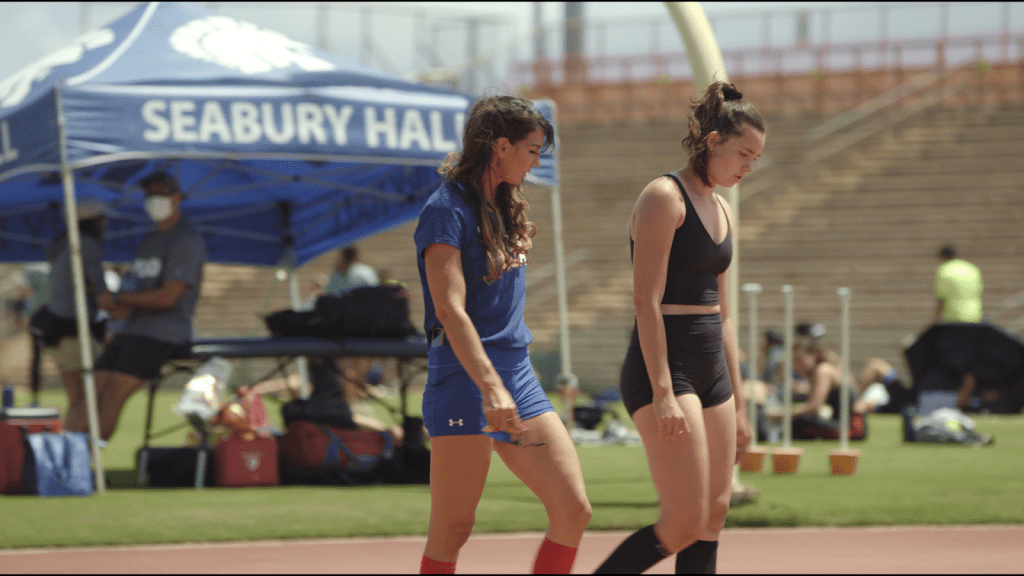
Photo: Cynthia and Margaret Monteleone (photo: Independent Women’s Forum/QuickFrame

Currently, Hawai’i High School Athletic Association (HHSAA) allows male athletes to simply self-identify into female competitions. HHSAA has no formal or written policy regarding trans-identified athletes competing, but they claim to follow The National Federation of State High School Associations (NFHS), the body that writes the rules of competition for most high school sports and activities in the United States. The NFHS advises sports organizations to create their own policies. Heading into the 2023-2024 school year, ESPN released an article regarding transgender athlete laws that stated, “The Hawaii High School Athletic Association has no discernible policy, and the state has no law. Bills that would prohibit transgender girls from participating in girls’ and women’s sports have been filed, but none has passed.” This is a loophole that no one seems to want to take responsibility for.

However, the Biden administration’s Department of Education recently introduced a new rule requiring schools to allow biological males who “identify” as female to compete in women’s sports. This rule undercuts the very purpose of Title IX, while also threatening Title IX funding for schools that fail to comply.

The principal of Kea’au High School, Dean Cevallos, has said that he is following the State of Hawai’i Department of Education policy which allows self-identification into female sports. Monteleone has had an active civil rights complaint against the Department of Education (DOE) since 2020,  which is still being investigated. The complaint states that DOE oversees HHSAA and is violating Title IX by discriminating against females.

In an interview with Island News on May 8th, Principal Cevallos was asked if he’s heard any complaints as a result of trans-identified athletes participating.

“I’ve never received any complaints, not to my knowledge”, he responded.

Left: Huff awarded track & field, Right: Dean Cevallos, Principal, Kea’au High School (photo: Civil Beat)

Monteleone, who has been vocal about her concerns for years, has shared with 4W two emails sent to Cevallos, dated May 1st and May 6th, in which she stated her concerns. Principal Cevallos did not respond to a request for comment from 4W.

Most people don’t realize how firmly the history of Title IX is rooted in Hawai’i. Congresswoman Patsy Mink, a twelve-term Member of Congress from Hawai’i, played a pivotal role in developing and defending Title IX. Mink fought for women and girls to have a place to safely showcase their unique physical abilities in a level playing field.

The principle of fair play, which is fundamental to competitive sports, is being challenged by what is happening in Hawai’i and across the USA. Historically, fair competition has been ensured by categorizing athletes based on various physical differences such as age and weight, and by separating sports into male and female divisions. On average, male bodies are larger, faster, and stronger than female bodies. Female sports offer women the opportunity to showcase their top physical abilities, which they would not be able to do in mixed-sex competitions.

In Hawai’i now, it appears that it is more convenient for athletic organizations to showcase men who identify as women as symbols of social justice, “diversity,” and “inclusion” rather than addressing the real issues faced by female athletes.

Girls deserve fair competition at every level in sport — and this can only be achieved in a category exclusive to female athletes based on sex.

If you’d like to express your concern over this issue, please email the HHSAA at: info@hhsaa.org

Court Approves First “Female to Male” Self-ID in Taiwan

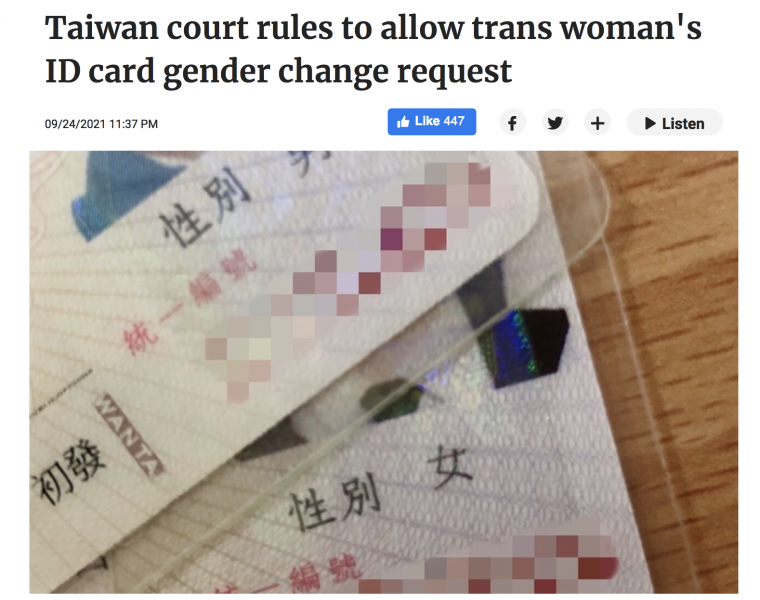
Photo above: Xiao E holding his former and updated national ID card


This article was originally published on 4WPub – ✍🏻 | paid writing for fearless women


Yesterday morning, the Taipei High Administrative Court announced that a female plaintiff, who sued the Department of Household Registration for denying her request to change her legal sex marker to ‘male,’ has been granted permission to make the change. This decision allows her to update her registration without needing any medical certificate or prerequisite surgeries. Traditionally, in Taiwan, changing an individual’s sex on a national identification card required applicants to provide a diagnosis certificate from two psychiatrists and a certificate from a qualified medical institution confirming the completion of gender reassignment surgery.

This  marks the second case of self-identification,  and first ‘female to male’ self-ID, in Taiwan.

The woman, living in Taipei, applied to change her registered sex from female to male two years ago. The Household Registration Office rejected her application because she had not undergone sex reassignment surgery. She filed an administrative lawsuit, becoming the first case in Taiwan where an individual sought to change their registration from female to male without surgery. Today, the Taipei High Administrative Court ruled in her favor, requiring the Household Registration Office to change her registration and identification to male. The decision can be appealed.

This is the second case of self-ID being allowed in Taiwan, the first having occurred on September 23, 2021, when the Taipei High Administrative Court issued a ruling allowing a trans-identified male calling himself “Xiao E (小E)” to change his legal sex to female without sex reassignment surgery.

During the recent elections in Taiwan, the country’s first trans-identified male politician, Abbygail ET Wu (吳伊婷) pledged to fight to remove the barriers of undergoing sex-change surgery placed on those wanting to change their sex legally. He argues for intact males to be able to change their sex marker on all forms of identification at will, and for them to be allowed into female spaces.

In 2022, scholars working at various universities across Taiwan conducted an online questionnaire survey, sought to understand the general public’s views on self-identification, meaning surgery-free change of legal sex,  in Taiwan. The questionnaire had a sample size of more than 10,000 people, and the survey report has been published in the academic journal Archives of Sexual Behavior. Poll results show that more than 90% of Taiwanese people strongly oppose changing someone’s legal sex without so-called sex reassignment surgery.

Those concerned about the encroachment of gender identity ideology have formed No Self ID Taiwan, the main organization leading the growing opposition movement against self-ID in Taiwan.

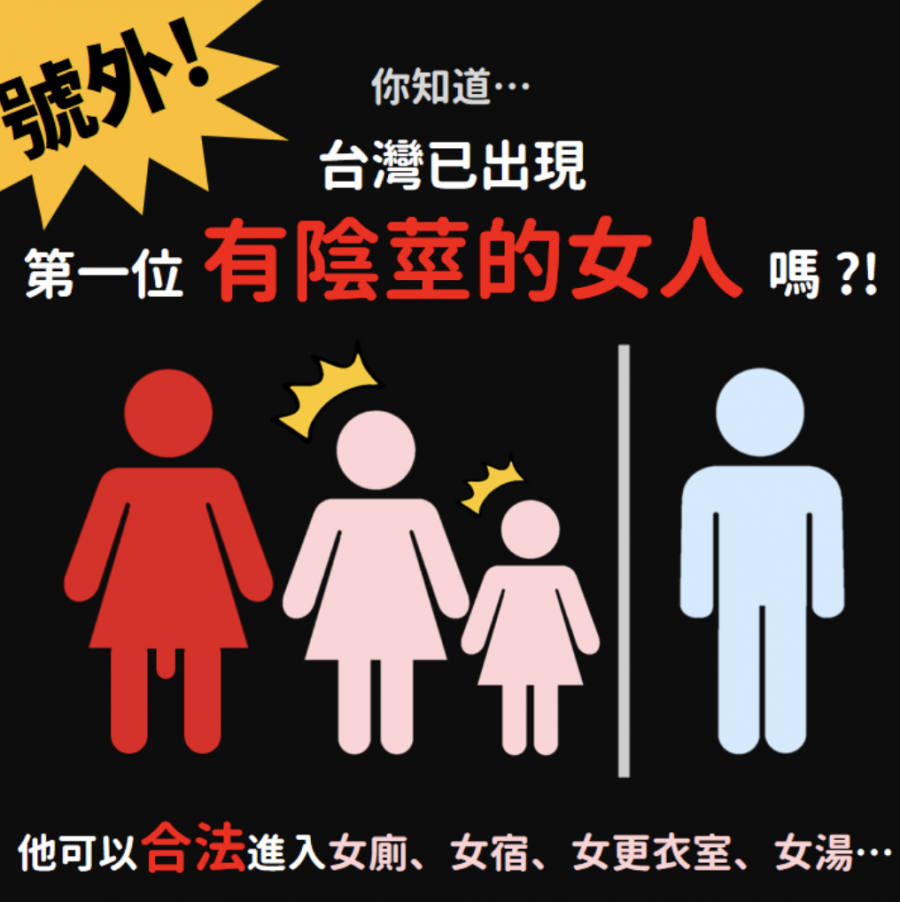
A flyer in Taiwan reads: “Did you know… The first woman with a penis has appeared in Taiwan? And he is able to enter women’s bathrooms, dorms, changing rooms, hot springs… etc.”


Jaclynn Joseph is a Hawai’i born — now Taiwan based — PhD student and university lecturer.

Joining the Heterodox Academy – Representing Academic Freedom in Taiwan

There can be no more vital issue for academics than academic freedom

I’m thrilled to announce my recent acceptance as a member of the Heterodox Academy. While you can submit an application to join as a representative of your university as either a student OR faculty (as a PhD student and adjunct professor at two different universities I am both), and I applied based on my faculty position here in Taiwan.

What makes this achievement particularly noteworthy is that I am not only among the select few to be part of this esteemed group but also only the second individual from Taiwan to have the honor. I’m excited to represent Taiwan and contribute meaningfully to this distinguished community of scholars from around the globe. Few issues are as crucial to academics as academic freedom. The foundation of the university system rests on the relentless quest for truth and the belief that questioning one’s own preconceptions is honorable and essential. When the freedom to openly discuss and debate ideas is restricted, the entire campus community suffers. Orthodoxy takes hold, empathy wanes, and students depart campus with diminished ability to think critically on important issues.

If you haven’t heard of it, Heterodox Academy is a non-profit organization founded by a group of professors and scholars with the aim of promoting viewpoint diversity, open inquiry, and constructive disagreement in academia. The organization was established in 2015 in response to concerns about the lack of ideological diversity and the suppression of dissenting opinions on (American) college campuses.

The core mission of HA is to encourage universities and colleges to embrace a broader range of perspectives and to create environments where faculty, students, and administrators feel free to express their ideas and engage in respectful debate. They advocate for policies and practices that support intellectual diversity, including hiring practices that prioritize diverse viewpoints, promoting free speech principles, and fostering a culture of openness and intellectual humility.

The organization provides resources, research, and support for scholars, educators, and institutions interested in promoting viewpoint diversity and constructive discourse. They also host events, conferences, and workshops to facilitate discussions on topics related to intellectual diversity, free speech, and academic freedom. They have communities set up so that you can connect based on geographical region or scholarly pursuits. I’ve just applied to join the East Asia community and will hopefully make some good connections!

A Conversation with Peter Boghossian

Educator, author, defender of free speech, and American philosopher visits Taiwan and sits down with us for a discussion on Taiwan identity politics


Who is Dr. Peter Boghossian?

Peter Boghossian is a passionate and incisive voice in the realm of critical thinking and skepticism. As an educator, author, and philosopher, his work shines as a beacon of intellectual rigor and inquiry.

Boghossian’s work extends to the broader domains of critical thinking and education. He emphasizes the importance of questioning received wisdom, challenging dogma, and fostering a mindset of skepticism and inquiry. He travels around the world, giving talks and doing Spectrum Street Epistemology sessions, spreading, as he says, the blueprint to push back against illiberalism.

“The blueprint has a two-fold aim: first, restore free speech and open inquiry as non-partisan values; and second, reveal the implications of far-left ideological takeover.”


His work

He has authored or co-authored several influential books that delve into themes of skepticism, critical thinking, and atheism.

In “A Manual for Creating Atheists” (2013) Boghossian presents the concept of Street Epistemology, a method for engaging with believers in constructive conversations about faith and belief. He outlines techniques for challenging the epistemological foundations of religious belief, aiming to encourage critical thinking and rational inquiry. Sitting on my shelf is a copy of “How to Have Impossible Conversations: A Very Practical Guide” (2019) , co-authored with James Lindsay. In this practical guide, Boghossian and Lindsay provide strategies for navigating difficult conversations, particularly on contentious topics such as politics, religion, and social issues. They offer techniques for fostering mutual understanding, maintaining civility, and finding common ground, even in the face of deeply held disagreements.

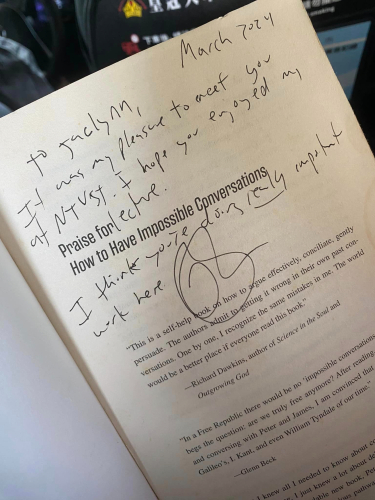
Dr. Boghossian was kind enough to sign my copy of How to Have Impossible Conversations

Boghossian was an assistant professor of philosophy at Portland State University. His resignation letter from PSU in 2021 was a significant moment that underscored the challenges facing academic freedom and free expression within higher education institutions.

In his letter, Boghossian outlined a series of grievances, primarily centered around what he perceived as a lack of institutional support for open inquiry and intellectual diversity. He criticized what he described as an “illiberal orthodoxy” that stifled dissenting viewpoints and punished those who dared to challenge prevailing ideologies.

One of the key incidents that led to Boghossian’s resignation was his involvement in a series of hoax academic papers, co-authored with Helen Pluckrose and James Lindsay, which were designed to expose what they saw as flaws in certain academic fields, particularly within the realm of gender studies. While the intention behind these papers was to provoke critical discussion about the standards of academic rigor and the influence of ideology within academia, the response from Portland State University and other institutions involved was met with criticism and condemnation, but the trio’s point was very clear. “Making absurd and horrible ideas sufficiently politically fashionable can get them validated at the highest level of academic grievance studies.”

Boghossian’s decision to resign was a symbolic gesture, highlighting his frustration with the university’s failure to uphold principles of free expression and academic freedom. He argued, correctly, that the stifling of dissenting voices and the enforcement of ideological conformity were antithetical to the core values of higher education. This idea in particular is one the things that I most strongly agree with in Boghossian’s work, and what garnered so much respect from me for his work.

The resignation letter sparked a broader conversation about the state of academic freedom and ideological diversity within universities, particularly in relation to controversial topics such as gender, race, and identity politics. It raised questions about the limits (should there be limits?) of academic inquiry, the role of ideology in shaping scholarly discourse, and the responsibilities of universities to foster an environment conducive to open debate and intellectual diversity.

While Boghossian’s resignation may have been a personal decision, one strongly encouraged by the constant harassment he received on campus from students clearly ill-equipped to deal with the real world, it served as a poignant reminder of the ongoing tensions within academia and the importance of defending principles of free expression and intellectual inquiry. It also brought much needed attention to the need for institutions to reevaluate their approaches to handling controversial ideas and promoting a culture of robust debate and critical engagement.


Giving us an international platform

I have been a huge fan of Peter Boghossian and his work for years, I’ve read his books and I enjoy his Street Epistemology sessions on his YouTube channel. As an educator I try to use the Socratic method in my classes and with my students, and I find Peter’s methods very useful. As a PhD candidate in philosophy and someone who fights against ideologues in Taiwan, I was floored when I found out that he was here. Taiwan?? None of the great critical thinkers and philosophers I admire ever visit Taiwan! Thankfully when I reached out to his team via his website, explaining the work we do in Taiwan, and I received a quick response. Yes, he and his are team were on the island to interview people, do Spectrum Street Epistemology, appear on shows, deliver lectures at universities, and conduct public events.

After attending one of his talks in Taipei, and getting to meet Peter face to face, I was able to explain the important work that we do in Taiwan. I am a guest speaker and panelist for the Women’s Human Rights Campaign, and the Taiwan country representative for WDI – Women’s Declaration International. I help run two organizations in Taiwan fighting gender ideology and protecting the sex-based rights of women and girls.Noselfidtw.cc is the first website in East Asia to be written entirely in English (and the only such website in Taiwan) and dedicated to pushing back against gender ideology, protecting women’s sex based rights, and tracking changes in the law regarding self-ID. This movement against gender ideology was sparked in part by Feminist Current.
My original article remains the only one written in English by someone living in Taiwan addressing what is going on within the country and demonstrating opposition to self-ID legislation.

After a year of organizing, myself and a group of dedicated activists have founded Taiwan’s first gender critical, female-centric organization — Taiwan Women’s Association (TWA/Chinese 臺灣女性協會) — which has been officially recognized by the government. Many in Taiwan were disappointed in the lack of action by feminist organizations here, and such organizations have conformed to “gender mainstreaming” and openly support the inclusion of males in female spaces. TWA is the only gender critical, non-partisan, nonprofit that engages in legal arguments and policy advocacy to protect, advance, and defend women’s rights.

After years of watching Peter interview some of the “greats”, including Richard Dawkins, Helen Joyce, Kathleen Stock, and more, I was asked to be interviewed by Boghossian and his team on our work in Taiwan. With a YouTube channel with nearly 200k subscribers and a global following, this was huge! The world would get to hear about our work in Taiwan!

And I have to be honest, I am not much of a public speaker. Especially when confronted with someone I have been a fan of for years. I was so nervous! Luckily my friend and brilliant colleague, Neo Yang, agreed to be interviewed with me. Neo is a passionate activist in both the field of LGB and women’s rights, and the head of our new organization TWA.

How did the interview go? Being interviewed by Peter Boghossian feels like being at the ultimate intellectual concert! It’s a thrilling rush, like meeting your favorite celebrity, except instead of swooning over a pop star, you’re geeking out over profound ideas and engaging debates. It’s a thrilling experience knowing that you’re sharing your thoughts with someone respected for their insightful questions and understanding adds an extra layer of satisfaction to the experience. Peter is a humorous man, cracking jokes, and his interview style is causal. For such a brilliant man with a large following he is incredibly down to earth, receptive, and welcoming. He helped ease our stage fright immensely.

During our interview we discussed the encroachment of gender ideology in Taiwan, providing a timeline and a broad strokes guide as to when this started and how it is progressing. We were able to discuss our work pushing back against this harmful ideology through our various platforms and organizations, the threats we receive through the work that we do as activists, and our continuing push forward as we seek to promote, ensure, and defend the rights of women and girls using legal argument, policy advocacy, and public education. We are seeing a modern version of Taiwan’s authoritarian past, where trans activists and their supporters are vilifying, ostracizing, and blackballing dissenters, and suppressing any information that contradicts their goals.

But thanks to this interview we will have an international platform to showcase our work and get our message out. That we socially progressive members of the community want to challenge our local media to stop ignoring the need for open debate and unbiased coverage of self-ID laws and gender ideology (which has been thoroughly one-sided to date).

Like many organizations around the world have done, we will be fighting back in Taiwan. Thank you to Peter Boghossian for his support and giving us such an amazing tool to get our message heard by the masses.


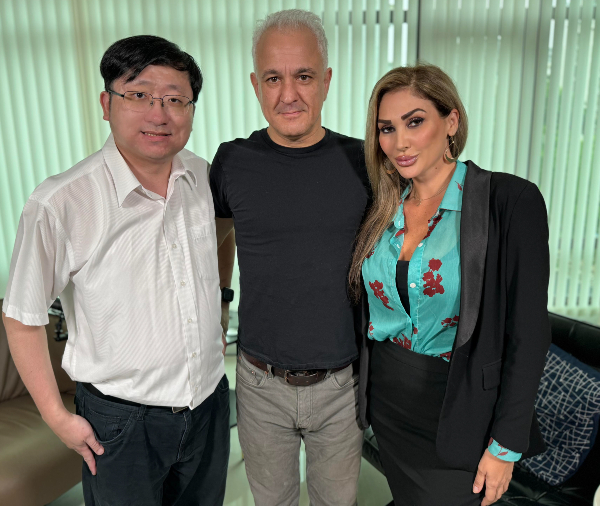
My colleague Neo Yang, with philosopher Peter Boghossian, and myself at our interview in Taipei.


Exploring the World, Giving Back: How to Make a Difference While Traveling Abroad

In my carefree 20s, traveling was all about me. It was about the sights, the experiences, the thrills. I didn’t spare much thought for giving back or making a positive impact on the places I visited. Sure, I might have dropped a coin in a donation box (to be fair, in my 20s I didn’t have a lot of coin to spare!) at a museum or bought a souvenir from a local artisan, but beyond that, my travels were largely self-centered adventures.

I reveled in the freedom of exploring new destinations without the burden of responsibility. Volunteer opportunities or community engagement projects seemed like distractions from my ultimate goal of self-discovery and adventure. The idea of spending precious travel time working on something other than my own enjoyment felt foreign and unappealing.

As I journeyed from one place to another, I encountered various cultures, landscapes, and people. Yet, I remained largely detached from the communities I passed through. I was a transient observer just flitting from one experience to another.

But as the years (decades) passed and I grew older, my perspective began to shift. Perhaps it was a natural maturation process or simply a deeper understanding of the world around me. I started to realize the privilege I held as a traveler and the impact, both positive and negative, that my presence could have on the places I visited.

As travelers, we often seek enriching experiences, cultural immersion, and adventure when exploring foreign lands. But amidst the excitement of discovering new places and meeting new people, there’s a profound opportunity to give back to the communities that welcome us with open arms. Traveling abroad offers a unique platform to contribute positively to the places we visit, leaving a lasting impact beyond our footprints in the sand. 

Nestled in the heart of Southeast Asia, Laos (officially Lao People’s Democratic Republic (Lao PDR)) beckons with its serene landscapes, rich cultural heritage, and warm hospitality. This Lunar New Year I was lucky enough to have Laos be the 38th country I’ve visited. As you embark on your journey to explore this beautiful land, consider how you can make a meaningful difference in the lives of its people and the preservation of its natural wonders. This is not an exhaustive list, merely some ways to give back that I discovered while traveling in Laos.


Education and Empowerment:

In rural areas of Laos, access to education can be limited. Consider supporting initiatives aimed at improving educational opportunities and services for local communities. Organizations like the Lao Disabled Women’s Development Center work to empower women through vocational training and healthcare support. While walking around Luang Prabang I happened to meet the owner of a charming boutique shop called Lala Laos. His shirt designs on display were so unique compared to anything else that I had seen, and I had to step into the shop and take a look. I made a purchase and in the process uncovered his story. 

The owner, Sithong, pictured above, explained to me that his life’s work is dedicated to helping girls receive secondary education in Laos, with help from donations abroad and through money raised in his shop where he prints his own one of a kind shirt designs. One-third of all girls in Laos are married before they are 18 years old, and few are able to afford to go to secondary school. Girls in smaller villages especially are not expected to finish primary school. Cultural norms that are inclined to males, poverty, racism and discrimination against ethnic groups, and a general lack of attention given to girls’ education all contribute to this. The owner and his wife are putting five girls, and his niece who they are raising along with their own children, through school. They built a dormitory, provide the girls all of their meals, their school fees, and provided them all with bicycles. In 2019 they officially created a non-profit foundation called, Do The Kindness. He hopes they can continue to expand and help more girls in the future, and you can help them by donating here

Engage in Wildlife Conservation:

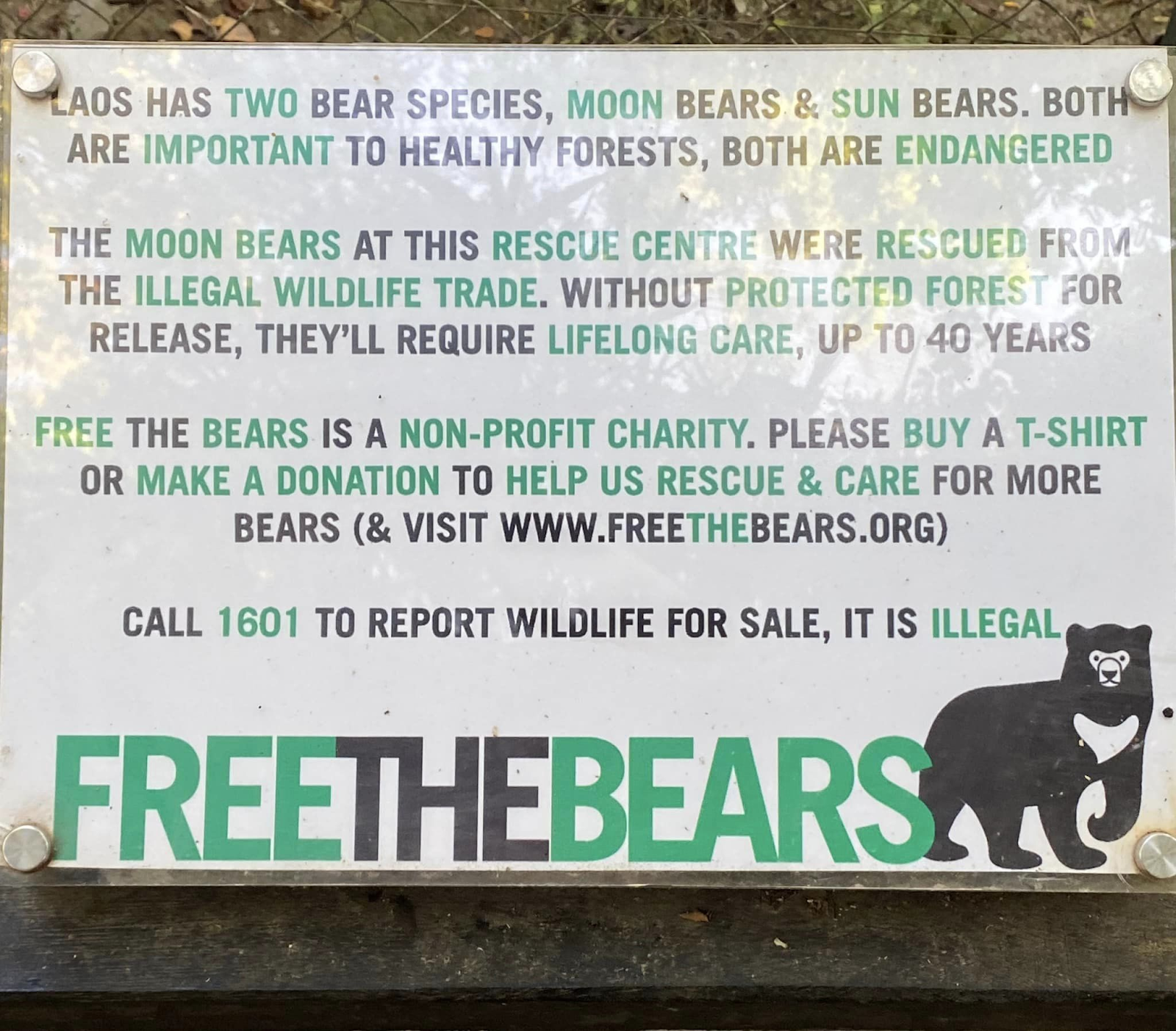
Laos is home to beautifully diverse wildlife and ecosystems, but these natural treasures face threats from poaching, habitat loss, and illegal wildlife trade. Support wildlife conservation efforts by visiting ethical sanctuaries and rehabilitation centers like the Luang Prabang Wildlife Sanctuary. Here, you can learn about efforts to protect endangered species such as gibbons and sun bears while contributing to their welfare through responsible tourism. While in Luang Prabang I was able to see some of the bears rescued from the horrific bile farming industry playing together, enjoying the sun, and happily living a life outside of a cage. I purchased a shirt and made a donation to their cause, and you can too!

Remember, it’s never ok to ride an elephant, hug a tiger, visit a circus with performing animals, or support the animal tourism industry in ways that hurt animals. Living the expat life in Asia for the past fifteen I have unfortunately seen just about every form of animal abuse on my travels. If you find yourself somewhere when you are guaranteed you can ride, hug, or take a selfie with wild animals you are aiding that animal’s suffering. The truth is that many of these animals are kept in appalling conditions, beaten to submission, caged, and looked after by (most of the time) inexperienced and poor locals just trying to put food on the table, not a zoologist or scientist. We all want to interact with wild animals, but don’t be that arsehole on social media with a photo hugging a drugged tiger or riding some beaten down elephant. 

Contribute to Local Economies:

Support the local economy by purchasing goods and services from small businesses, artisans, and street vendors. Invest in locally-made souvenirs, handicrafts, and artisanal products rather than mass-produced items. By choosing to spend your money locally, you directly support livelihoods and contribute to sustainable economic development within the community. I met a lot of very friendly people in Laos, in fact it was one of the friendliest countries I’ve been to, and the locals I spoke to told me that despite the huge increase in tourism from neighboring China (trains were built connecting the two countries in 2021), Chinese tourists do little to help the local economy. Many Chinese tourists are coming, but the problem is that most of them will not stay at Lao guesthouses or hotels, my local acquaintances informed me. Most of them use their own services, and stay at hotels and use tours run by other Chinese. They even have their own tour guides, and only eat at Chinese owned restaurants, with little benefit seen by Laos residents themselves. 

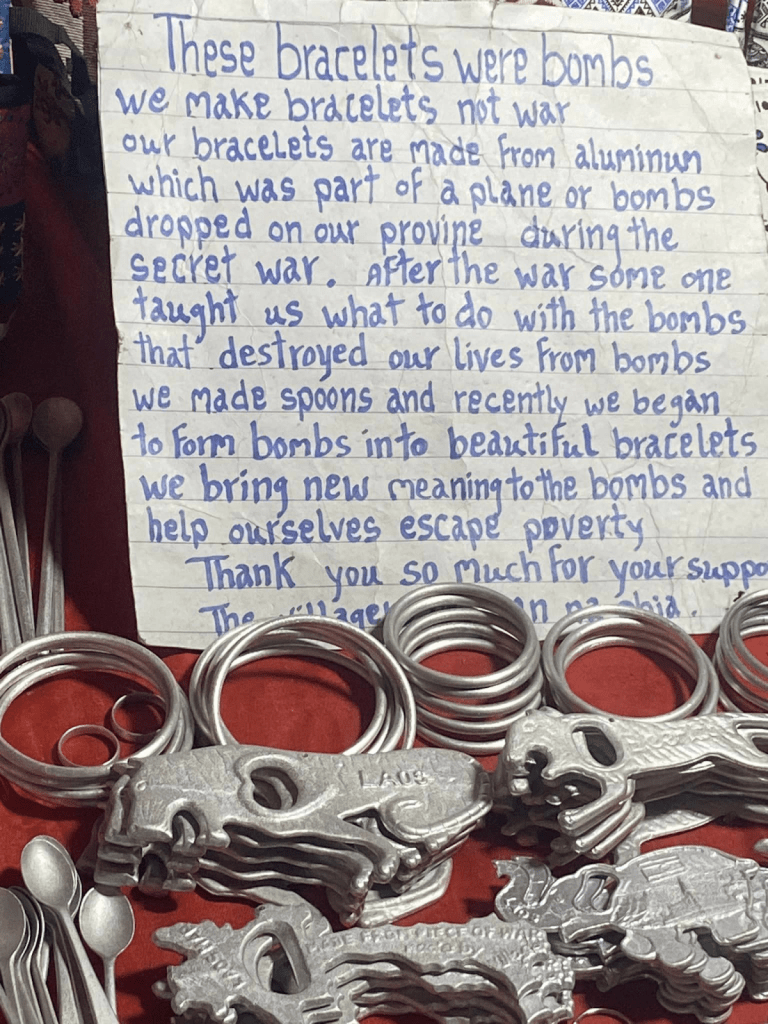
As gifts for friends, while keeping in mind that I was traveling minimally with just a backpack, I purchased many of the keyrings made from the aluminum leftover from the bombs dropped on the country. More than two million tons of cluster bombs were dropped on Laos during the Vietnam war, making Laos the most heavily bombed country in history per capita. Unexploded bombs, which have the power to kill or cause horrific injuries, lurk unseen beneath the ground to this day. NGOs like TaiBaan works with about 15 village crafts groups numbering more than 250 women producers across ten provinces in Laos to produce items like these keyrings, beautiful scarves and throws, and more. 

Donate Blood:

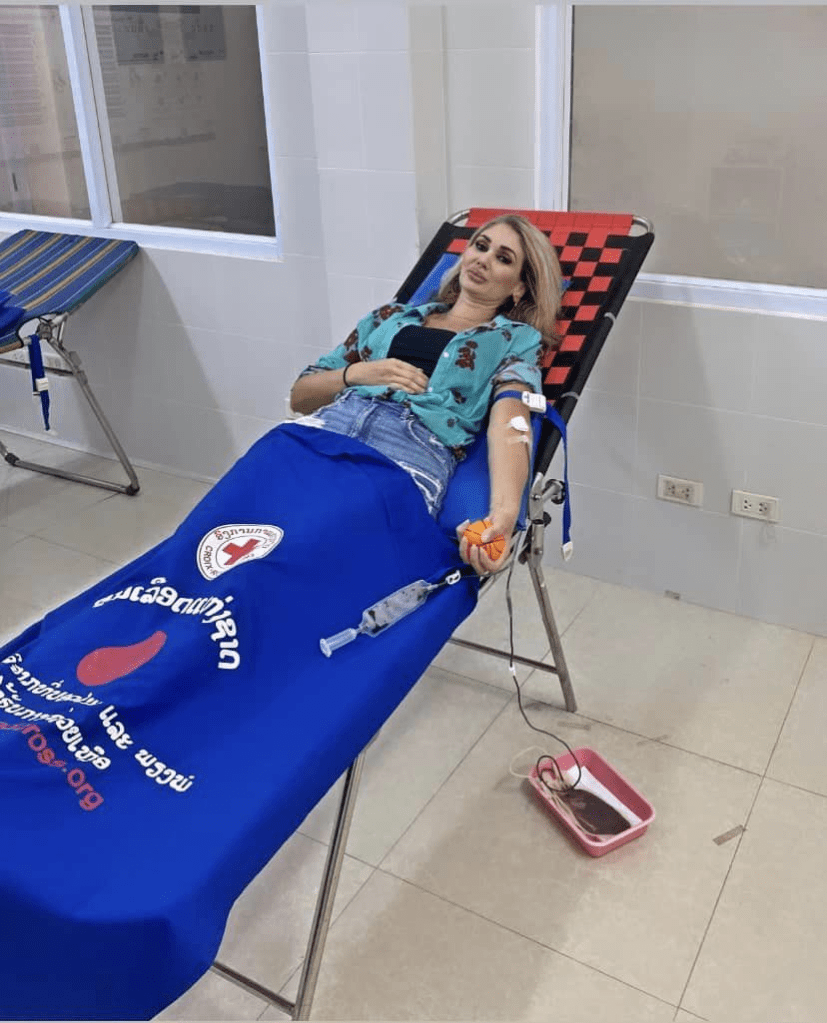
I donate often in Taiwan because my blood type is rare in Asia. Taiwan blood banks often don’t have my blood type, A-, in supply, so it’s important to donate every 3-4 months. I have never donated blood outside of Taiwan, not even in the USA where I am originally from, but a friend shared a Facebook post with me from a travel group showing requests for anyone going to Laos to donate. In Laos they are in desperate need of blood donations. People are dying here, literally, for lack of blood.

Lao Friends Hospital for Children treats 38,000 children annually and is the only free children’s hospital in Laos. I was the only person at the blood center the day I came in. They have children who need blood everyday for a variety of illnesses and emergencies. One of the main reasons they need blood is for their thalassemia clinic. Thalassemia is a genetic blood disorder prevalent in Northern Laos and Thailand. These children need blood transfusions once a month and they currently treat 200 children per month. (Not to mention all the other reasons why one might require a transfusion!)

As soon as I said I was going to go in to donate (contacted via FB) they lined up my donation to go straight to a sick child. They asked me to tell anyone and everyone who comes to this gorgeous town to donate blood. They were very kind, an English speaking rep from the hospital chatted with me the entire time (I got to tell him about Hawaii and Taiwan, he got to tell me all about his life in Laos!), and I got a lovely goodie bag and transport back into town. It’s not for the faint of heart, but if you’re able to then please consider donating blood. In Laos they are more relaxed about who can donate, so if you’re not able to donate in Taiwan you may very well be able to donate there. Contact them to check! And make sure to rest and hydrate properly afterwards. I’ll be honest, I didn’t take proper care of myself after making a 500ml donation (that’s 10% of our total blood volume!), and I got very ill. It was my fault entirely, and it left me a wreck. But if you take care of yourself before and after the donation process you’ll be just fine!

Volunteer with Local NGOs:

Laos boasts numerous non-governmental organizations (NGOs) dedicated to education, healthcare, environmental conservation, and community development. Organizations like Big Brother Mouse welcome volunteers to assist with English teaching in rural schools, library programs, and sustainable agriculture projects. I had planned on attending one of the two daily English speaking sessions led by Big Brother Mouse, but due to my own negligence and not taking care of my health after giving blood, I was too ill to go. Happily, every time I walked by the head office I saw it was packed with foreigners donating their time to speak with Laotians and help them improve their spoken English! If you’re in Luang Prabang, you can help young adults practice English conversation, daily 7 days a week at 9:00 a.m. and 5:00 p.m. They’ve also published over 400 books since 2006, their first batch of books aimed at helping children learn to read. Now they’ve published on a wide variety of subjects, from women’s health to the countries of ASEAN, from traditional fairy tales to the diary of Anne Frank. You can purchase bilingual books in Lao and English to take home as gifts, found at their shop and in the Luang Prabang night market. Find out more about how to volunteer with them here.


Today, as I reflect on my younger self’s indifference towards giving back while traveling, I recognize it as a missed opportunity. But I am grateful for the evolution of my perspective and the realization that travel is not just about where you go, but how you engage with the world around you. And as I continue to explore new destinations and embark on new adventures, I do so with a renewed commitment to making a positive impact wherever I go.

You can use your platform as a traveler to raise awareness about important issues facing Laos, or any country that you visit. Share your experiences and insights through social media, travel blogs, or by supporting advocacy campaigns led by local organizations. I am happy to say that by simply posting in a Taipei based women’s group on Facebook I was able to get three people to go and donate blood while vacationing in Laos. That may not seem like much, but to the children in dire need of transfusions it is quite literally life saving. By amplifying local voices and shedding light on pressing issues, you can inspire others to take action and make a difference in Laos and beyond. With each act of kindness, each moment of meaningful engagement, you will find your travels enriched in ways you never imagined.

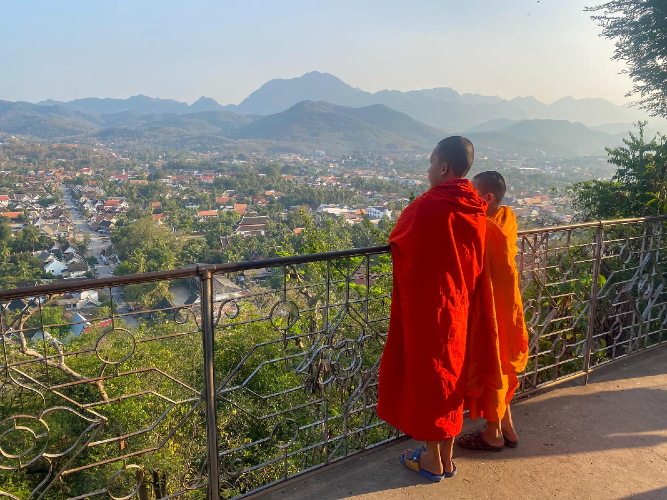
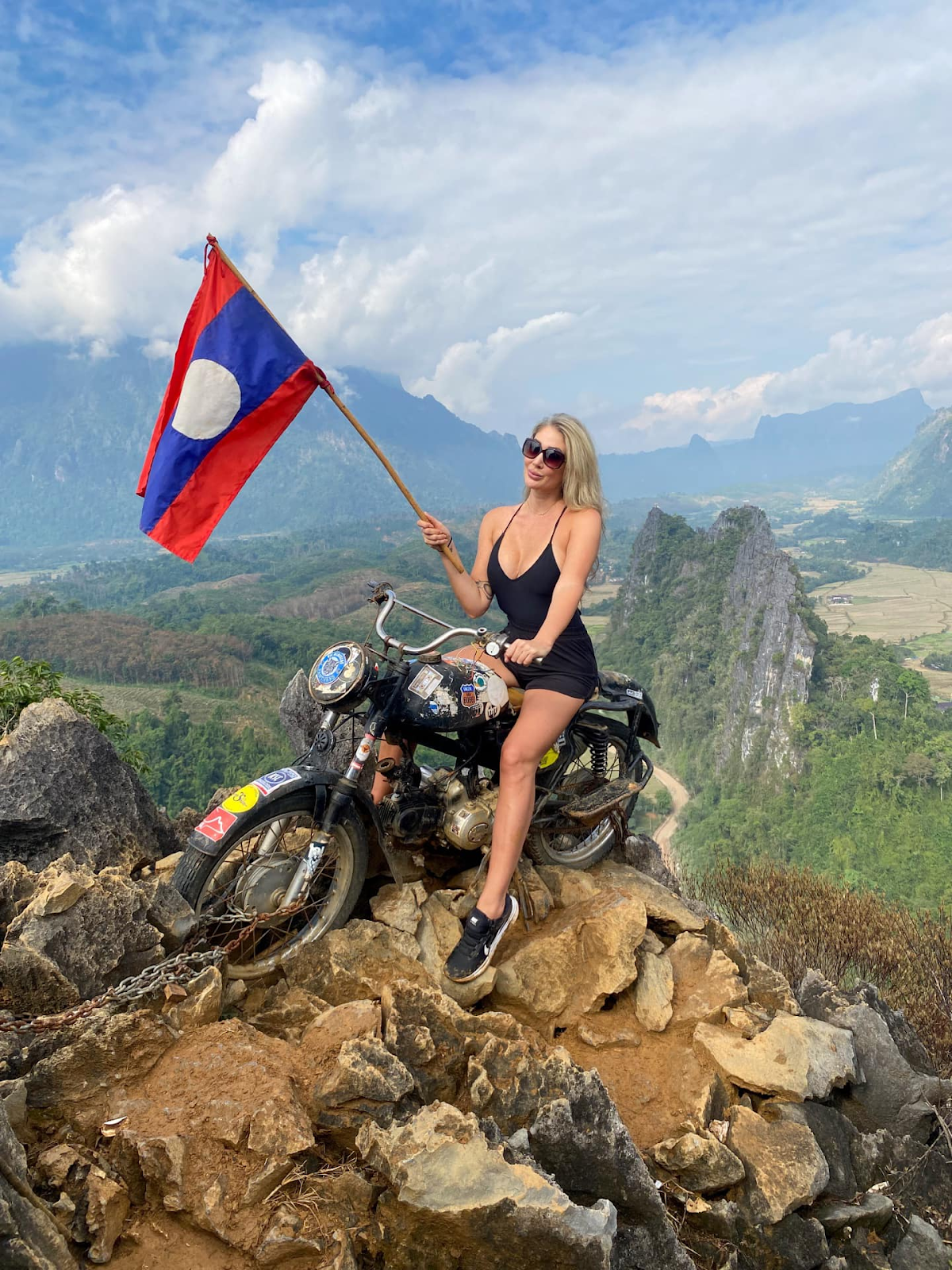
The author defying death on a mountaintop in Laos.

Taiwan Eyes Surrogacy Market

My newest article out now on 4WPub – ✍🏻 | paid writing for fearless women

On the heels of a presidential election, commercial surrogacy looms on the horizon here in Taiwan. A hot topic in the Western media, with celebrity couples seemingly popping up with a newly purchased baby every week on social media, Taiwan is ready to jump on the surrogacy bandwagon. Announced in December, the Ministry of Health and Welfare is poised to present draft amendments to the current Assisted Reproduction Act, anticipated by the end of 2024. These proposed changes are geared towards enhancing access to assisted reproduction and making all forms of surrogacy legal in the country.

During our recent presidential elections, surrogacy was a hot topic. During election debates, Taiwan People’s Party (TPP) presidential candidate Ko Wen-je made legalizing surrogacy a key pillar of his policy platform, highlighting the growing importance commercial surrogacy in the country.

Some women’s rights groups in Taiwan, have raised concerns that disadvantaged women might be exploited as surrogate mothers, or that legalizing the practice might reinforce the pressures on women to have children. The main concerns regarding surrogacy include: adequate protection of the surrogate mothers, as they face health risks from pregnancy; ethical considerations about using surrogates as a treatment tool for infertile couples; and the legal status of the child.


The Assisted Reproduction Act in Taiwan currently prohibits all forms of surrogacy. Despite efforts to amend the laws, as recently as 2017, such attempts have faced opposition from women’s and children’s rights groups, leading to unsuccessful outcomes. “A woman’s body is not a commodity or a tool. We oppose rich people exploiting poor women and buying them as surrogate mothers,” said Huang Sue-ying, chairperson of the advocacy group Taiwan Women’s Link.

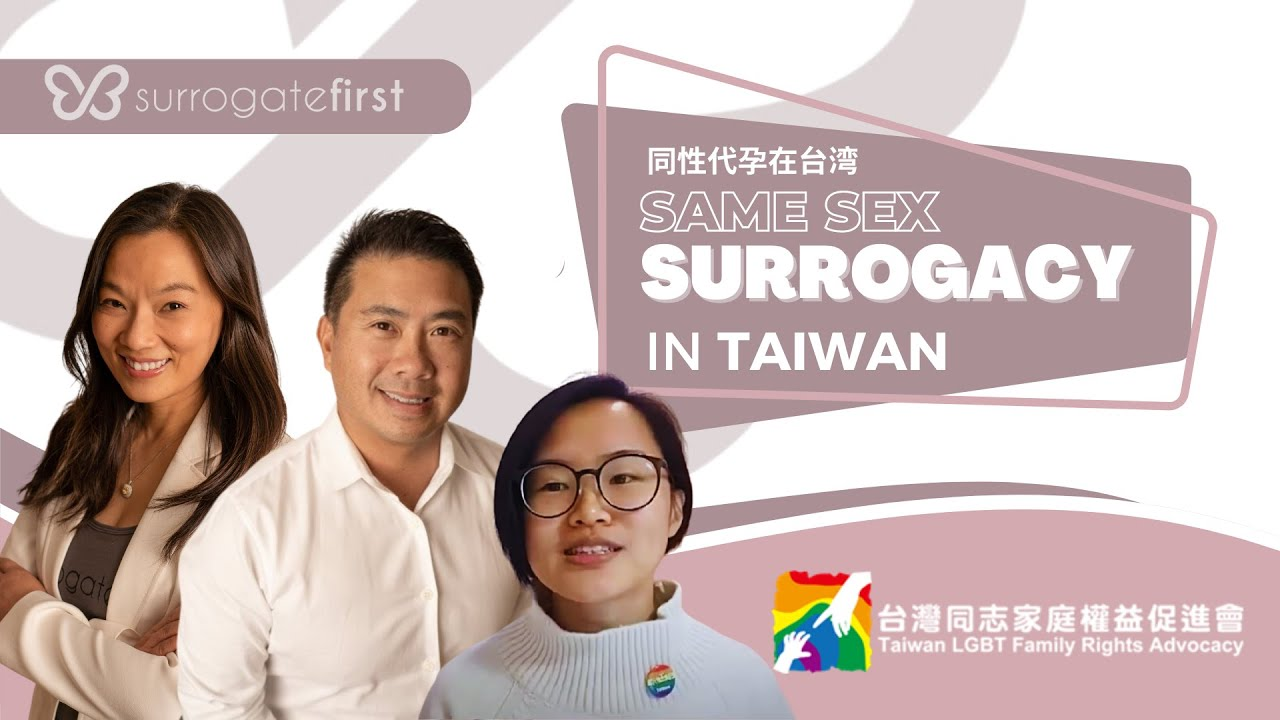
However, Taiwan emerged as a new and potentially explosive market for surrogacy after it became Asia’s first country to legalize same-sex marriage in 2019. This small island nation was bombarded by commercial surrogacy agencies who promised to help couples purchase wombs in exchange for a child of their own. And the potential for making money hand over fist is sure to overturn any ethical or moral opposition to female exploitation.

The initial valuation of global fertility services was approximately $21 billion in 2018, as the market research firm Data Bridge estimated. The industry is projected to experience significant growth in the next few years, reaching an estimated worth of $41 billion by 2026.

American surrogacy agencies have flooded into Taiwan after the legalization of same-sex marriage four years ago. While commercial surrogacy is still illegal here, the agencies work around this by arranging IVF and surrogacy in the relatively unregulated United States. The average cost of purchasing a child? Around 140,000USD, which is nearly ten times the average national salary in Taiwan. It’s big bucks to sell children.

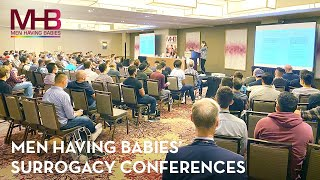
The grotesquely named Men Having Babies, a New York-based misogynist group that claims to “help gay men become fathers through surrogacy”, hosted a conference in Taiwan for prospective buyers of female wombs this year. They will host their next event here in 2025, and every two years after that, spreading information on their agencies, clinics, law firms, and other surrogacy providers.

What’s the problem with surrogacy?

Not being discussed in any of the news reports are the negatives associated with surrogacy. Paid surrogacy is illegal in much of Asia, but one should be aware that many surrogacy operators offer back-channel surrogacy with alternative arrangements for couples who come to Asian countries. After having been forbidden in neighboring Thailand (nicknamed the “Womb of Asia” in 2015), after a series of horrific high-profile cases, with Cambodia following suit soon after. In the scandal in Thailand in 2011, fifteen Vietnamese women were discovered being forcibly kept in an apartment in Bangkok, seven of them pregnant. It was a baby-making farm.

Unfortunately, as of 2023, Thailand has been in the process of amending its surrogacy laws to permit foreigners to engage in surrogacy arrangements with Thai women. The proposed revisions also include the commercial exportation of women’s eggs. This initiative comes after Thailand imposed restrictions on the surrogacy industry, prompted by concerns raised when David Farnell, an Australian convicted pedophile, was granted custody of a child born through a Thai surrogacy clinic. In what might be the ultimate in outsourcing, Western couples are increasingly traveling to unregulated India to have their baby delivered by a surrogate mother.

Despite the bans, would-be parents are drawn by Asia’s lower costs, as compared to wealthier countries. Who would want to pay a woman a higher price for her time and physical labor, when you could get it so much cheaper in Asia? Surrogacy exploits women, particularly those from economically disadvantaged backgrounds, who may be driven to become surrogates due to financial need. Taiwanese women won’t be the ones selling their bodies to make babies for the wealthy, that task will instead fall to the same women who come here and do the dirty work no one else wants to do. The domestic help, the factory workers, and the migrants from Southeast Asia that face discrimination and are easily exploitable…and expendable.

Pregnancies involving surrogacy are inherently categorized as high-risk due to the elevated likelihood of health complications for both the surrogate mother and the baby. In fact, all surrogate pregnancies are medically classified as “high-risk” due to the use of hormones involved, and even egg donation confers risks of developing endometriosis, infertility, or the fatal condition of ovarian hyperstimulation syndrome (OHSS). This increased risk is particularly associated with the practice of implanting multiple embryos, a common strategy to enhance the chances of a successful pregnancy. Surrogate mothers undergoing this procedure face various health hazards, including ovarian torsion, reproductive cancers, stroke, premature menopause, placental abruption, and, in extreme but not unheard of cases, death. The necessity for a Cesarean section (C-section) is also more probable in pregnancies with multiple gestations, introducing a range of associated risks.

Research conducted on surrogacy in developing countries revealed instances where women underwent C-sections purely for the convenience of the “commissioning parents” aka the paying customers. This raises ethical concerns regarding the medical procedures chosen for the sake of timing rather than the well-being of the surrogate mother.

Furthermore, infants born through surrogacy, often referred to as “surrogacy babies,” confront their own set of health risks, such as low birth weight, prematurity, and the possibility of miscarriage. A study discussed in an article on the ethics of surrogacy in The Journal of Medical Ethics highlights that a significant proportion of infant mortality can be attributed to complications arising from prematurity, with infertility treatments being a contributing factor.

The emotional and psychological impact of surrogacy on the surrogate is a concern. Some worry about the potential long-term effects on the surrogate’s mental health, especially if she forms a strong emotional attachment to the child. The truth is, this practice and the justifications surrounding its regulation bear striking resemblance to prostitution. The debates often revolve around women’s “freedom” to lease their wombs, altruistic intentions, and the undeniable desire of those who commission surrogacy to fulfill their dream of starting a family. However, what remains obscure is the darker side: the prevalence of poverty, human trafficking, the exploitation of impoverished nations for surrogacy tourism, the dehumanization involved, and the myriad risks to the emotional and physical well-being of all parties involved.

The Problem with Adoption

In some East Asian cultures, like Taiwan, there is a  strong emphasis on biological lineage and carrying on the family name. Taiwanese on average simply don’t like to adopt children. Laws were changed to promote domestic adoptions in Taiwan, with little effect. There is a notable disparity between the number of children awaiting adoption and available adoptive parents, with the former outnumbering the latter by two- or three-fold. Even in cases where there is a willingness to adopt, prospective adoptive parents in Taiwan frequently have specific criteria for the children they are open to adopting, such as a young age, good health, and a family background with an unblemished history. This means many children are growing up without loving homes, while couples seek commercial surrogacy at sky-high prices.

But it’s not a human right to have a child. This is a narrative we hear time and time again on the topic of surrogacy. It is born of the notion that an individualistic desire for a child translates to a necessity for a child and therefore a right to a child. Couple this delusion with the lie that women, usually economically disadvantaged and marginalized women, are little more than sexual and reproductive resources to be used and exploited and you have a justification for surrogacy.

Lack of Information

Western mainstream media and organizations claiming to support human rights advocate for the censorship of those who acknowledge women’s sex-based oppression. Similarly, there is little to no information being provided to the public in Taiwan showing the negatives of commercial surrogacy. This coincides with the push for the acceptance of gender identity ideology in Taiwan, which was greatly influenced, like surrogacy, by Western ideology and thinking. In 2021, the Taipei High Administrative Court issued a ruling allowing a trans-identified male calling himself “Xiao E (小E)” to change his legal sex to female without sex reassignment surgery — the first ruling of its kind. Until then, individuals could not change their sex on an ID card unless they provided medical certificates confirming a diagnosis of gender dysphoria and proof of a sex change operation. The Chinese language news outlets that covered this case (UDN News, ET Daily, Apply Daily, LTN Liberty Times) all did so with no comment on how these changes would impact women in Taiwan. Across the board, they printed copy and paste statements from groups representing trans activist interests and offered no counter opinion or discussion of potential harm to women and girls. The two English-language news outlets to discuss the case — Focus Taiwan and Taipei Times — provided the barest of details and also failed to discuss the negative impacts on women.

What the media fails to do, time and time again, is show how these issues affect women negatively. The media conceptualizes surrogacy as some sort of empowerment of women in the forms of self-reliance, self-confidence, and the social and economic movement out of poverty. However, this empowerment framework appropriates feminist language to the extent that the ‘Third World’ woman (typically from Southeast Asia) has to align herself with Western market systems in order to demonstrate her “agency”. The concept of “choice” is not free from exploitation, and the systems put in place for surrogacy do not at all prioritize the women that surrogacy supposedly “empowers”. A surrogacy contract will appear financially attractive to poor women with the payment being marginal compared to the time invested in the service. The formal language of the contracts in addition to cultural barriers often discourage these Asian women from reporting exploitation or seeking help, which, in turn, restricts the surrogate mother’s understanding of what they have signed and any information on regulations that could have protected them

Taiwan continues to be influenced by Western trends, from gender ideology to the commercialization of women’s wombs for profit. The DPP, the political party of both the former and incoming presidents, has said that the surrogacy act should be amended to allow single women and female same-sex couples to receive assisted reproduction so that they do not have to risk going abroad and spending a lot of money on procedures. While I am also resolutely in favor of same-sex parenting, I am angry that Taiwan is currently leading the way in destigmatizing a deeply unethical practice. Rather, they promote the idea that one must use their wealth to rent women’s wombs, whilst child welfare authorities are struggling to find foster or adoptive parents for those many children in care. There is no tabloid fawning over those unwanted babies in Taiwan, or anywhere else in the world.

Follow the Money

Public opinion on surrogacy in Taiwan has been divided, and discussions on the topic have involved ethical, legal, and cultural considerations. But in the end, I believe that Taiwan will allow commercial surrogacy into the country. Why? Because it will bring in a lot of money. It’s as simple as that. There is simply too much money to be made from it. Already commercial surrogacy agencies in Taiwan take huge sums of money to place couples with foreign surrogates. And when there is money to be made from women’s bodies, the sharks will circle.

Advocates of the surrogacy industry, encompassing both profit-driven medical professionals and affluent infertile couples capable of purchasing a child, contend that women receive generous compensation for their “services” and are therefore not subjected to exploitation. They assert that it is within a woman’s right to utilize her body as a workplace, akin to a vending machine. This narrative closely mirrors the arguments put forth by supporters of prostitution, emphasizing personal choice. However, I maintain the perspective that all forms of surrogacy involve exploitation. These women are reduced to mere vessels, their essential human needs often overlooked in favor of prioritizing the desires of the “commissioners” who claim ownership of the developing baby.

Despite the availability of children who need homes, surrogacy will be the primary choice for the wealthy on this island nation. Unfortunately, the ethical fix for delayed pregnancy, not wanting stretch marks, for same-sex couples, or even for infertility, is not to exploit women. No one has the “right” to have their own biological child, and certainly, no one has the right to use a woman’s body for their personal benefit.

To quote feminist writer Rachel Klein; “Pared down to cold hard facts, surrogacy is the commissioning/buying/renting of a woman into whose womb an embryo is inserted and who thus becomes a ‘breeder’ for a third party.” While many people have strong emotional desires to have children, there is no “right” to have a child genetically related to you. The moral claim for surrogacy is an illusion.

Page-Turners of the Year: Exploring My Top Reads of 2023

65 books read in 2023 – Who earned a top spot?


As the year comes to a close, I find myself reflecting on the literary adventures that have shaped the past 12 months. Since starting my PhD I have seen my reading list drop, year by year, from my all-time record of 101 books in 2019. This year, I embarked on a journey through 65 books (still a fairly decent number), each one a unique escape into different worlds, perspectives, and emotions. (If you know me, then you know I don’t approve of claiming to have “read” an audiobook. This is a reading only zone! #sorrynotsorry).

Join me as I share my top picks from this year’s reading list and offer a glimpse into the literary gems that have left a lasting impression. I’ve linked each book to Goodreads, so you can add them to your to-read list!

It’s always nice to make friends while reading in the park.


Overview of My Reading Year:

In 2023, my reading journey took unexpected turns, and I delved into a diverse range of genres. I am definitely reading a lot more fantasy than I used to, probably as an escape from Hegel, Husserl, and Hediegger! Participating in reading challenges on Goodreads and setting personal goals added an extra layer of excitement to my literary pursuits. 

Top Picks: (I tried to narrow this down to a top ten list but I just couldn’t do it!)

Women’s Rights, Gender Wrongs” by Kath Aiken (Editor),  Sally Wainwright (Editor) (Nonfiction)

I can’t lie, I’m biased. This book features my very first (but not last!) contribution to a book publication. In total 115 women from all around the world contributed to this book, in the form of poetry, research articles, country reports, artwork, etc. I contributed a country report and a piece documenting the encroachment of gender ideology in Taiwan. How proud I am to be a part of this collective of strong feminist voices, speaking out against female erasure. Not only gender ideology but surrogacy, domestic abuse and sexual assault, trafficking, and issues related to women’s rights are all touched upon. It’s a groundbreaking and important read for women and girls (and our allies) everywhere.

“The Change” by Kirsten Miller (Fantasy)

This is a fantastic book filled with magical realism, female friendship, female empowerment, and FEMINIST WITCHES. The novel  combines pure fun and revenge fantasies while commenting on social norms and issues. The novel touches upon violence against women, gender roles, sex, menopause, and female friendship in a straightforward way. There isn’t any sugar coating or B.S. Some of the events that occur are hard to read, but humor, love, and romance are woven in to balance the horrors of reality.

The Good Earth” by Pearl S. Buck (Historical Fiction)

How did I manage not to read this one until now?? Set in pre-revolutionary China, “The Good Earth” portrays the life of a Chinese farmer, Wang Lung, as he navigates the challenges of societal changes, family dynamics, and personal ambition against the backdrop of a transforming nation.

“The Courage to be Disliked” by Ichiro Kishimi (Philosophy)

This philosophical work presents a dialogue between a philosopher and a young man, challenging conventional beliefs about happiness, success, and interpersonal relationships, advocating for the courage to live authentically. A simple, accessible read that I recommend everyone have on their bookshelf!

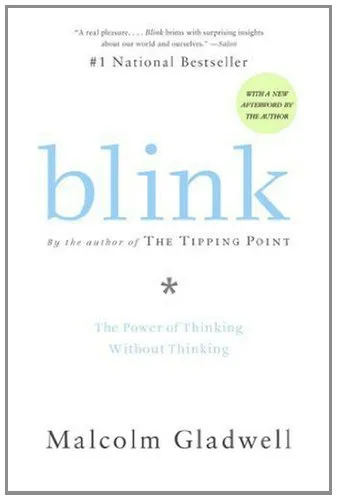
“Blink: The Power of Thinking Without Thinking” by Malcolm Gladwell (Nonfiction)

Malcolm Gladwell explores the concept of rapid decision-making in “Blink,” revealing the power of intuitive thinking and the factors that shape split-second judgments in various aspects of life. It motivated me to write an article on concept of thin-slicing for the feminist news outlet 4WPub.

“The Glass Hotel” by Emily St. John Mandel (Mystery)

A mystery novel intertwining the lives of various characters (and the author does this so well in all of her novels!), “The Glass Hotel” explores the repercussions of a financial scam, delving into themes of guilt, ambition, and the interconnectedness of lives. It had me in tears by the end.

“The Golem and the Jinni” by Helene Wecker (Fantasy)

Set in New York City in the early 20th century, this fantasy novel follows the unlikely friendship between a golem and a jinni, the book is heavy on folklore mixed with philosophical questions. Everyone loves legends, lore, tales of long ago, filled with heroes and magical beings. They dilate our pupils, excite our imagination and provide the fodder for our dreams. Wecker has written a very grown up fairy tale, bringing to life a pair of magical beings. In doing so she has transported old world legend to a place where and a time when vast numbers of more ordinary people were trying to create new dreams, new legends of their own, immigrating to New York City at end of the 19th century. I absolutely loved this.

“Shalimar the Clown” by Salman Rushdie (Magical Realism)

I’ve stayed away from Rushdie for awhile but was pleasantly surprised by this one. Rushdie weaves a tale of love, betrayal, and revenge against the backdrop of Kashmir, incorporating elements of magical realism to explore the complexities of cultural and political conflicts. Compared to Rushdie’s style in The Satanic Verses his magical realism here is more subtle and toned down to the point where it enhances rather than disrupting my suspension-of-disbelief.

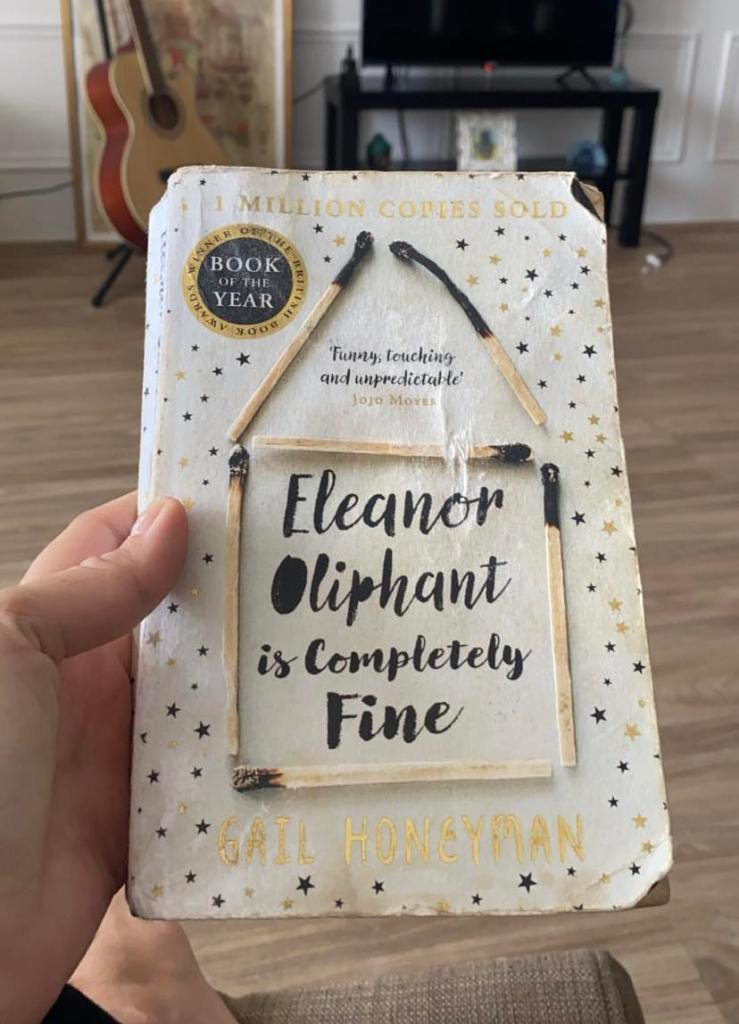
“Eleanor Oliphant is Completely Fine” by Gail Honeyman (Fiction)     

A very moving work of fiction, this novel follows the socially awkward Eleanor Oliphant as she navigates her isolated life, exploring themes of loneliness, trauma, and the transformative power of human connection. This was a powerful, and unsuspecting, read. It really hit me in the feels.

“The Immortalists” by Chloe Benjamin (Historical Fiction/Fantasy)

Spanning decades, “The Immortalists” tells the story of four siblings who, after learning the dates of their deaths from a fortune teller, grapple with destiny, mortality, and the choices that shape their lives.

“Rubicon: The Last Years of the Roman Republic” by Tom Holland (History)

Tom Holland provides a historical account of the tumultuous final years of the Roman Republic, delving into political intrigue, military conquests, and the collapse of a once-mighty empire. As a passionate semi-historian I can confidently say that this is probably the most accessible and entertaining contemporary book written on the decline and final turbulent years of the Roman Republic. 


Honorable Mentions: While these books didn’t quite make it to the top of the list, they deserve an honorable mention.

“The Night Watch” by Sarah Waters (Historical Fiction)

The Swerve: How the World Became Modern” by Stephen Greenblatt (History)

“Farewell My Concubine” by Lilian Lee (Historical Fiction)

“Billy Summers” by Stephen King (Thriller)

“The Wolf and the Woodsman” by Ava Reid (Fantasy)

“Nettle and Bone” by T. Kingfisher (Fantasy)

“The Dovekeepers” by Alice Hoffman (Historical Fiction)

“The Water Dancer” by Ta-Nehisi Coates (Magical Realism/Historical Fiction)


Reading Goals for the Next Year:

As I look forward to the next chapter in my reading journey, I aim to read more for pleasure! Studies have shown that people who read for pleasure live longer. Reading literally saves lives! Isn’t that a good enough reason?

As we step into a new year, may our bookshelves be filled with new tales, much needed literary distractions, and endless inspiration. Feel free to share your own favorite reads from the year in the comments below, share them with me on Goodreads, and let’s continue this conversation about the magic of literature. Happy reading!

The chaos that is one of my bookshelves at home

Thin-Slicing and the Silencing of Our Instincts

My newest article out now on 4WPub – ✍🏻 | paid writing for fearless women

Originally published on 4WPub on Nov. 20, 2023.


Imagine a woman is at a party. She meets someone who appears friendly and engaging at first glance. However, she pays attention to certain cues that could indicate potential risks. Are they using aggressive body language? Are they evasive when answering questions? Are they slurring their speech? She trusts her gut feeling. If something about the person makes her feel uneasy or unsafe, she takes that feeling seriously, as intuition can sometimes pick up on subtle cues that the conscious mind might miss. We have all, at some time or another, been that woman at a party.

“Thin slicing” is a concept that originated in psychology and has relevance for me as a feminist student of philosophy, particularly in discussions related to perception, intuition, and decision-making. In psychology, thin-slicing refers to the ability to make quick, accurate judgments or decisions about a person or situation based on a limited amount of information. This concept was popularized by Malcolm Gladwell in his book “Blink,” where he explored the idea that our subconscious mind can rapidly and accurately process small amounts of information to form judgments or make decisions. In the field of epistemology, which is concerned with the nature of knowledge, there is a debate about the reliability of intuition as a source of knowledge. Thin-slicing can be seen as a form of intuitive judgment, where individuals quickly assess a situation or person based on the limited information available. 

The world of online activism has undoubtedly reshaped the way we engage with social and political issues. It has provided a platform for marginalized voices to be heard, but it has also given rise to a disturbing trend – the harassment of feminists who don’t toe the gender ideology line. We’ve all experienced it…the ubiquitous “TERF” name-calling, the threats of cancellation (often ironically from people who aren’t exactly high-ranking on the social hierarchy), the messages sent under safe cover of FB messenger so reminiscent of junior high…delete her or we can’t be friends! 

Often, these harassments are rooted in the rapid judgments and stereotypes that underlie thin-slicing, exposing the insidious ways bias persists in the digital age. Thin-slicing as described by Malcolm Gladwell in his book “Blink,” refers to the human ability to make snap judgments based on limited information. It’s a cognitive shortcut that helps us navigate complex situations quickly. This tool, innate in us humans, has been a powerful one that women especially have used for generations to mark danger. Imagine you are walking down the street at night, alone, and you briefly encounter someone you’ve never met before. You exchange only a few words, and you notice certain physical characteristics like facial hair, a deep voice, and a masculine clothing style. Based on these limited cues, you may quickly infer that this person is male, and that you should be wary of your surroundings. We women have been doing this from the beginning of recorded history. Our brain is like a computer which processes knowledge instantly to give a first impression. Thin-slicing allows us to make decisions in person, quickly, that can be as good as those made cautiously and deliberately. This technique can be learned through practice and controlled to the point when you know you can trust your instincts or not. 

Part of the problem with gender identity ideology is that we are told to no longer trust our instincts, our natural gut reaction, thin-slicing, and to train ourselves to lie. No, this isn’t a man, this is a WOMAN. The “real self” is something other than the physical body, in a new form of Gnostic dualism, and we must disregard what we see in front of us. Gender identity can sound a lot like religious identity, which is determined by beliefs. But those beliefs don’t determine reality. A person either is or is not a man, regardless of what anyone—including that person—happens to believe. I find it hard to believe that, a few years ago, feminists’ rallying cry was #BelieveAllWomen. How times have changed. 

Thin-slicing can be a very powerful tool that allows us to get below the surface of a situation quickly. However, it becomes problematic when these judgments are tainted by preconceived biases and stereotypes, which is often the case in online spaces. In the digital realm, feminists who question gender identity ideology often find themselves at the center of intense debate. 

Here’s where thin-slicing comes into play: when individuals encounter anti-genderist feminist ideas, they may immediately resort to quick judgments and stereotypes, without delving into the nuances of the arguments. These judgments may stem from society’s deeply ingrained biases about feminists, especially those who challenge the status quo, and about gender ideology. The giant computer that is our brain silently crunches all of the data given us: that good people are compliant and faithfully repeat the mantra “transwomen are women”. Those who question it are BAD. 

The harassment of feminists online can take various forms, including doxxing, threats, trolling, and character assassination. These attacks often result from thin-sliced judgments that dismiss their ideas and instead target them as individuals. Such harassment has a chilling effect on free speech, as it discourages people from speaking out on controversial issues. It also shows, disturbingly, that one’s stated values (acceptance, inclusivity, love) can be utterly incompatible with their attitude (violence, threats, personal attacks) and how they behave in the world. 

Thin-sliced judgments often reinforce existing stereotypes about anti-gender feminists, labeling them as “radical extremists.” These stereotypes can be used to justify harassment and discredit their arguments without substantive engagement. Instead of engaging in constructive debate, harassers resort to personal attacks, dismissing anti-genderist feminist ideas based on preconceived notions. This stifles important discussions about gender inequality and social justice. Harassment discourages many other men and women from participating in online discussions, limiting their ability to advocate for change and share their perspectives. Rather than engaging in open and respectful dialogue, some individuals resort to quick judgments and stereotypes, dismissing important ideas and contributing to a hostile online environment. 

In the past, there was a movement to #BelieveAllWomen and trust our instincts. Today, we find ourselves in a profoundly changed world, where a new generation of young women is being instructed to suppress the fear they might experience in potentially dangerous situations. They are advised not to rely on their intuition and, if they express discomfort in environments like bathrooms, changing rooms, or shelters for survivors of sexual abuse, they are sometimes met with accusations of bigotry and even receive threats.

The message today’s young women are getting is that if their inner voice says it feels wrong when someone with a penis undresses in front of them, or is present when they undress, in a space designated for women, there is something wrong with them. It appears that institutions, politicians and so-called progressives are happy to sacrifice women at the altar of inclusivity. They demand we keep quiet when we feel uncomfortable or unsafe. Ironically, instead of teaching us to keep ourselves safe and fear violation, the women’s movement teaches us to fear being labeled as bigots. 

We are setting a dangerous precedent. Think about the young women watching the way that those of us who speak out are being treated. They will surely conclude that they must suffer to accommodate the small handful of males that want to make everything about them. They are now being given access to female prisons, domestic abuse shelters, rape centers, locker rooms, spas and public toilets, as well as changing rooms.

It would be unreasonable to assume that all individuals who identify as transgender are seeking to harm girls or women. Conversely, it is also unwise and overly optimistic to believe that there are no male predators who may exploit this system. They have, they are, and they will continue to do so. What is particularly disconcerting, however, is that we are pressuring women in general to doubt their own judgment. We are advising girls and women to disregard the discomfort that arises at a subconscious level and to suppress their instincts. When a woman perceives danger, the last thing she needs is for her ability to make sound judgments to be compromised by the additional fear of facing social consequences if she takes steps to protect herself.

And all of us who are abused or who witness the abuse that women who speak up are being subjected to are expected to remain silent. All of us whose little voices, our thin-slicing,  are telling us that there’s something wrong with prioritizing men’s feelings over women’s safety are told we are wrong. Undermining our ability to thin-slice, this fluid, intuitive, non-verbal kind of experience that helps keep us aware and safe, makes us vulnerable. Insight isn’t a lightbulb that goes off inside our heads. It’s a flickering candle that can easily be snuffed out. We have to keep the flame burning. 

Press Release – Women’s Rights, Gender Wrongs

On Friday 13th October, we are launching the first book on the global impact of gender ideology, with 35 country reports and contributed chapters from 28 international authors.


I am honored to be one of the authors of a new book that works to reveal that women’s rights across the world have come under threat by the growth of gender ideology. Women’s Rights, Gender Wrongs, looks at how gender ideology has affected women in 35 countries. 

Already we are getting press, with The Telegraph featuring an article on this groundbreaking anthology.

From schools, prisons, employment tribunals and puberty blockers, to lesbian rights and language in healthcare, gender ideology has dominated headlines in the UK (particularly Scotland) in recent years.

On Friday 13th October, we are launching the first book on the global impact of gender ideology, with 35 country reports and contributed chapters from 28 international authors. 

The book – which I contributed to – will be an excellent resource for journalists on how Taiwan fits within the global context.

The press release is below. I am happy to facilitate interviews with people associated with the book, to give you the opportunity to develop a story.

Kind regards

Jaclynn Joseph

Guest writer for Feminist Current, 4WPub, and No Self ID-Taiwan

Guest Speaker for the Women’s Human Rights Campaign

Co-founder of the Taiwan Women’s Association 臺灣女性協會Country Representative for Women’s Declaration International (WDI) Taiwan


PRESS RELEASE

For immediate release 

Friday 13 October 2023

First international book on gender ideology warns of ‘serious global threat’ to women

  • World-first book on global impact of gender ideology to be launched in Scotland
  • Reports from 35 countries including Australia, Taiwan, Iceland, South Korea, Slovenia, Scotland, Germany and Panama’s universal failure of governments to protect women’s rights 
  • Contributions from 28 international authors highlight common issues of sexual violence faced by female prisoners, laws preventing lesbians from excluding biological males, and the misuse of data and language

A new book exploring the global impact of gender-identity ideology on the lives of women and children, featuring 28 writers from around the world including Brazil, Canada, Australia, Japan, Angola and Iceland, will be launched tonight in Glasgow.

Published by Women’s Declaration International (WDI) and titled Women’s Rights, Gender Wrongs: the global spread of gender-identity ideology, it is the first book to take a truly global perspective on the growth of gender-identity ideology and how its impact goes far beyond western countries. 

Edited by Sally Wainwright and Kath Aiken, the book discusses how gender ideology has impacted life for lesbians in Angola, the collection and misuse of data in Brazil, the experience of female prisoners housed with trans-identified men in Canada, and how a grassroots feminist resistance is building in Japan. 

In the Australian state of Tasmania, it is illegal for lesbian events to exclude biological males while in Iceland, the City of Reykjavik contested a legal ruling that it must provide single-sex toilets. In Canada, a women prisoner and survivor of childhood sexual abuse endured weeks of repeated rapes by a male prisoner incarcerated with her, while in Brazil the Tribunal Superior Eleitoral ruled that affirmative policies intended to assure women’s participation in politics apply on the basis of ‘gender’ rather than ‘sex’.

Feminist academic Sheila Jeffreys, a director of WDI, said, “In the last decade, women’s rights have come under a serious global threat from the replacement of the category of sex by the notion of ‘gender’. 

“People are fast waking up to the dangers of gender ideology within their own countries, but may not be aware of the extent to which it has captured much of the rest of the world. This landmark book provides that critical global perspective and will be a sobering but important read for anyone who wants to understand what is happening internationally.

“Never have the dangers for women that will occur if we are not successful in fighting back against gender-identity ideology been more clear.”

The book also includes 35 country reports which detail progress and setbacks for women’s sex-based rights. They cover countries as diverse both geographically and politically as Australia, Taiwan, Iceland, South Korea, Slovenia, Scotland, Germany and Panama. 

The country reports show a universal failure of governments across the world to promote and protect equal rights for women, and an eagerness in many cases to give existing rights away to men who declare themselves to be women. In many of the countries featured, women face the threat of gender ideology compounded with existing widespread misogyny and discrimination in relation to employment, political participation, and sports. 

Having reviewed the book, Kathleen Stock said, “This is a stunning piece of work, providing a meticulously researched, jaw-dropping snapshot of the global effects of gender-identity ideology on women’s rights.

“Due to the political climate, this kind of work could not have been done in universities – but is no less rigorous for that. Never has it been so clear how the influence of postmodern theorists, making up reality as they go along and insulated from the worst effects of their own constructions, has hurt women.”

Women’s Rights, Gender Wrongs discusses ways in which both language and data have been distorted, making it more difficult to describe women’s situation. In a significant number of cases some, if not all, official statistics conflate ‘sex’ and ‘gender’. In Scotland, for example, the 2022 Census allowed people to choose which ‘sex’ they were recorded as. 

The Scottish Government has also simultaneously asserted that a gender-recognition certificate changes a man’s sex regarding the protected characteristic of ‘gender reassignment’ in the Equality Act 2010, while arguing that making gender-recognition certificates more widely available to any man who wants one does would not affect the protected category of sex in the Equality Act 2010.

In some countries it is possible for fathers to be recorded as ‘mother’ on a child’s birth certificate or mothers as ‘fathers’. In New Zealand, the official data agency, Statistics NZ, has made ‘gender’ the default for data collection in place of  ‘sex’. Gender identity ideologues’ misuse of the word ‘woman’ to include men who declare themselves to be one, means that any discussion of women’s rights, resources or provision now has to start with a clarification of what is meant by the word ‘woman’ in that context.

WDI is self-publishing Women’s Rights, Gender Wrongs, and copies can be ordered on-demand by contacting any bookseller worldwide.

Contact

To arrange interviews with anyone quoted in the press release or contributing authors, attend the book launch in Glasgow on Friday evening, or for further information, quotes and review copies of the book, contact Taiwan WDI contact and contributing author to the book, Jaclynn Joseph 

Notes to editors

About Women’s Declaration International

Women’s Declaration International (WDI) is a group of volunteer women from across the globe dedicated to protecting women’s sex-based rights. Its volunteers include academics, writers, organisers, activists, and health practitioners. The Declaration on Women’s Sex Based Rights was created to build international sisterhood and to urge nations to maintain language protecting women and girls on the basis of sex rather than ‘gender’ or ‘gender identity’. It has been signed by around 37,000 people and 517 organisations from 160 countries. 

Website: https://www.womensdeclaration.com 

Twitter:  https://twitter.com/DeclarationOn 

About The Declaration on Women’s Sex-Based Rights.

The Declaration is based on rights first detailed in the UN treaty,  CEDAW (Convention of All Forms of Discrimination Against Women). This is sometimes described as a Bill of Rights for Women and is the only human rights treaty to affirm the reproductive rights of women and to target culture and tradition as influential forces shaping gender roles and family relations.

In summary, the nine articles of the Women’s Declaration reaffirm:

  1. Women’s rights are based on their sex
  2. Motherhood is an exclusively female status
  3. The right of women and girls to physical and reproductive integrity  
  4. Women’s rights to freedom of opinion and expression
  5. Women’s rights to peaceful assembly and association
  6. Women’s rights to full political participation
  7. Women’s rights to participation in sports and physical education
  8. The need for the elimination of violence against women
  9. The need for the protection of the rights of the child. 

Full details are available on the WDI website

Additional information about Women’s Rights, Gender Wrongs.

Some other specific issues covered in the book  include:

~  Women’s  Reproductive and Bodily Autonomy

Women in many countries are denied reproductive autonomy through lack of access to contraception and abortion. There are often barriers to obtaining these, such as poverty or lack of local provision, even where they are theoretically available. A chapter on Reproductive Extractivism discusses how Latin American women’s reproductive capacity has been exploited by a thriving reproductive industry, and the urgent need to regulate surrogacy. Other contributors report that, even  where surrogacy is outlawed, their governments nevertheless turn a blind eye to citizens travelling abroad to purchase a surrogate baby.

Another chapter considers the political movement which promotes sex self-ID and that which promotes ‘prostitution as sex work’ and argues that both are based on the sexual objectification of women and contribute to women’s oppression and subordination.

~ Protection of Children

Although in general, girls have the same right to education as their brothers, in practice they are often unable to access it, especially in poorer communities, where girls might be expected to stay home to undertake domestic chores, or become pregnant or are forced into underage marriage.

Gender-identity ideology is promoted to both primary and secondary school children around the world. In France it is legal for healthy girls to have a double mastectomy at 16. In many countries children are allowed – even encouraged – to socially transition, with schools sometimes participating in this process behind parents’ backs. 

~ Male Violence Against Women

High levels of femicide, sexual and other violence against women were reported. In Puerto Rico, after the Covid-lockdown, it increased to such an extent that the government declared a 17-month state of emergency in relation to gender-based violence. Whilst in South Africa, an unfounded belief that sex with a virgin will cure HIV/AIDS has led the country  to becoming known as ‘the rape capital of the world’. Elsewhere women are widely trafficked or subjected to underage or forced marriages, even where they are illegal. 

Where they exist, specialist services for women who have been subjected to male violence are increasingly open to biological men, both as service users and staff. 

Comment from the Editor

Sally Wainwright, joint editor said, “Despite the fact that CEDAW clearly laid out women’s sex-based rights more than 40 years ago, progress has been extremely slow, and is now in danger of going backwards. Every one of the countries covered by the Country Reports is a CEDAW signatory yet in some countries, women’s rights have barely changed in that time. Elsewhere, rights which women were beginning to believe were well established are being decimated by the march of a misogynist and homophobic gender-identity ideology. In some cases, new laws are creating competing rights  which can criminalise women who seek to exercise their rights. Data and language are both being misused and distorted to make women, if not invisible, extremely difficult to discuss accurately. 

“In the worst cases, countries in which women already had very few rights are also seeing them further diminished by gender-identity ideology. Women’s Rights, Gender Wrongs shines a light on the extent to which this is happening globally.”

Book Publication and Launch – October!

Women’s Rights, Gender Wrongs: The global impact of gender-identity ideology  is out in OCTOBER!


My work is being published in a book for the very first time. ❤️I am thrilled to share with all of you the incredible news that my first publication in book form has found a home in a groundbreaking anthology focused on global feminist voices fighting against gender identity ideology! This journey has been one of immense growth, learning, and empowerment, and I am deeply honored to contribute my thoughts to this important conversation.

In a world where diverse perspectives are shaping the course of history, I am humbled to join the ranks of authors who are dedicated to amplifying the voices of women from every corner of the globe. This book is a celebration of the strength, resilience, and bravery that women bring to the forefront of social, political, and cultural discussions.

This publication is a step forward in the ongoing journey towards amplifying women’s voices as we stand against a misogynistic and irrational ideology, and I am incredibly proud to play a part in it. I want to extend my heartfelt gratitude to the editors, fellow contributors, and everyone who has supported me along this path. Your belief in my words and ideas has been an unwavering source of inspiration.

Stay tuned for more updates about the book’s release and where you can get your hands on a copy. Let’s continue to uplift and empower one another, ensuring that the chorus of global feminist voices grows stronger and more resonant with each passing day. 🌍📖💪


The book launch will be held in Glasgow, Scotland, at 18.00 on Friday 13th October. The venue’s just a three minute walk from where the FiLiA women’s conference is being held, so I hope a lot of women from around the world will join. Hopefully, including you

I’m so, SO excited and proud. 💪

https://www.filia.org.uk/tickets

Purchase the book here!