Empowering Voices: Asia’s Gender-Critical Feminists in Focus

A new series highlighting the work of a gender-critical feminists throughout Asia


Get ready to be inspired and informed as I embark on a new series here on my site, “Empowering Voices: Asia’s Gender-Critical Feminists in Focus.” Throughout this series, I aim to celebrate the remarkable, and often overlooked, work of feminist activists from across Asia. It’s time to celebrate the stories that deserve to be heard and that are making a difference, one spotlight at a time. It is crucial to shed light on the extraordinary efforts and achievements of gender-critical feminists in Asia who are breaking barriers, challenging norms, and making a profound impact in their communities. Each month I hope to delve into the lives, stories, and accomplishments of these inspiring individuals, highlighting their contributions to the feminist movement and the broader social landscape. I hope you join me on this journey as I honor the resilience, courage, and determination of feminists in Asia who refuse to accept the indoctrination of gender identity ideology.


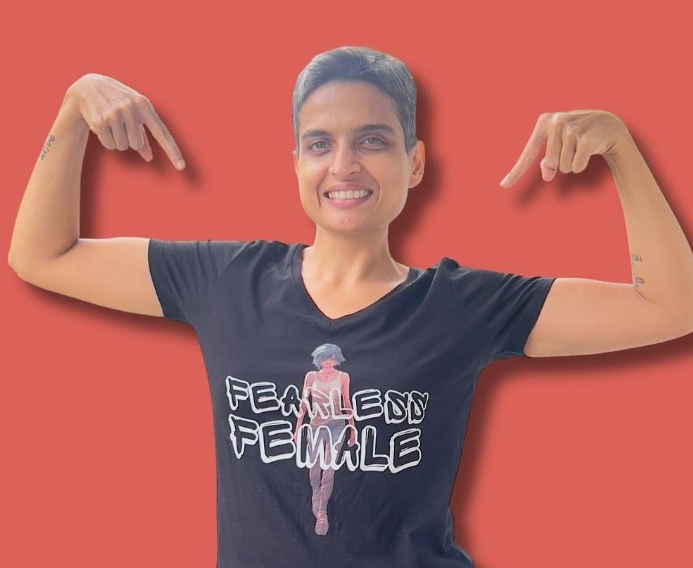
Fearless Female is epitomized in the first feminist to be featured in this series, and what an honor to know her! Vaishnavi Sundar is a woman I have admired for a long time. Her four-part series on  Gender Identity Ideology and its effects on women and girls, Dysphoric: Fleeing Womanhood Like a House on Fire, had quite an impact on me and found its way into my university lectures and teaching material.  At the heart of her work lies a fierce determination to challenge societal norms, dismantle stereotypes, and give voice to the marginalized who so often don’t get a voice when opposing gender identity ideology. Sundar’s unyielding commitment to the rights of women and girls is a resounding battle cry, as she exposes the pervasive lies and manipulations put out by radical genderists, forcing viewers to confront uncomfortable truths and reconsider long-held beliefs. With an unyielding dedication to truth telling, Sundar is a dynamic feminist filmmaker and activist, fearlessly challenging sexism, misogyny, and female erasure. Let me introduce you to the provocative and revolutionary world of Vaishnavi Sundar, where the power of the lens converges with the power of change. 

  • First, can you tell us your name and where you are based in Asia?

My name is Vaishnavi Sundar, I’m a filmmaker, writer and a feminist activist based in Chennai, a city located in the South of India.

  • What was your first big project? What are some of the key feminist topics or issues that you have explored? Why did you choose to focus on these particular subjects?

I wouldn’t know how to quantify something as big, but I think purely in terms of duration, my first feature length project was But What Was She Wearing? ( BWWSW). I think it still is India’s only film on the topic of workplace sexual harassment faced by women, that deep-dives into both the organised as well as the unorganised sector. But before BWWSW, I’d already made two shorter documentaries and a couple of fiction films. In my humble filmmaking experience, I have touched upon topics of class, caste, exploitation of all forms that intersects with misogyny. I choose subjects that center women because that’s who I am. I am a woman, and I want to make films about other women; women like me, women so vastly different from me despite being tethered together as a sex class. We live in an unequal society, and sex-based oppression aside, women in India and in extension Asia, face several multilayered exploitations, violations and categorical abuse that I might die before I can make films on all the injustices. But I endeavor to do as much as I can.

  • Can you tell us more about the work that you do with the organizations you have founded, Women Making Films and Lime Soda Films.

Women Making Films (WMF) is a pet project that I started in 2015 because I was overcome by the number of men I encountered while trying to make films in my city. I wanted to create a space for female filmmakers to come together. The patriarchy, misogyny and sexism in the society permeates into all industries without an exception. And through WMF, I wanted to create a forum for the promotion of female filmmakers, their work, through blogs, workshops, screenings, film festivals and mentorship programs. Even before I started WMF, I tried to bring together an all-female crew for my films. My work predates some of Hollywood’s multi-billion dollar “inclusion programmes” that still only does lip service. Ever since I started it, WMF now has members from more than 20 countries. I’m stretched thin by my film, writing, and advocacy work that I sometimes find it hard to hold film festivals and screenings. But I hope to remedy it after my current project concludes. WMF is also a repository of some great essays, reviews, and opinion pieces. I’m so proud of what it has become. PS: Anyone who is female who has at least one film to her credit as a head of any department, is welcome to sign up. Signing up is free!

Lime Soda Films is the name of my film production company. I write, produce, direct and distribute it under this banner. I founded this when I was in the process of releasing my second ever film, way back in 2014. I wanted a name that was fresh, unconventional, and curious – incidentally, these could also be the adjectives used to describe me. I also just happen to love lime soda. And just like that, I bought the domain, and it has been a glorious few years.

  • Can you tell us about your journey as a gender critical filmmaker and feminist activist in India? What motivated you to combine these two roles?

I was raised in a typical Indian family where sex role stereotypes were upheld to its full capacity. I was considered a deviant from a very young age. I had short hair, loved wearing loose, cotton clothes for they were comfy, loathed dresses and such for it hindered my hyperactivity. I was born with a lot of breathing complications, so the family “allowed” my hairstyle. Thankfully, in the 1980s, gender ideology wasn’t a thing, if it was, I would have gladly given away parts of my body to flee from womanhood. This knowledge of how easily I could have been swayed into this cult affected me deeply as an adult.

I have always been an evocative storyteller, I seem to have a way with narrating things, that I often laugh to myself when I think about what I do now. But like most Indian homes, unconventional academic pursuits were frowned upon. Had they let me be, I would have probably made five dozen films by now. But I went through the rat race of business education and corporate jobs before giving it all up in 2013.

My route to redemption from a deeply entrenched patriarchal background initially came from liberal feminism. But to be fair, I didn’t know feminism of any other kind existed. While I was merrily chanting libfem slogans, two things kept bothering me: the libfem diktat to call pornography and prostitution a matter of “choice!” I started isolating myself from these groups online, trying to find resources to better understand porn and prostitution from a critical vantage point.

Also, back when I was actively creating events via WMF, I too capitulated to the woke jargon and used the phrase “identifies as women” on the website. However, I never had anyone but females signing up at that time. Imagine the crisis that would have befallen me. Sall Grover’s legal case with her company Giggle comes to mind. Anyway, it was a very innocent exchange between me and a friend of mine (a male) who candidly asked what I meant by “identify as…” and said “do you mean, men?” I think that was the moment when a light went off and I have since never looked back. A lesson here is that a lot of women mindlessly include phrases without realising the ramifications. So a lot of them are moments away from seeing it for themselves. Hopefully sooner than later.

Not that I was ever interested in gender identity politics even in my libfem days. My films have always been about women regardless of my knowledge (or should I say ignorance) on the subject. I knew I always wanted to advocate for women’s rights, and I chose to put my skill to use by making films, and using this medium as a tool for social change.

  • This hasn’t been an easy journey. What are the unique challenges you face as a feminist activist and filmmaker in India, and how do you work to overcome them?

I have often wondered if I’m part of “the industry” for I feel I’m too insignificant at this stage. But it is fascinating how people move away from you the moment you go against the grain. Life has completely changed after I have been openly critical of transgender ideology but the challenges predate the current tide.

After I decided to quit my job and nosedived into making my own films, I worked with many women’s organisations around the world, screening films made by women and strengthening the WMF community. Some of these organisations have been downright exploitative. Since it was in the early stages, I did not mind slaving for next to nothing, and losing sleep (for someone else’s profit) because my desire to contribute towards the movement blinded me — and in retrospect — cost me.

People expect me to devote my time to an event and simultaneously make it sound like they are doing me a huge favour (read: “provide exposure”). At one such event, a male panelist was flown down, and provided five-star accommodation while I had to haggle for a “lunch pass.”

I have been made to feel ashamed for wanting to be compensated monetarily for my time and work. NGOs hire female/feminist filmmakers, but treat them as pushovers, eventually cancelling the gig. It seems we can all fight for equal pay, but asking to be compensated as a freelancer will always be seen as egregious.

Of course, once I have openly been critical of gender ideology, nobody wishes to associate themselves with me. Much like collaborators, funding has also slipped away. Back then, I used to write for several Indian media companies, but now they don’t even reply to my emails, let alone commission work.

I get by with my own films and activism. I create opportunities for myself and others. Most importantly, I live an extremely humble life. I thrift where I can, I don’t enjoy parties or any form of social gathering. If I have my computer and my internet connection, I don’t care if I have to live in a hole underground. I don’t know if I can ever overcome this loss, but the current radical feminist sisterhood has been most helpful and a life saver.

  • In your opinion, what are some of the most urgent feminist issues that need to be addressed in India today, and how can documentary filmmaking contribute to raising awareness and advocating for change?

We have to put an end to all forms of sexual exploitation of women. That includes the post-postmodern garbage that is the gender ideology which seeks to wear women like a costume. India is still riddled by the caste system and many other forms of social hierarchies that further disenfranchise women. Abolishing the caste system as a means to uplift marginalised women must be a priority. And it has been the biggest success of the gender movement to sway the feminists wayward into the service of men, while there are profoundly pressing issues that haven’t found redressal for decades.

I am just one woman. I’m trying very hard to do what I can. Documenting these injustices is my way of marching towards a better future. Even if I’m long gone before said future arrives. I hope my films will carry forward my fight after I perish.

  • What are you currently working on? How can we help you make this project even more of a success?

My current project is called Behind The Looking Glass. (You can view a teaser trailer for the film here!) This documentary is about the lives of women whose partners have or want to ‘transition’. While we hear a great deal of “stunning and brave” stories of men, there is a deadly silence when it comes to the stories of the wives or partners. ‘Behind The Looking Glass’ will be the first of its kind in collecting such experiences of women from around the world.

I’m seeking funds to complete this film, as I’m creating eight characters using animation of women who have to remain anonymous. The funds will help me pay my female crew – the animators and all the technicians involved in post production. I do what I do because it bothers me to sit idle when the world is burning down. When women and girls are losing agency, dignity and respect. It renders me sleepless knowing we exist at a strange time where words have lost all meaning. But the only thing that keeps me going is my anger towards such injustice, and how much I value advocating for women’s rights. Not only do the gender ideologues want us to not make this film because it unmasks their misogyny, a profound amount of abuse is lying in wait to pounce when the film is out. I’m unbothered by the abuse, and steadfast in my pursuit to speaking the truth. You can help me finish the film by donating.

Links to Vaishnavi’s work:
https://vaishnavisundar.com/
https://www.wmfindia.com/


 Vaishnavi Sundar, the embodiment of a (fearless) feminist filmmaker and activist, refuses to be silenced. Her provocative narratives challenge the status quo, ignite conversations, and push boundaries in the pursuit of a more just society. Through the lens of Sundar’s films, we discover a world where feminism takes center stage, demanding our attention, and daring us to embrace the truth.

If you have an amazing woman in mind for next month’s feature please don’t hesitate to message me or comment below with a suggestion!

Taiwan Allows Males to Compete in Female Sports – My newest piece out now on 4Wpub

Beginning this year, trans-identified student athletes can enter the Taiwan National High School Games as the “gender of their choice.” Originally published on 4Wpub.

I grew up in an athletic household, with a coach for a father and a youth spent competing in long-distance running events. Though I struggle to run around the block these days, all four years of high school were spent on the cross-country and track teams, and I even medaled in various events at Hawai’i’s own Olympic-style multi-sports festival for athletes of all ages and abilities, the Aloha State Games.

As a girl growing up competing in sports in the 90s, I took for granted that athletic competition was readily accessible and available to me. This wasn’t always so in the USA. Prior to the passage of Title IX in the 1970’s, women’s sports were often underfunded and received far fewer resources and opportunities than men’s sports.

But now, Title IX is under attack. Recently, the Biden administration’s Department of Education has introduced a new rule requiring schools to allow biological males who “identify” as female to compete in women’s sports.

The very same thing is about to happen in Taiwan, the country I’ve called home for the past fifteen years.

What’s happening in Taiwan?

Female sport is at risk of being destroyed in my adoptive home country of Taiwan, despite Taiwan taking significant steps to promote and protect women’s sports through legislation and policy over the last twenty years.

The Taiwan National High School Games (全國高中運動會) is the largest annual multi-sport event in Taiwan that brings together high school athletes from all over the country to compete in various sports. The event is organized by the Ministry of Education and the Sports Administration, and it is considered one of the largest and most prestigious youth sports events in Taiwan.

Beginning this year, trans-identified student athletes can enter the Taiwan National High School Games as the “gender of their choice.” So-called “non-binary” students may also participate in either male or female categories without restriction.

The eligibility rules and competition details have not yet been laid out officially by the National Sports Administration. This is riding on the coattails of a controversial court decision that happened in September of 2021, when the Taipei High Administrative Court issued a ruling allowing a trans-identified male calling himself “Xiao E (小E)” to change his legal sex to female without sex reassignment surgery — the first ruling of its kind.

Until then, individuals could not change their sex on an ID card unless they provided medical certificates confirming a diagnosis of gender dysphoria and proof of a sex change operation. I have contacted both the Chinese Taipei School Sport Federation (CTSSF) and the Ministry of Education (MOE) in Taiwan to try to find out how they will determine and standardize the qualifications of non-binary or trans-identified contestants, but none of my requests for additional information were answered.

The Taiwan National High School Games is incredibly important to young, rising Taiwanese athletic stars. The event is attended by many officials, including the Minister of Education and other high-ranking government officials, and it is covered extensively by the media in Taiwan. The games are an important part of the high school experience for many Taiwanese students, and they provide a platform for them to pursue their dreams of becoming professional athletes. In fact, many rising stars have gone on to participate as representatives of Taiwan (unfortunately referred to as “Chinese Taipei”, a term used in various international organizations and tournaments for groups or delegations representing the country of Taiwan in a way to avoid conflict with China) in the Olympic games.

If the sporting world changes its rules and trans-identified males dominate, it will be to the detriment of sport and will have destroyed the fair and level playing field for women and girls. Women and girls will lose out on scholarships, team places, medals, and the chance to make a name for themselves as professional athletes in their field.

There is not strong support for this from the public, either. The National Association of Principals has suggested that not enough research has been done on the subject, and that further studies should be done on how to identify and evaluate participants, and that it should take a minimum of three years before a decision is made. The National Federation of Teachers agrees that more research needs to be done. The National PTA has asked that the Sports Administration and other organizations involved should write out the entire plan that they envision for the National Games, and should hold a public hearing, so that parents and students have the right to understand what is happening and discuss it openly. Everyone should be involved in policy discussions to determine whether this model is acceptable, and to avoid the government hastily making decisions that will meet with public disapproval. Why hasn’t this happened already? Why are these suggestions and requests being ignored?

It only recently came to light that a trans-identified male competed as a woman in Taiwan’s National Intercollegiate Athletic Games in 2018. Many runners and coaches from other schools knew this athlete was male, and representatives of Taiwan’s National Tsinghua University questioned his ability to compete against female athletes in track and field events, but because there were no clear rules for transgender participation in Taiwan, he was able to compete in the female division, destroying the previous record held by a woman. Unfortunately, there appear to be no clear rules or guidelines now, either.

Let’s be more like Samoa

Samoan culture is often lauded as progressive for its cultural acceptance of fa’afafine, the traditional social category of effeminate males. Fa’afafine are identified at an early age by virtue of their propensity for “feminine tasks”, and so the concept is wholly dependent upon the sex role stereotypes. There’s only one acceptable way to “be a man” in Samoa, and if you don’t fall in line, you’re “othered”. Historically, fa’afafine do not deny their sexed bodies as men. In fact, there are several professional athletes who are fa’afafine, and they play on men’s teams.

Despite identifying as what we would call “trans”, they do not deny their biological sex nor seek to invade female spaces. Jaiyah Saelua, pictured above on the far right, is a footballer from American Samoa, he is fa’afafine, and plays on the men’s team. His life will be portrayed in an upcoming Hollywood film, directed by Oscar winner Taika Waititi, to be released later this year. He has had cross-sex hormones and cosmetic surgery to adjust his appearance, but he still remains a player on the men’s team. He is accepted by his teammates, and it seems society at large, because there is no push in Samoan culture to deny the biological reality that he is indeed male. In American Samoa, in other words, they aren’t compelled, or brainwashed, into lying about material reality, whilst simultaneously allowing men like Saelua to participate in professional sport. I’d call that a fair compromise.

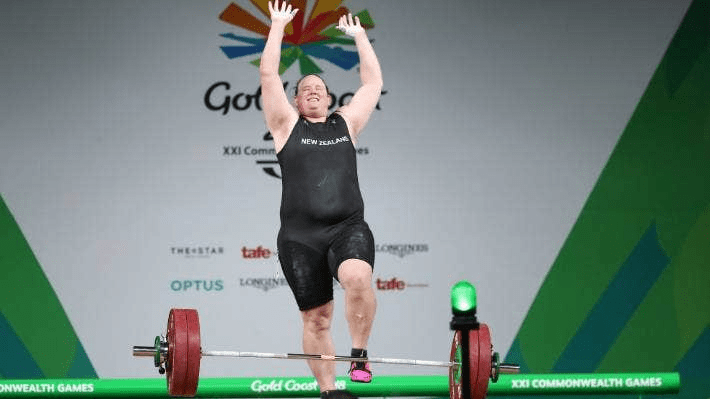
In fact, when New Zealand trans-identified weightlifter, Laurel Hubbard, competed and medaled in the 2019 Pacific Games, the American Samoa Minister of Education, Sports and Culture had something to say about it; “It is not fair to have a transgender athlete compete against women.” Hubbard, even at forty-one years old (making him twenty years older than the average female weightlifting champion), displaced several young women of color, denying them a spot at the Olympics. Prime Minister Tuilaepa Sailele Malielegaoi made it clear he didn’t support trans-identified male athletes competing in women’s sport, despite his unwavering support for fa’afafine athletes and the overwhelming acceptance of fa’afafine in his culture. “This fa’afafine or man should have never been allowed by the Pacific Games Council president to lift with the women. I was shocked when I first heard about it,” he told reporters. ​”No matter how we look at it, he’s a man and it’s shocking this was allowed in the first place.”


What’s Fair?

I wish the Chinese Taipei School Sport Federation (CTSSF) and the Ministry of Education (MOE) had responded to my requests for an interview, because I have so many questions for them. Is it fair, I’d ask them, to simply pretend away undeniable biological differences between the sexes in the name of a political ideology which will serve to restrict a space so hard won by women who struggled for it for so long? Is it fair for women — who had to wait so long for the creation of women’s competitive sports, separate from the men — to have to compete against “women” who were born men?

Like in many other countries, female athletes in Taiwan still face challenges and inequalities. They often receive less funding, resources, and training opportunities compared to their male counterparts. This leads to a lack of support for female athletes, which can affect their performance and chances of success.

On top of that, female athletes are often objectified and sexualized in the media, which can lead to them being seen more as sex symbols than as serious athletes. Female athletes in Taiwan may face limited opportunities to participate in certain sports, like basketball, due to cultural or societal norms. For example, some sports may be seen as “too masculine” or “not suitable” for women, which can limit their ability to pursue their athletic goals. Groups have formed to push back against those regressive ideas of certain sports being only for men, but basketball courts are still dominated by male athletes. Female athletes are often held to different standards than males in terms of appearance, behavior, and performance. For example, females may be criticized for being too muscular or not feminine enough, while male athletes are rarely subjected to the same scrutiny. And now, on top of all that, female athletes will have to compete against males. How is that fair?

NoSelfID Taiwan, the only organization in Taiwan documenting the spread of gender identity ideology in the country, suggests locals and permanent residents appeal to legislators and executive agencies. A petition letter is available to download on their site to express your concern over fairness in the National Games to legislators and administrative agencies, such as the Sports Department of the Ministry of Education and the Hsinchu County Government (who will host the National Games.)

It is a physiological fact that men and women are built differently. There are myriad and well-documented ways in which men are physically different than women. Allowing men to self-identify as women and access women’s spaces and resources causes harm to the original members of the category “woman.” There are over 160 cases globally in which male athletes have unfairly competed against women or girls. We can no longer ignore that this is happening.


4W provides a platform for over 70 feminist writers in countries spanning the globe. This work is made possible thanks to our

An Interview with Women’s Voices Podcast

Neo Yang and I speak with Genevieve Gluck: co-founder of Reduxx Magazine, feminist researcher and essayist, and host of the podcast Women’s Voices.

When I first started working as a women’s rights activist, Genevieve Gluck was one of the women I most admired. She’s the “real deal”, a heavy hitter, and a wonderful woman. What an honor it is now to call her a friend, and be interviewed by her for her podcast with my brilliant colleague and fellow activist Neo Yao. Neo is a force, and I am grateful every day that I met him and can work with him. You can listen to our interview here: Spotify

After almost a year of organizing, Jaclynn Joseph and Neo Yao have founded Taiwan’s first gender critical, female-centric organization — Taiwan Women’s Association (TWA/Chinese 臺灣女性協會) — which has been officially recognized by the government. Originally from Hawai’i and now based in Taiwan, Jaclynn Joseph is a university lecturer, Ph.D. candidate in the field of feminist philosophy, and the Taiwan country representative of the feminist organization Women’s Declaration International (WDI). A guest writer for Feminist Current, she was the first to shed light on the infiltration of gender identity ideology in Taiwan through her articles.

Neo Yao was born and raised in Taipei, Taiwan. He has been a human rights and LGB activist for more than fifteen years, and a women’s rights activist for more than six years. He began focusing on Women’s sex-based rights in the past several years, and along with Jaclynn, formed the Taiwan Women’s Association in late 2022 as a founding member, where he currently serves as an executive council member. Some founding members of TWA, including Jaclynn, also work with an organization called No Self-ID Taiwan (NSIDT). NSIDT is the only website in Taiwan dedicated to pushing back against gender ideology and tracking changes in related legislation.


My Newest Out on 4WPub – Self-ID Would Make Epidemic of Voyeuristic Assault in East Asia More Gruesome

Singaporeans are dealing with an increase in voyeuristic assault; in Malaysia videos from a women’s changing room were being sold online; and Japan sees a huge surge in “upskirting” and spycam crime.


heterodox

/ˈhɛt(ə)rədɒks/

adjective

not conforming with accepted or orthodox standards or beliefs.

Do you like your critical thinking with a side of heterodoxy? Me too! Which is why it’s such an honor to be enthusiastically welcomed as a paid writer to 4W! 4W exists to give a platform to today’s feminists who are boldly stepping outside of the mainstream narrative to unapologetically bring you stories about the issues affecting women today.

I hope you enjoy the first of many articles I’ll have featured on the site! Click here for the article on 4W.


Self-ID Would Make Epidemic of Voyeuristic Assault in East Asia More Gruesome

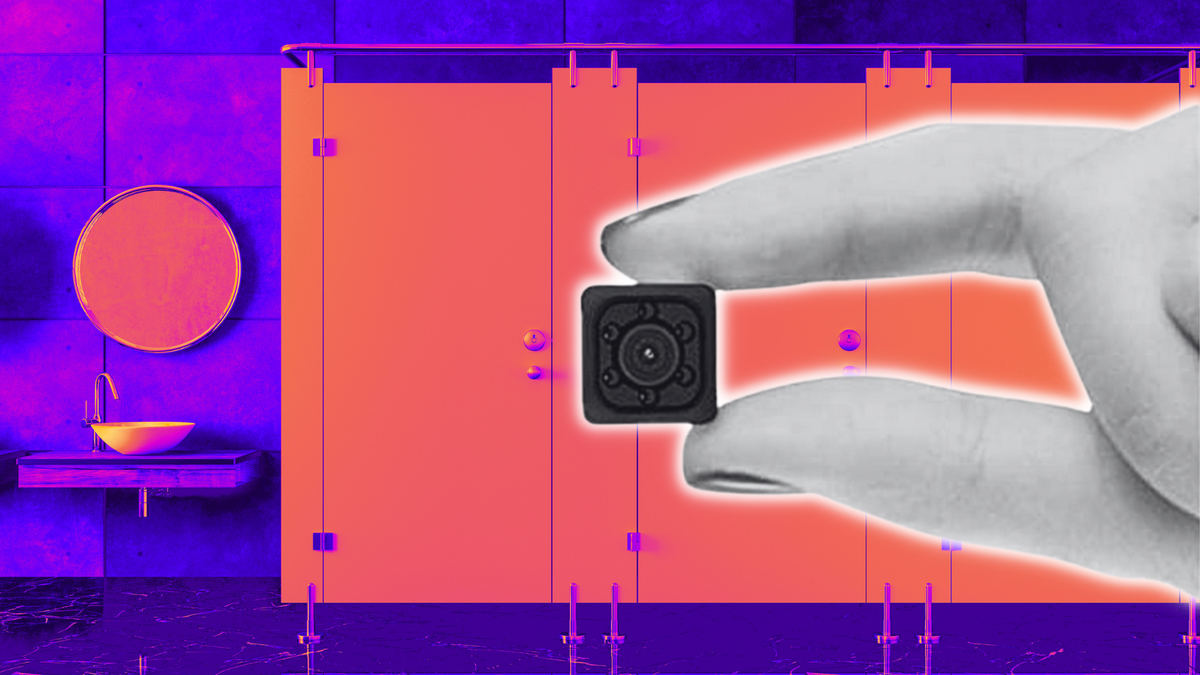
As digital sex crimes rise worldwide, South Korea has become the global epicenter of spy cams (also referred to there as “molka”) – the use of tiny, hidden cameras to secretly film people primarily in restrooms, hotels, and changing rooms. The bulk of the victims are female, the vast majority of the perpetrators are male, and the captured images or videos are regularly sold on various pornographic websites to great fanfare.

Disturbingly, spycam footage has actually become the dominant pornographic genre in South Korea. In 2018, the issue of spycams took center stage with the bust of multiple spycam rings, which included some well-known K-Pop stars. In fact, the problem was so severe at the time that the Seoul government established an 8,000-person team to scour the city’s public restrooms on a daily basis. To this day, the police still regularly sweep public restrooms and hotels. Tens of thousand women in the country took to the streets and protested against the harassment and violations they were facing daily and the government’s inability to take it seriously, but the problem remains, and enforcement of these offenses is arguably still inadequate. As bad as the problem is in South Korea, it is much worse when one takes into consideration that it is a vastly underreported crime; it is hard to detect the hidden cameras in the first place, so the victims and authorities may not even know when a crime occurs.

In Asia, the issue of high-tech voyeurism isn’t limited to South Korea. Singaporeans are dealing with an increase in voyeuristic assault; in Malaysia international headlines were made when videos from a women’s changing room were being sold online; and in Japan authorities are scrambling to deal with, but not discuss, a huge surge in “upskirting” and spycam crime. Upskirting is a term used to describe the act of taking photographs or video footage of a person’s underwear or private parts without their consent, typically using a hidden camera or smartphone.

In recent years, the issue of hidden cameras and voyeurism, particularly in public restrooms and changing rooms, has been a growing concern in Taiwan. These hidden cameras, some as small as your fingernail, have been used to record and distribute images and videos of individuals, mainly women and girls, without their consent. On my daily inter-city train rides I now see warnings in stations in Taipei to be aware of the dangers of men taking upskirt photos on escalators, as well as reminders that staff regularly check restrooms for recording devices.

In 2020, a 26 year old man in Taipei made headlines after he was found to have secretly filmed more than 160 women and girls in Taipei and New Taipei City. Among his victims were girls as young as 13 and 14 years old. The majority of his spycams had been placed in women’s restrooms in various schools and universities in the city, sex-segregated facilities he had snuck into. The fact that he was able to sneak into so many women’s only restrooms is particularly alarming since Taiwan is considering passing a self-ID bill, which, if pushed through, will ensure that a man need only self-declare an inner sense of “gender identity” in order to legally change sex and enter female spaces. Men like this would have free and open access to women-only spaces, anywhere and at any time.

A couple from China vacationing in Taiwan discovered several hidden cameras placed in the bathroom and bedroom of their AirBnb in the south of Taiwan. The couple sued the owner of the AirBNB, and expressed concern about how many other people had been unwittingly victimized since the apartment was purchased and made available to holiday goers in 2014.

Last year, a man in southern Taiwan was caught with over 3,000 photos of women on his phone and computer, having taken “upskirt” photos of them using his cellphone and hidden cameras. And in 2021, in a high-tech related form of harassment, a 26-year-old Taiwanese YouTuber, who goes by the name Xiao Yu, was arrested for selling deep fake pornographic videos of various individuals well-known in Asia, ranging from influencers, to celebrities, and even government officials. It is estimated that he earned over $325,000USD from video sales.

So what is Taiwan doing to help solve this issue? In December of 2015, Taiwan passed the Sexual Assault Crime Prevention Act. The purpose of the act is to prevent sexual assault and to protect the rights of victims. This act provides sexual assault prevention education at every level of school, provides a legally competent authority to investigate sexual assault crimes, provides corrective measures and medical treatment to perpetrators within prison, and provides support for victims and punishments for offenders.

In direct response to voyeurism, including upskirting and hidden cameras, Taiwan has:

  • Increased penalties for voyeurism and the distribution of voyeuristic material
  • Increased funding for police investigations and technology to detect hidden cameras
  • Established a national database of individuals convicted of voyeurism
  • Increased public awareness campaigns to educate individuals on how to detect and report hidden cameras

In Taiwan the government has also established a national database of individuals convicted of voyeurism, which is maintained by the Ministry of Justice’s Investigation Bureau. The purpose of this database is to keep track of individuals who have been convicted of voyeurism, and to make this information available to the public.

The database includes information such as the individual’s name, date of birth, and photograph, as well as details about their conviction and sentence. The database is searchable by the public, and can be accessed through the Investigation Bureau’s website. The government also has a mechanism to prevent re-offending through the use of this database. For example, employers can check the database before hiring a new employee, and individuals convicted of voyeurism are prohibited from working in certain fields, such as education and healthcare. The establishment of this database is part of the government’s efforts to combat the problem of voyeurism in Taiwan and to protect the privacy and safety of its citizens. However, the effectiveness of this database in preventing re-offending, and the possible side effect of stigmatization of individuals that have served their sentence is still a topic of debate.

Additionally, there have also been grassroots efforts by citizens and civil society organizations to combat this problem, such as creating public maps of known locations where hidden cameras have been found and organizing volunteer groups to conduct searches and public awareness campaigns.

I was recently told by a friend on social media to look online at the proliferation of spycams being sold in Taiwan, and what I found was shocking. First, when I typed in “Taiwan spycam” to Google, nothing but pornography sites came up. The genre, it seems, is incredibly popular amongst consumers, which explains why so many victims of high-tech voyeurism find videos or images of themselves on porn sites available to a paying public, leading to emotional and psychological harm for the individuals recorded.

Advertised on popular shopping platforms like https://shopee.tw/, are easily hidden or disguised spy cameras. The advertisements also include photos of couples in bed together. The only logical implication being that one can film couples or a partner at their most vulnerable without consent.

Another advertisement on https://shopee.tw/ featuring a small, easily hidden camera and a woman in her underwear. The suggestion the ad is making here is clear and disturbing.
Sold for less than $20USD, this tiny spy cam, sold on the same site, features another unsuspecting woman bending over while in her underwear.

Some have advocated a ban on the sale of hidden cameras in countries like Singapore. In other countries, laws have been passed to specifically prohibit the manufacture, sale, or possession of hidden cameras. For example, in South Korea, it is illegal to produce, distribute, or possess a device that can be used for voyeurism, such as a hidden camera, and violators can face up to three years in prison or a fine of up to 20 million won (about $18,000 USD).

The technologized version of male violence, namely digital sexual violence could get even more gruesome for females with new gender identity legislation. A precedent was set in 2021 when the Taipei High Administrative Court issued a ruling allowing a trans-identified male calling himself “Xiao E (小E)” to change his legal sex to female without sex reassignment surgery — the first of its kind. Until then, individuals could not change their sex on an ID card unless they provided medical certificates confirming a diagnosis of gender dysphoria and proof of ‘sex reassignment’ surgery. There is now a push in the country for self-ID, a simple self declaration of innate feeling and one would be allowed to legally change their sex. Studies show that globally, most males who identify as transgender retain their genitalia. Changing the law in order to allow these males access to women’s spaces means any man at all can access women’s spaces, essentially making all spaces mixed-sex spaces, to the detriment of females.

At a Taiwan public hot spring in 2018, a facility separated into male and female spaces so participants can bathe comfortably in the nude, a man disguising himself as a woman attempted to enter the female-only space. Scaring customers, who were exposed to his penis, he asked to be referred to as female before being escorted out. The same thing happened last year, with a man claiming to be a self-declared woman trying to access the women-only section of a hot spring facility with a false ID and his genitals tucked between his legs. He was promptly arrested.

The risk to the privacy and safety of women and girls is real. Around the world, there have been numerous cases in recent years of men either cross-dressing or claiming to be transgender in order to access women’s bathrooms and locker rooms for inappropriate purposes. Many women fear that predatory men, who often already go to great lengths to gain access to vulnerable women and girls, would abuse the notion of gender self-identity and take advantage of self-ID. The fact is, they already are.

On Grief and Strength – Centered Magazine

A Piece on Surviving Loss and Becoming a Strong Woman on International Women’s Day


March is Women’s International History Month, and March 8th is International Women’s Day, a time to celebrate women and the countless ways that we have contributed throughout history to society.

I am honored to have a piece featured in this special Women’s issue of Centered Magazine, the topic being Strong Women. My journey to becoming a strong woman hasn’t been easy, and losing my father has been the most difficult challenge of my life. Becoming a strong woman wouldn’t have been possible without his strength. I hope your enjoy my story, and that in your hearts you continue Running with the Big Dog.

Read the magazine online https://communitycenter.org.tw/what-we-do/magazine/ or get the magazine at your usual outlet.


Losing a father is a profound and painful experience, overwhelming with feelings of sadness, loneliness, and grief. The grieving process is different for everyone, and it can be a long and emotional journey. My personal journey of grief goes back a decade, with the pain of loss felt most acutely in autumn. November would have been dad’s birthday, and as I write this I realize it would have been his 75th. Looking back I find it amazing how quickly, and slowly, the time has gone since he passed away. Ten years is a long time, but it’s also a blink of an eye.

For most of us, change, loss and grief are hard. Even when we experience positive changes, we sometimes yearn for the way things were before. Intellectually we recognize that change, loss and grief are a natural part of life. Still, it is tough to let go of what we have known and to begin again. When my dad passed away, I grieved long, hard, and completely. His death left me shattered, and I felt incapable, helpless, and under-confident. His departure filled me with the dark void. It was years before I felt like I had the freedom and strength to move on with my life. Years later I realized that the thief that is grief was stealing all that was happy and good in my life, and I made the decision to change that. 

I would give anything and everything I have right now to have my father back in this world. He worked passionately, lived fearlessly, and loved wholeheartedly. He was my greatest ally. He was a titan. Too similar in fiery Iberian temperament, we didn’t always get along, but we were always close. It is hard to imagine life without someone like that, someone you can trace yourself in. Every time I think of the day he passed away, my head on his chest in our home in Hawai’i, when his heart stopped and mine continued to beat, I am engulfed in pain. There is not a day that goes by that I don’t miss him, or wonder what life would be like if he were still here, with me, his only child. 

I was in my 20s when he got sick, in graduate school and unsure about my future.  I was unfulfilled, unsettled and unfocussed. When he died, I had one semester left of grad school to complete and a thesis to write. In a blur, a haze I can barely remember, I graduated on time, second in my class,  and with a 4.0 GPA. My dad didn’t raise a quitter. But once I had my diploma in hand I collapsed for the next two years, and there I remained at an emotional rock bottom. I finally reached the point where I knew that I had no further to fall. So I took some of the biggest risks of my life. And since then, life has continued to throw me numerous curveballs, allowed me to experience adventure, and pushed me into situations that fuel my passions and intellect. There is good that can come from the bad.

But finding happiness isn’t easy. Sometimes, it’s disgustingly difficult, hidden behind your worst fears, and it won’t show itself until you build up your courage and fight for it.  But eventually, you will find it – as long as you don’t give up. I’m proof of that. But most people who meet me now don’t know about my life ten years ago. They don’t know who I was before my father died, or during the year when he was sick with Stage 4 brain cancer, or the few years after when I was consumed by grief.  I was a completely different person. They didn’t experience me during my grief or my metamorphosis.

They didn’t see the panic attacks and insomnia. The forty extra pounds of weight that I gained by being on antidepressants. The disappointing relationship I continued for years just to feel a little bit less alone in the world. 

They get to see the person I am today.  Quick wit and sarcasm, cracking jokes (that aren’t always funny). The unstoppable voice and mind behind the articles found in publications ranging from philosophy to feminist theory. The worldly expat with a zest for life and 37 countries under her belt and stamped in her passport. The doctoral candidate. 

The journey that shaped me into the woman I am today – the woman I am slowly but surely becoming – the woman I hope that my father would be proud of, didn’t come easy. There’s nothing quite like the death of your most favorite person, your support network, your closest family, to kick you in the rear and remind you of how short life actually is. 

I never for a second thought, in my 20s, that I would have to live the rest of my life without my dad. He will not be there to walk me down the aisle if I get married one day. I can’t call him on the phone to talk to him when faced with complicated life decisions. I can’t fly home to Hawai’i, hug him, and have one of his amazing home cooked meals. I can’t thank him for everything he’s done, or repay him for the sacrifices he made for me. I can’t return the inheritance he left me, still untouched, and tell him; “Take it back, I don’t want it! Travel, see the world like you always wanted to. Live out the dreams you put on hold to give me a better life.”

When you lose your favorite person, some of the things that you felt were important will quickly become a waste of time. You will grow and shift, become uncomfortable with your current life, and all of that discomfort creates pressure that forces you to reprioritize, re-examine and reshape the life you want to live. People call me strong but I don’t always feel that way. I have to remind myself that strong women are still allowed to struggle.

I used to fear expressing how I really felt on issues. I used to fear traveling to unknown destinations solo. I used to fear letting a man know what I truly needed to be happy, so I played games and didn’t stay true to myself.  I used to fear making rash decisions, or planning too little, or living without a sense of security. I used to fear change in any shape or form. Then life forced change on me and asked me, can you handle this? Or will you break? What are you made of?

I used to let these fears control my decisions, and my life. Grief sat on me like a boulder, getting me from moving forward, from growing, from progressing. In the heart of my grief, at my frailest, I grieved all that was stolen from me by death; love, security and even my very sense of self. But I now see fear as an opportunity to challenge myself, and prove to myself that I am capable of overcoming each and every one. I have traveled alone to countries on four continents. I’ve spoken in front of huge crowds on controversial issues alongside women I hold in deep admiration.  I walked away from a decade-long relationship that I was scared to leave even though it was damaging to my confidence, mental health, and self esteem. I applied for a PhD program, got accepted, and am on my way to having my doctorate – and I’ll be the first in my family to do so.

I feel every bit of that fear before speaking in front of an audience. When I left my well-paying full time job to lecture part-time at a university to focus on my academic pursuits. Giving my heart to someone new. When I take risks and jump into the unknown. 

And it is because I know that nothing I will ever go through – whatever problem, whatever issue, whatever heartbreak – will be as difficult as my father’s death.  If I can go through that trauma, that hardship, that depression, and make it out alive – I will be able to get through anything. 

Years later, I have looked back on the journey my grief has taken and realized that it has made me a stronger person. If my father hadn’t passed on, would I so willingly have taken on so many challenges? The journey of grief starts bitterly and ends at acceptance. I know that I will always miss my father, but I also know that his love and legacy will live on in my heart. I’m grateful for the time we shared, and I’m confident that I can face whatever life brings my way. 

My newest article out on Feminist Current!

Part of a series I have done on gender identity ideology in Taiwan

Women in Taiwan are organizing to fight back against gender identity ideology
(Originally published on Feminist Current)


byJACLYNN JOSEPH

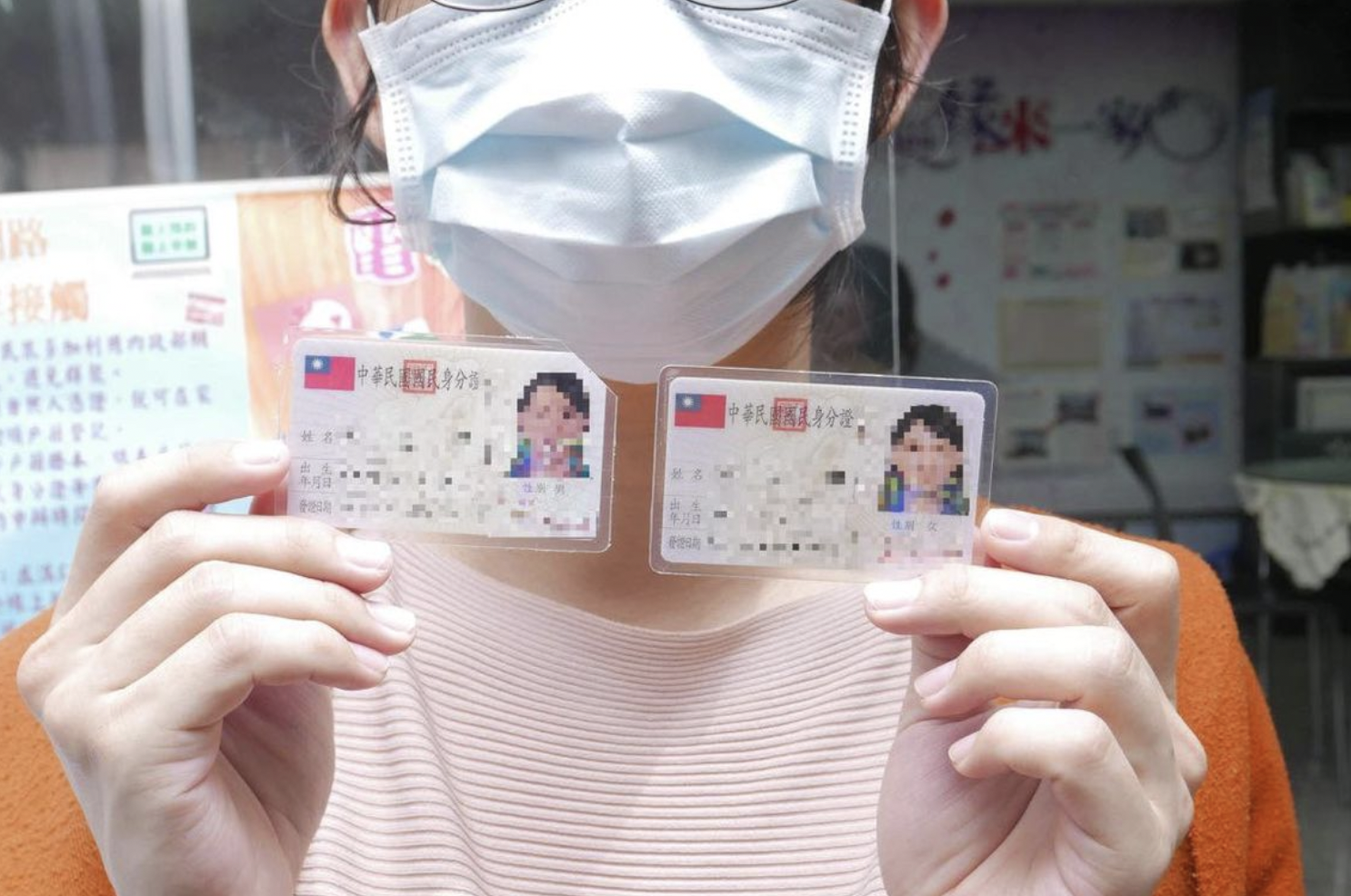
Xiao E at the Daxi Household Registration Office holding his former and updated national ID card

Political activism is relatively new in Taiwan, a country hailed as a beacon of progress in Asia but that only began to approach democracy in the late 1980s and early 1990s. Taiwan transitioned from a one-party state under martial law to a multi-party democracy, and the country began to see democratically elected presidents as recently as 1996. Taiwan has seen a renewed interest in activism and protest of late — the Sunflower Movement, for example, which saw hundreds of student protesters occupy Taiwan’s national legislature in 2014 to oppose a proposed free trade agreement with China, shook up the political culture on the island. Now after almost a year of organizing, Taiwan’s first gender critical, female-centric organization — Taiwan Women’s Association (TWA/Chinese 臺灣女性協會) — is being officially recognized by the government.

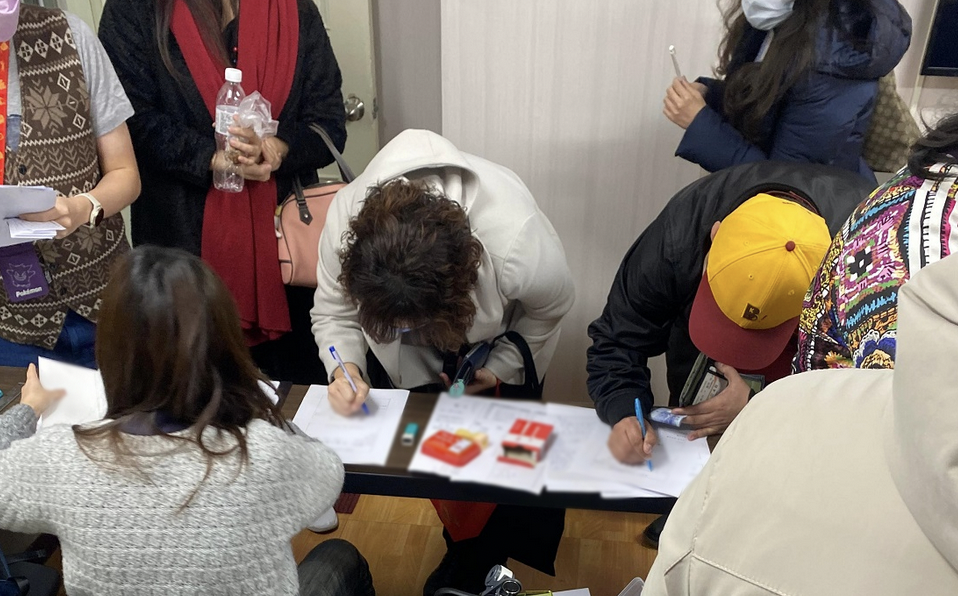
Members of TWA sign in for the first committee election ceremony, held in Taiwan on Dec. 25th.

Formed through cooperation between grassroots activists in 2022, the TWA is composed of members who seek to promote, ensure, and defend the rights of women and girls using legal argument, policy advocacy, and public education. We are a local, community-based and women and LGB-led organization made up of members of varying ages, academic affiliations, and diverse professional backgrounds, working together to respond to the emerging infiltration of radical gender ideology and female erasure in Taiwan. We are socially progressive members of the community who want to challenge our local media to stop ignoring the need for open debate and unbiased coverage of self-ID laws and gender ideology (which has been thoroughly one-sided to date). We are seeing a modern version of Taiwan’s authoritarian past, similar to the witch trials, except that instead of burning accused “witches,” trans activists and their supporters are vilifying, ostracizing, and blackballing dissenters, and suppressing any information that contradicts their goals.

In Taiwan, International NGOs can set up a nonprofit social organization with the backing of thirty founding members who come from various districts within the country. As a permanent resident of Taiwan, I was able to participate in the formation of the TWA as a founding member and hold a seat on the Supervisory Committee for the next three years. I am the only non-Taiwanese citizen to be a founding member.

Our organization recognizes that this is critically important work done under very difficult circumstances. Part of our budget will go to a 24 hour CCTV and surveillance budget to protect the home of our organization’s director, as there will be a serious risk of violence, harassment, and bullying, on account of the fact the director’s registered address is public and searchable. Because rational questions and critique has been deemed “literal violence” and “life-threatening,” we open the door to violent opposition. As we have seen happen time and time again, those who stand up against gender ideology are fired, blacklisted, threatened with physical harm, rape, or even death — all due to having challenged the idea that the cultural construct of gender should supplant biological sex.

How did this start in Taiwan?

This movement was sparked in part by Feminist Current. My original article remains the only one written in English by someone living in Taiwan addressing what is going on within the country and demonstrating opposition to self-ID legislation. As part of my research, I spoke with activist Neo Yang, an executive board member of TWA, who explained the progression of gender identity ideology in Taiwan and how organizations advising the government were strongly biased in favour of self-ID legislation, helping to translate information I would never have found on my own.

After publishing my first piece on this site in 2021, local Taiwanese women translated my article into Chinese and shared it on popular social media platforms like Plurk. The first article discussed the infiltration of gender identity ideology in Taiwan and how support was growing for related policies and legislation. Citizens opposing self-ID felt a deep sense of betrayal when they tried to raise awareness about this issue, or looked for help within local feminist organizations. One activist I spoke to told me how disappointed she was that so many “Honorable feminist scholars in Taiwan have publicly supported self-ID” and that despite the fact an increasing number of  girls and women are concerned about self-ID laws, when they “turned to women’s organizations and politicians for support, they “got nothing but disappointment.”

Connections were made and plans were set into motion to join forces to start an organization that could push back against this harmful ideology. Many in Taiwan were disappointed in the lack of action by feminist organizations here, and such organizations have conformed to “gender mainstreaming” and openly support the inclusion of males in female spaces.

Some founding members of TWA, myself included, also work with an organization called NoSelfID Taiwan (NSIDT). NSIDT is the only website in Taiwan dedicated to pushing back against gender ideology and tracking changes in related legislation. A volunteer for NSIDT told me, “The website is the only one of its kind, and serves as the most comprehensive site on the history, status, and impact of self-ID legislation in Taiwan.” The site hosts dozens of translated articles and news about gender identity ideology from all over the world, providing resources to counteract the mainstream media’s omissions.

Last year, NSIDT started two petitions opposing gender self-identification on Taiwan’s Public Policy Participation Platform, each of which garnered over 5,000 signatures. The first demanded a halt to the alteration of the sex marker on identity cards without proof of sex reassignment surgery, and the other for “clear separation for the safety of women and children.”

What’s on the TWA agenda for 2023?

Like all small nonprofits, TWA’s resources are limited. We have made a strategic decision to focus the vast majority of our time, attention, and financial resources on pushing back against the encroachment of gender ideology. Currently, and historically, there have been many other nonprofit and government-funded organizations in Taiwan that focus on other issues related to women and girls. Many of these organizations are well-funded and receive ample public support, but either support gender ideology, or ignore it entirely — refusing to address it. TWA is the only gender critical, non-partisan, nonprofit that engages in legal arguments and policy advocacy to protect, advance, and defend women’s rights.

Women’s sports in Taiwan are under threat

As I touched on in my second piece for Feminist Current, female sport is at risk of being destroyed in Taiwan. Beginning in 2023, trans-identified student athletes can enter the Taiwan National High School Games — the largest multi-sport event for junior and senior high school players in Taiwan — as the “gender of their choice.” This means that male athletes who “feel” female can compete in the female sport categories. The eligibility rules and competition details have not yet been laid out officially by the National Sports Administration. It only recently come to light that a trans-identified male competed as a woman in Taiwan’s National Intercollegiate Athletic Games in 2018. Many runners and coaches from other schools knew this athlete was male, and representatives of Taiwan’s National Tsinghua University questioned his ability to compete against female athletes in track and field events, but because there were no clear rules for transgender participation in Taiwan, he was able to compete in the female division, destroying the previous record held by a woman.

Convention on the Elimination of All Forms of Discrimination against Women (CEDAW)

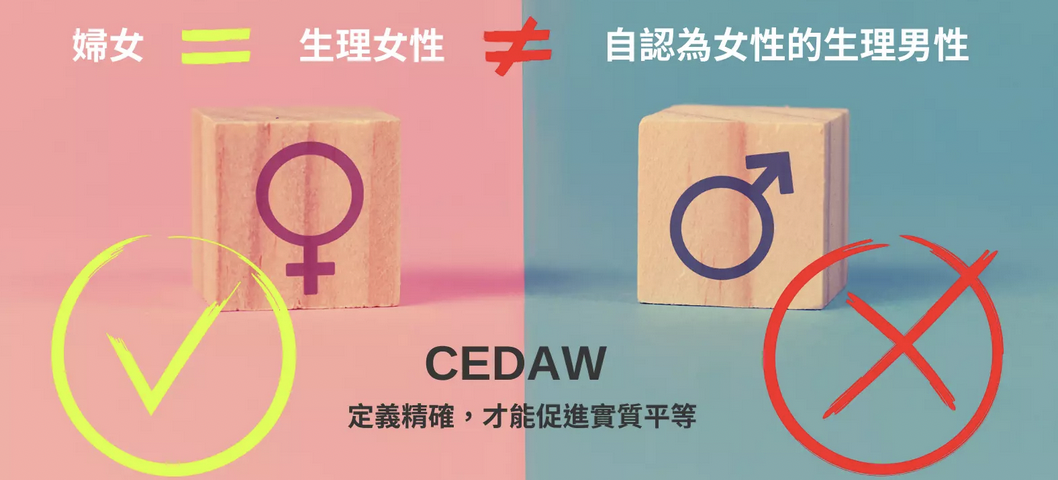
To achieve greater equality between the sexes, Taiwan’s highest court, the Legislative Yuan, ratified CEDAW in 2007. Members of TWA have gone through the conclusions and recommendations based upon the review of Taiwan’s “Fourth Report on the Implementation of CEDAW,” published by the Gender Equality Committee of the Executive Yuan (the executive branch of the government) on December 1st, 2022. According to the review, trans-identified men should be included under CEDAW, adding that the government should introduce third-gender certifications to “break gender stereotypes.” The language CEDAW uses has been manipulated and reframed to refer to biological males as part of the distinct sex class of women. The review is littered with the word “gender,” while the actual usage of “sex” is limited to terminologies like “sexual and reproductive health service,” making it very confusing to determine what the focus of their review is. The stated objective of the Convention is the “elimination of all forms of discrimination against women on the basis of sex,” but now includes men in the female sex class. Female erasure is being enacted through changing laws that provide sex-based protections for women, while dismissing biological sex differences as irrelevant or even labeling them bigotry.

The line on top reads, “Don’t forget CEDAW’s original founding premise: ‘To eliminate discrimination against biological women.’ Women means ‘biological women,’ not ‘biological men who claim they’re women.’” The bottom: line reads, “Only an accurate definition brings us closer to equality.

Protecting Women-Only Spaces

The protection of women-only spaces and female safety will be at the forefront of our work, as well as working to shine a light on and bring media attention to changes in law and policy in Taiwan that are detrimental to women.

In 2022, administration at National Cheng Kung University tried to sneak a trans-identified male student into female-only dorms. This student possessed all of his functional male genitalia and was meant to share a room with up to five female students in a small space with little privacy. Only after a whistleblower brought this to the attention of the mainstream media did it come under scrutiny. This was not the first time a major Taiwanese university tried bringing a fully intact trans-identified male into girls’ dorms without informing anyone or getting consent. This also happened at Taiwan’s top academic institute, National Taiwan University. In fact, the former Dean of National Taiwan University, Feng Yan, admitted that she “secretly” assisted several trans-identified students to transfer into dormitory rooms of the opposite sex when she served as the Dean of National Taiwan University from August 2005 to July 2012.

As an officially recognized association, TWA can participate in women’s rights related conferences. Rather than merely being “a bunch of concerned citizens” as we have been in the past, we are now a registered INGO. We will be able to send formal complaints to government agencies to pressure them to respond to our inquiries publicly, rather than continuing to hide their agenda from the public. Sending written formal requests for information or further scrutiny will have more impact on local governments, legislators, and the executive branch of government in Taiwan. As a legal entity, we can (but will hopefully never have to) file lawsuits against trans activists who harass or threaten TWA members.

Here in Taiwan, we are taking the advice of Angela Davis, who famously said; “I am no longer accepting the things I cannot change. I am changing the things I cannot accept.”

TWA was created to help promote critical thinking, to open dialogue, and to safeguard the rights of women and girls. While members may not agree on every nuance of this topic, and our personal experiences may differ, we are united in our determination to speak out, educate, raise legitimate concerns, and take action. Within the next month, TWA will be unveiling a new website, in both English and Chinese, and creating a social media presence. TWA will be opening up registration to new members, Taiwanese citizens, and foreigners with permanent resident cards in March.

Like many women around the world have done, we will be fighting back in Taiwan.

Jaclynn Joseph is a Hawai’i born — now Taiwan based — PhD student and university lecturer.

Taiwan Now Listed on Women’s Declaration International

Taiwan finds a voice on the international feminist website WDI

I’m proud to be able to put Taiwan on the list of countries covered by Women’s Declaration International (WDI). WDI is a group of volunteer women from across the globe dedicated to protecting women’s sex-based rights. Our volunteers include academics, writers, organizers, activists, and health practitioners, and aim to represent the total breadth of the human female experience.


I wrote up the info provided for Taiwan, and while it’s not extensive or attempting to be complete (that could take up an entire book), it provides a glimpse into the status of women and the infiltration of gender ideology in the country.

WDI has written a Declaration on Women’s Sex Based Rights to lobby nations to maintain language protecting women and girls on the basis of sex rather than “gender” or “gender identity”. I encourage you to visit their site and sign it. One of the authors of the declaration is Dr. Sheila Jeffreys.

With my entry Taiwan becomes the 9th country in Asia to be represented on the site. I’ll also be the country contact. I’m honored to be in such company, amongst truly inspiring feminists who are making a difference.

Surviving Injustice

The story of Fred Him-San Chin – Wrongfully imprisoned during Taiwan’s White Terror

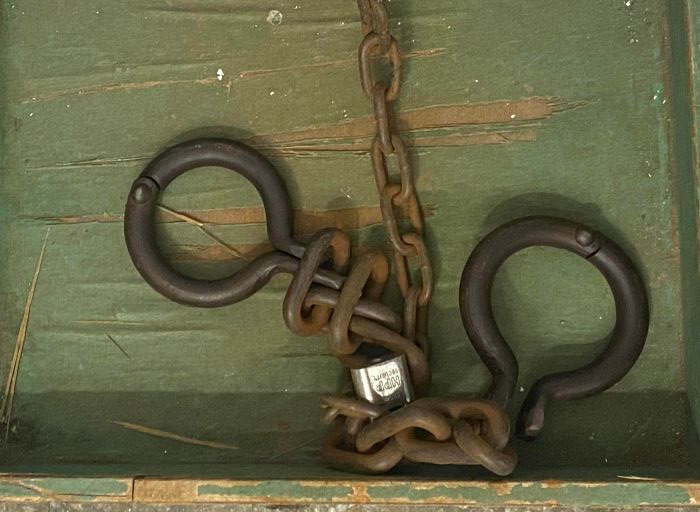
Built in 2018 the National Human Rights Museum, located in Taipei, Taiwan, provides publicly accessible research and educational materials relating to the period of martial law in the country, and works with museums globally as well as throughout Taiwan. The museum is housed in the former detention center, court, and jail where political prisoners were incarcerated and tried during the White Terror period of Taiwanese history (from 1947 to 1987). These now deceptively peaceful but somber grounds include minuscule jail cells, heavy metal ankle and wrist shackles, the old commissary, and an infirmary. This often overlooked museum is highly recommended for the insight it gives into the horrors of authoritarianism, and just how far Taiwan has come since then in such a short time; its transition from authoritarian rule to a representative, electoral system was swift and peaceful. I’ve lived in this thriving democracy, the leading light of democracy in Asia, for over a decade, and it never ceases to amaze me just how quickly the country changed from a tyrannical and authoritarian regime to the island of peace and freedom I know it to be now.

On Saturday evening I went to the National Human Rights Museum to go on a guided tour lead by Fred Him-San Chin (陳欽生). Mr. Chin is a Taiwanese citizen of Chinese descent who was born in Malaysia and was wrongfully imprisoned in Taiwan from 1971 to 1983. He volunteers his time now, at 73 years old, to educate the public on his experiences. Why does he do this? To help him resolve his own trauma and to make sure horrors like this never happen again.

Mr. Chin, whose photo is above, graciously leads tours in English for those curious about Taiwan during the White Terror period. If you’re not familiar with the term, it refers to the political repression of civilians living on the island of Taiwan by the government, under the rule of the Kuomintang (KMT). The period of White Terror is generally considered to have begun when martial law was declared in Taiwan in May 1949 and ended in September 1992. Mr. Chin came to Taiwan from Malaysia in 1967 to study at National Chung Kung University in the southern city of Tainan. In March of 1971, Mr. Chin was brought to Taipei by KMT secret police, where he was imprisoned and tortured. His crime? He wasn’t told. He wasn’t even given a trial, but told only to “admit to his crimes.” The details of his repeated torture and what he experienced at the hands of the guards is the stuff of nightmares, and I won’t write them here. To hear such a gentle, well-spoken, kindly man speak of the abuse and severe physical and mental anguish he suffered made me sick to my stomach. Eventually, Mr. Chin was forced to confess to a bombing that had taken place in the United States Information Service (USIS), where he spent time studying and speaking in English (his first language). He had spent time at the USIS because he spoke English fluently and did not know any Chinese, and it was a place where he could study and communicate with ease. Unfortunately being a foreigner was most likely the reason he was wrongfully accused of a crime. He was an easy target.

Mr. Chin was sentenced to death, but due to international pressure, from the US and Malaysia primarily, his sentence was commuted to twelve years in prison. In the image above you can see his name, in Chinese, and the dates of his incarceration at the National Human Rights Museum. Mr. Chin told our group that he tried to commit suicide many times while wrongfully incarcerated. The conditions that he was kept in provided only for the most basic of needs. He was a foreigner, a very young man, alone in a country where he could not speak the language and had no friends or family. In prison he was lucky enough to be given the responsibility of taking care of a stray dog, which he felt was his one true friend and a bit of happiness in an otherwise meaningless life. He and the other prisoners he was kept with were treated with no dignity. As the years went by he learned both Chinese and Taiwanese, and various skills necessary to survive in his environment, until his sentence finally came to an end in 1983. But his story doesn’t turn around and become a happy one. He was released without any sort of identification or documentation, making it impossible to get work or housing. He could not return home to Malaysia. He was homeless and stateless for the following three years.

Thankfully, in 1985 as martial law in Taiwan was ending he acquired an ROC (Republic of China) Identification Card. He made his first trip home to Malaysia in 1988 and spent several months there, but pressure from family made him realize that the best thing for him would be to return to Taiwan. As Mr. Chin said during his guided museum tour, his country of Malaysia had changed drastically since he had last been there. And, happily, after being released from prison he had had met a Taiwanese woman and they wished to marry and have a family.

Mr. Chin tried to move on with his life by marrying and starting a family, traveling internationally, and working. He described once seeing a guard who had brutally beaten him while in prison while on the streets of Taipei, and the overwhelming repulsion and rage he felt. But he had promised his wife that he would not discuss what had happened to him. And until 2009 he kept silent. But opening these long hidden wounds again would help Mr. Chin heal. Mr. Chin has often shown foreign audiences around, including most recently Nancy Pelosi on her trip from the US to Taiwan, and he has even written an English language autobiography.

Were the people who ever wrongfully accused him and sent him to prison ever found? Did they ever come forward or apologize to him? No. And given how much time has passed I doubt they ever will. But Mr. Chin will greet you with a smile, welcome your questions, and talk about his love for his adopted homeland of Taiwan. He holds no resentment in his heart. He feels lucky, he says, because his life has had meaning after all. This resilience truly struck me, considering the physical and psychological harm he went through for so long. He meets people from all around the world who want to listen to him and to learn more. He has been publicly apologized to by four of Taiwan’s presidents, and Taiwan has not shied away from admitting their mistakes. Unlike other countries in Asia, or around the world for that matter, and despite being new to democracy, Taiwan opened a museum to show the public what happened here. Mr. Chin is just one of 140,000 people who were tortured and imprisoned during the White Terror. Officially, about 4,000 died, not including those in extrajudicial executions involving between 18,000 and 28,000 victims. Hopefully by providing a truthful account of a horrible moment in history, we can avoid repeating it again in the future.


Mr. Chin’s book can be purchased from the National Human Rights Museum in person, or online. The museum offers many guided tours, in Chinese and in English, and I strongly encourage you to take one. You’ll learn a lot!

Facing the Calamity: A Step Through Hurts & Hardships and Looking Beyond for Generations to Come
by Fred Him-San Chin

I am my foremother’s wildest dream

So much can change within three generations

An old photograph. A woman sits on a nondescript flight of stairs in a flowery linen dress. The face shown looks just a little bit like yours. You remember your aunt saying that this was a great-grandmother, but otherwise the woman in the picture is shrouded in mystery. Her story must be known, you think. Who was this woman? What was her life like?

After my dad died in 2013, along with both sets of grandparents many years earlier, I became obsessed with finding out more about my family history. The mere existence of so many genealogical materials digitized, indexed, and searchable online thrilled me, and I quickly threw myself into the search for information. I joined the now some 19 million people who have taken an Ancestry DNA test and contacted distant family members to confirm or build on the details I found.


One of the most interesting finds, and one I was able to gather information on from relatives who remembered them before they passed away, were my great-grandparents. The woman in the flowery dress, Maria d’Assumpcao Ferreira, was born in the Kingdom of Hawai’i in 1886 to Julio Ferreira and Maria (da Sançao) Ferreira. Her husband, Antonio Oliveira Joseph, was born in 1870, in Delgada, Leiria, Portugal.

Maria d’Assumpcao Ferreira was born on May 2, 1886, in what was then the sovereign Kingdom of Hawai’i, when her mother, Maria da Sançao, was 46 years old. Her parents had immigrated to Hawai’i, like her husband Antonio, as part of the great migration of 25,000 Portuguese from Madeira, the Azores, and Portugal, financed by sugar plantations seeking indentured laborers. Between 1880-1900, Portuguese immigrants were the third largest immigrant group in Hawai’i. They also became the third largest group of property owners rather quickly, as many of them moved off the plantations and took advantage of the Kingdom of Hawai’i’s encouragement of independent homesteads. Antonio, recently arrived from Portugal, widowed, with two children in tow, needed a caretaker in the form of a wife.

My great-grandfather Antonio was 16 years older than Maria when they married. She was 15 years old and couldn’t read and write. She was quiet and subservient. With both of her parents in their early 60s at the time of her marriage, it seems they wanted her out of the house and their care quickly, and Antonio offered that to them. According to family members, no one treated her as anything more than a slave; good for housekeeping, cooking, and breeding. She had her first child, a son, when she was just 16 years old. She would give birth to six more children over the next two decades, my grandfather Henry being her last. Her life was hard and by all accounts she wasn’t treated well, little better than chattel.


I wonder what she would have thought of me, her great-granddaughter. She died three years before I was born into a life filled with opportunity and choices. Would she have been proud of the woman I am today? A doctoral candidate, pursuing the the highest level of degree a student can achieve. Unmarried and childfree by choice, traveling the world, writing, teaching university students. I’d like to think that I am my foremother’s wildest dream, living the wildest dreams that she never got to fulfill, and in some cases not even allowed to dream of.  I’d like to imagine she would have been happy to know how much changed in the span of three generations and how far women have come to reach the point where I currently stand—something which should have been accomplished long ago.


Maria died on February 10, 1979 at the age of 92, outliving her husband by thirty years and dying just a few years before I entered the world. I never got to meet her, but relatives have described her as ceaselessly kind, warm, underappreciated, and overlooked. Her son Henry, my grandfather, was a gentle and kindhearted man, and perhaps his personality was shaped by his mother. I wish I could have met her. Finding information about your female ancestors can provide great inspiration. It can also be more challenging than discovering details about male relatives. Many historical documents only list women by their married name, or even by the name of their husband. It takes more effort to dig out the details of the female past. But it’s worth it. We all have brave and inspiring female ancestors – women who have been overlooked – deserving to have their stories told, or at the very least their names remembered.

Taiwan’s Pushback Against Gender Ideology Receiving Global Attention

Jo Bartosch’s article is the newest to feature the fight feminists are waging against gender ideology in Taiwan.

Josephine Bartosch is a heavy hitter. A widely commissioned journalist and feminist campaigner, her work can be found in The Critic, Spiked, Telegraph, New Statesman, The Times, Unherd, The Spectator, MoS, & more.

Most recently Bartosch has turned her attention to the fight against gender ideology we are waging here in Taiwan. Her latest piece on 4WPub focuses on the fightback by the feminists and allies of NoSelfID_tw against the imposition of gender self-identification. As a writer and campaigner for NoSelfID_tw, this is truly amazing to see! Sharing global stories like ours is the foundation for the formulation of new ideas and the production of a social movement that challenges the discourse of the dominant public sphere. It helps increase awareness and visibility of our website and our cause, giving us a chance to amplify our voices and our platform.

I also got a shout out in the piece, as the first and only journalist and activist within Taiwan to publish an opinion on self-ID which was contrary to the narrative being forced by the Taiwanese government. Beginning in 2021, I published several pieces on what was happening in Taiwan in Canada’s largest feminist news outlet, Feminist Current, including Gender identity legislation is being pushed through in Taiwan — will the public get a say? and Taiwanese women hit back as government tries to roll out self-ID law. To see my name mentioned in a piece by Jo Bartosch is noteworthy, and I am beyond flattered that my work would cross her path.